In some places, a car’s success is measured in range, practicality, or resale value. In others, it’s about presence, how it looks pulling up to a hotel, how it photographs against the skyline, how loudly it signals wealth or taste. The Tesla Cybertruck, once positioned as a utilitarian electric workhorse for the American masses, is now quietly shifting into the latter category.
After years of delays, ridicule, and disappointing sales in the United States, Tesla’s boldest vehicle may have found an unlikely second chance, not in suburban driveways or on dusty ranch roads, but under the neon lights and endless sun of the Gulf region. What began as a technological promise is morphing into something else entirely: a symbol, no longer of the future of transport, but of how culture shapes value in unexpected ways.
Tesla Cybertruck: American Flop, Gulf Phenomenon
When Elon Musk revealed the Cybertruck in 2019, it came with bold predictions: 500,000 annual sales, a sub-$40,000 starting price, and a new era for the American pickup. The timing seemed right. Trucks dominated U.S. sales charts, and Tesla had already proven it could challenge entrenched automakers.
But the Cybertruck never found its stride. Production delays stretched over years. By 2025, Tesla sold just 20,237 units in the U.S., a staggering 48% drop from the previous year. Even in its most promising quarter, it was outsold by traditional pickups many times over. The truck’s radical look divided opinion, while its build quality and pricing created growing skepticism.
One particular pain point was the gap between expectations and reality. Tesla had floated an entry price of $39,900. When the vehicle finally launched, that figure had doubled. The most powerful version, the Cyberbeast, now sits at over $114,000. Combined with a design that challenged both aerodynamics and public taste, the Cybertruck’s appeal narrowed fast.
First @cybertruck deliveries in the UAE 🇦🇪 pic.twitter.com/sN2rAxppUA
— Tesla Europe & Middle East (@teslaeurope) January 22, 2026
New Terrain, New Meaning
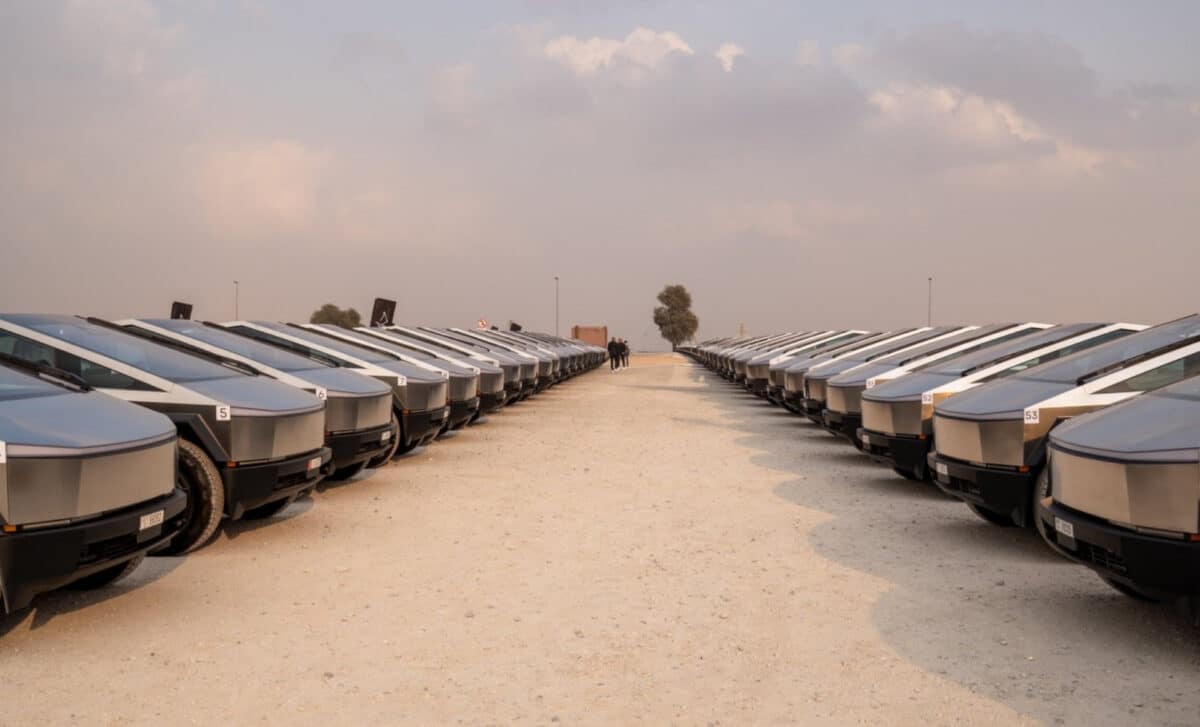
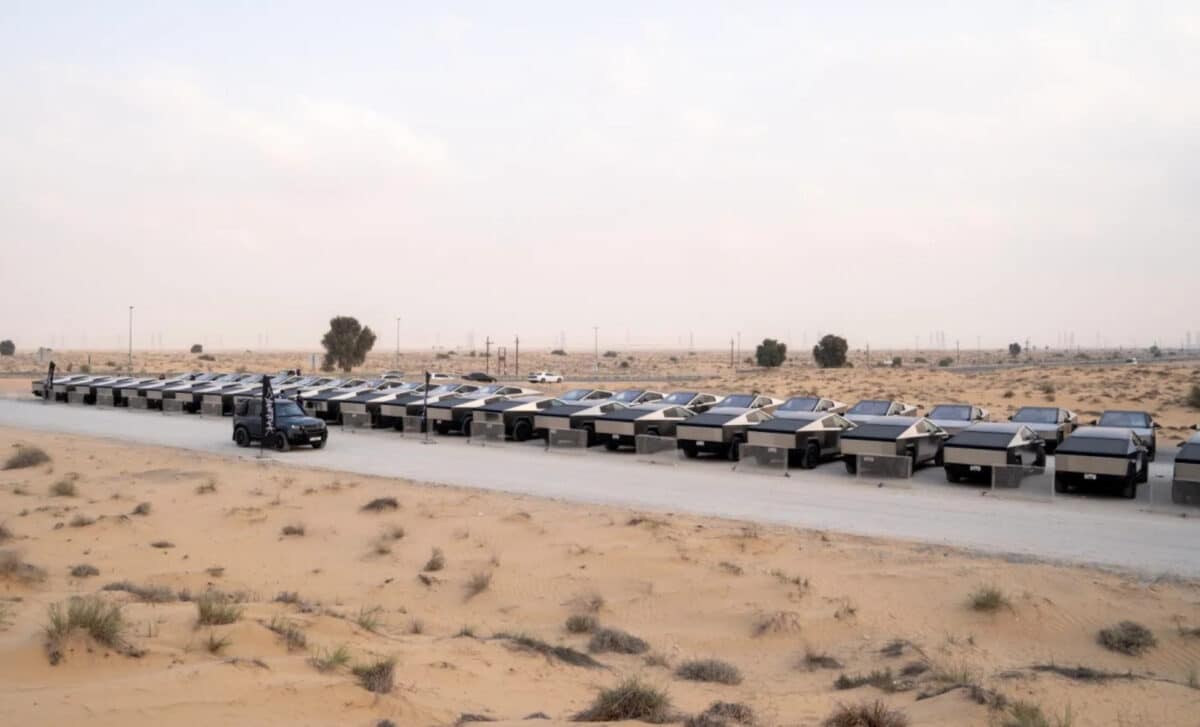
Tesla’s response wasn’t to double down, it was to pivot. In January 2026, the company staged a high-profile launch in the United Arab Emirates, delivering its first 60 units in a dramatic desert ceremony near Dubai. The images were striking: rows of Cybertrucks gleaming in the sand, shared widely across social media platforms.
This wasn’t just about selling EVs. In the Gulf, electric power is cheap and abundant, but not essential. Gasoline remains inexpensive, and infrastructure for internal combustion engines is firmly established. Here, the Cybertruck’s appeal has nothing to do with ecology and everything to do with spectacle. In a market that values presence and prestige, its aggressive silhouette and scarcity give it the kind of status Tesla couldn’t achieve at home.
A Price Tag That Adds to Its Aura
In the Emirati market, Tesla isn’t hiding the cost, it’s emphasizing it. The Dual Motor Cybertruck is listed at 404,900 dirhams (roughly $110,000), while the Cyberbeast version climbs to 454,900 dirhams (about $123,000). These are luxury-level prices, higher than in the U.S., and yet in the local context, they only reinforce the vehicle’s desirability.
Tesla’s regional ambitions go beyond the UAE. Plans include expansion into Saudi Arabia, Qatar, Israel, and Jordan, all of which combine flexible automotive regulations with a taste for technological excess. The Cybertruck, with its blade-like frame and cyberpunk styling, fits right in among Rolls-Royces, G-Wagens, and ultra-custom SUVs.
Limited Reach, Lasting Questions
Despite this positive shift in reception, the Cybertruck’s success in the Gulf is unlikely to solve its deeper problems. The region represents a niche market, enthusiastic, yes, but small in volume. With just a few thousand units expected to sell annually, these markets can’t offset the collapse in U.S. demand or justify the initial industrial scale Tesla projected.
In Europe, meanwhile, the Cybertruck remains legally sidelined. Its rigid stainless steel structure doesn’t meet EU pedestrian safety standards, which require deformable front ends to absorb impact. The vehicle’s weight, well above 3.5 tonnes in many configurations, would also trigger complex licensing and classification hurdles. Even its Top Safety Pick+ award from the IIHS in the U.S. carries little weight here, as it focuses solely on occupant safety.
What’s happening in the Middle East doesn’t rewrite the story of the Cybertruck, it reframes it. Tesla’s ambition to reshape the pickup truck for an electric age hasn’t fully materialized. But what the brand has created is something else: a rolling icon, capable of commanding attention in some of the world’s most image-conscious environments.