


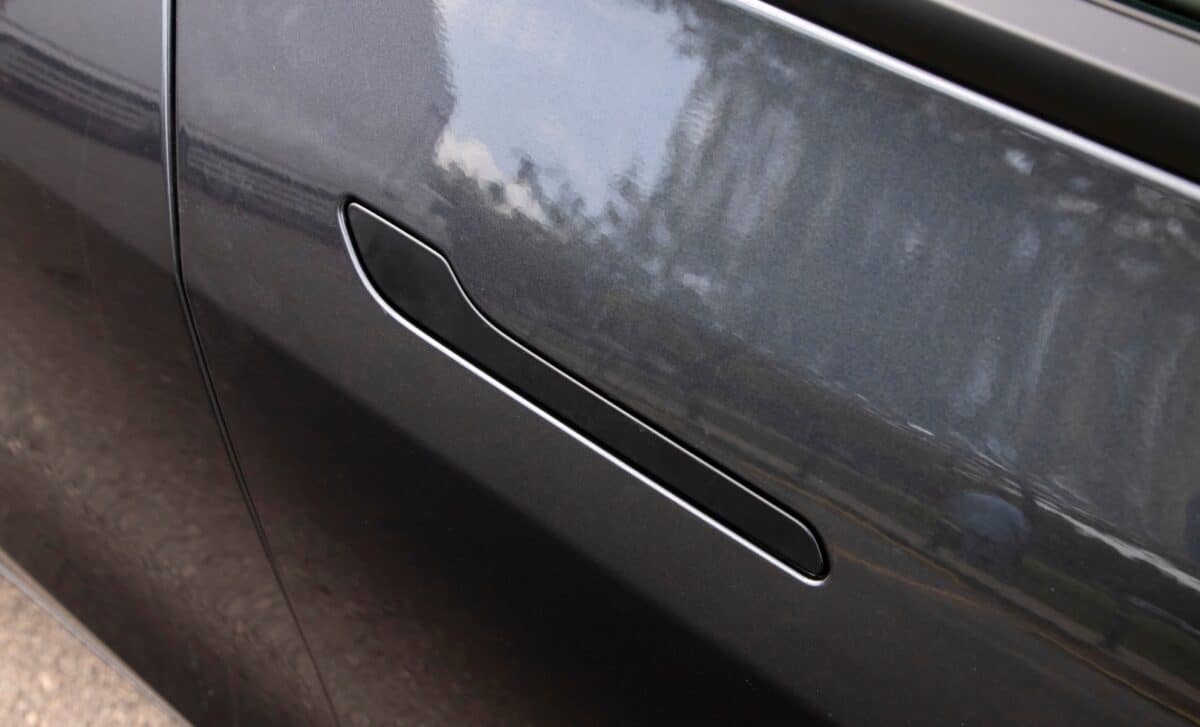
In recent years, the introduction of sleek, electronic door handles has sparked both praise for their innovation and criticism for their safety risks. These handles, designed to be flush with the vehicle’s body, rely on a system that often malfunctions when the car loses power, leaving passengers trapped inside. With growing concerns over emergency response times, Kelly’s proposed legislation seeks to establish clear and intuitive guidelines for door handle design, potentially reshaping the future of car safety.
The proposed bill targets automakers like Tesla and Rivian, who have incorporated advanced door handle technology into their vehicles. Kelly’s SAFE Exit Act, which is supported by Consumer Reports, seeks to ensure that vehicle doors remain easy to open even in the event of a power failure. It calls for enhanced labeling, mechanical redundancies, and standardization in design to guarantee that first responders can act swiftly in an emergency. The legislation would direct the U.S. Secretary of Transportation to develop new safety standards, which automakers would need to follow within two years of the rule being finalized.
Tesla’s Pop-Out Door Handles and Safety Failures
The bill’s focus on Tesla comes after several fatal accidents were linked to its pop-out door handles. According to a Bloomberg report, at least 15 deaths have been connected to the failure of Tesla’s electronic door handles, which are designed to retract when not in use. In some cases, the vehicles’ low-voltage systems were disabled after a crash, making the electronic handles inoperable and trapping passengers inside.
The bill specifically references these incidents as a major reason for introducing new regulations. Tesla’s CEO, Elon Musk, was previously cited as the driving force behind the adoption of these pop-out handles, despite concerns from within the company about their complexity and potential risks.
Consumer Reports and the Petition for Safer Designs
The issue of electronic door handles has garnered widespread attention from consumer advocacy groups. In fact, Consumer Reports, which has been vocal in its criticism of Tesla’s door handle design, launched a petition in 2015 that has since garnered over 35,000 signatures. The petition calls for safer, more accessible door handle systems that would prevent similar accidents.
According to Consumer Reports, the safety concerns with Tesla’s retractable handles were so severe that they had to delay their review of the Model S when the handles malfunctioned during testing. This outcry has helped to push the SAFE Exit Act forward, urging lawmakers to take action on the design and functionality of vehicle doors.
A Global Shift in Automotive Design
While the focus of the SAFE Exit Act is on U.S. vehicles, the issue of door handle safety has prompted international action as well. Automakers like Rivian have already pledged to redesign their electronic door handles in response to the growing pressure.
In addition, Chinese regulators have begun examining similar safety concerns, signaling that two of the world’s largest car markets may push for stricter safety standards sooner rather than later. This global shift could have a lasting impact on how car manufacturers approach door handle design in the future, with an emphasis on mechanical reliability alongside aesthetic innovation.