
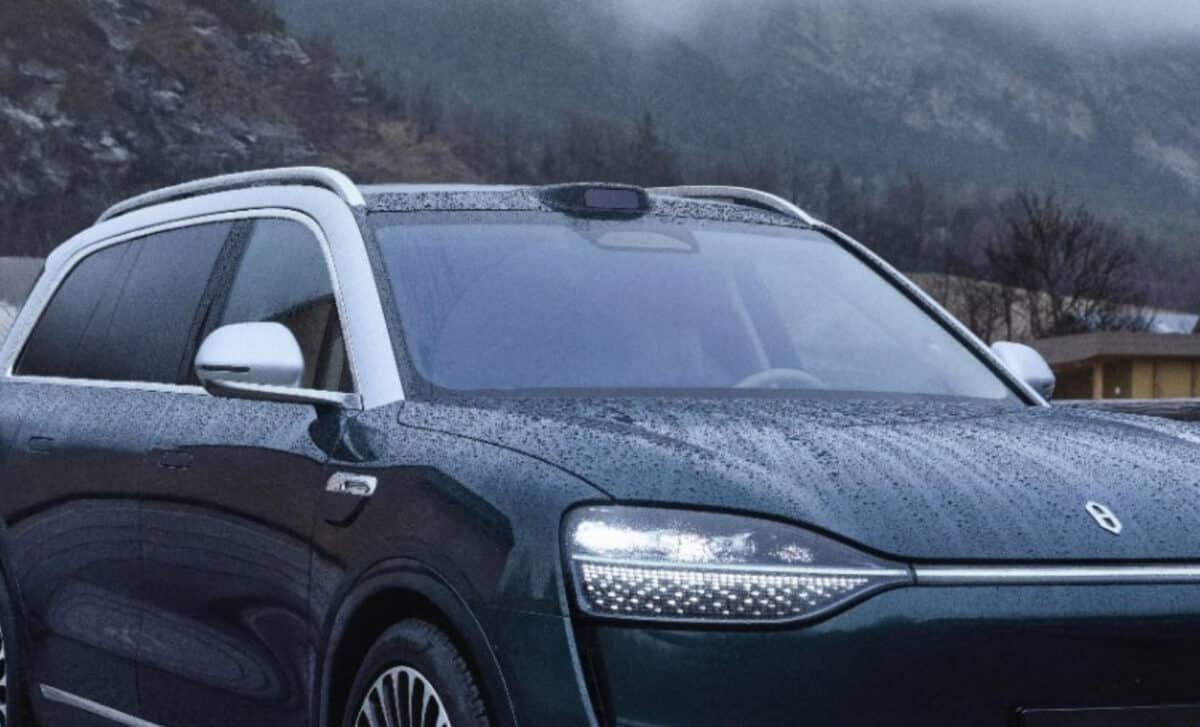
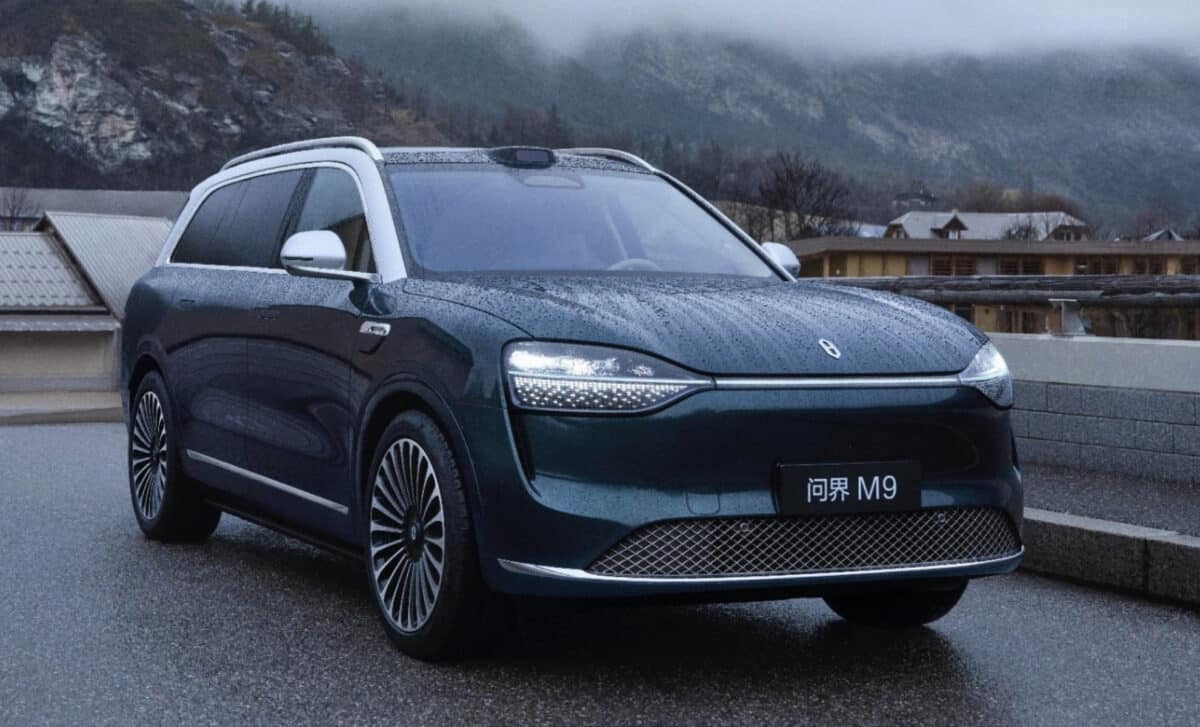
The Huawei AITO M9, is a new high-tech electric vehicle from China that lets users play racing games using the car’s actual steering wheel and pedals. Developed in partnership with Chinese automaker Seres, this feature turns the driver’s seat into a full-scale gaming cockpit when the vehicle is stationary.
As digital technology becomes central to modern vehicle design, the AITO M9 illustrates just how far automakers are willing to go to blend entertainment with mobility. With its unique gaming function and an interior dominated by screens and sensors, the vehicle signals a shift in what consumers can expect from the driving experience.
The AITO M9 is positioned as a flagship SUV for the AITO brand, aimed squarely at China’s luxury electric market. The vehicle is designed to compete with other premium models like the Li Auto L9 and the Mercedes-Benz EQS SUV, but its blend of software, hardware, and Huawei‘s technology places it in a distinct category. Buyers can choose between multiple configurations and drivetrains depending on their needs.
The Steering Wheel Becomes Your Controller
The gaming feature works only when the vehicle is parked. While stationary, the steering wheel and pedals are repurposed to function as input devices for racing games, offering a simulator-style experience right from the driver’s seat. It’s a feature that might seem excessive at first, but it demonstrates how modern vehicles are evolving into interactive digital platforms.
This addition pushes the idea of “car as computer” even further. Instead of limiting the vehicle’s purpose to transportation, the M9 opens up a new use case: in-car entertainment through direct interaction with the car’s controls. Whether used during charging stops or while waiting in parking lots, the feature expands how drivers engage with their vehicles during downtime.
Tech-heavy Interior And Extended Range Options
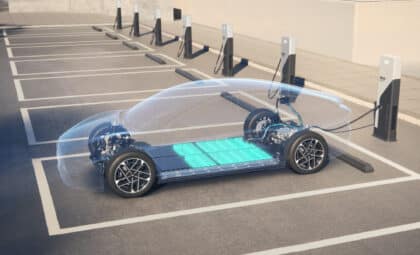
Beyond its gaming capabilities, the Huawei AITO M9 is a tech-first vehicle in nearly every aspect. Buyers can choose between a fully battery-electric version and an extended-range electric vehicle (EREV). The pure EV model includes dual motors and all-wheel drive, producing about 390 kW (over 500 horsepower). It delivers up to 630 kilometers (391 miles) of range, according to China’s CLTC test cycle.
The EREV variant combines electric motors with a small petrol engine used only as a generator, allowing the vehicle to reach a driving range of over 1,200 kilometers (745 miles). Despite its size and luxury focus, the SUV still boasts solid performance with a 0–60 mph time in the mid-four-second range.
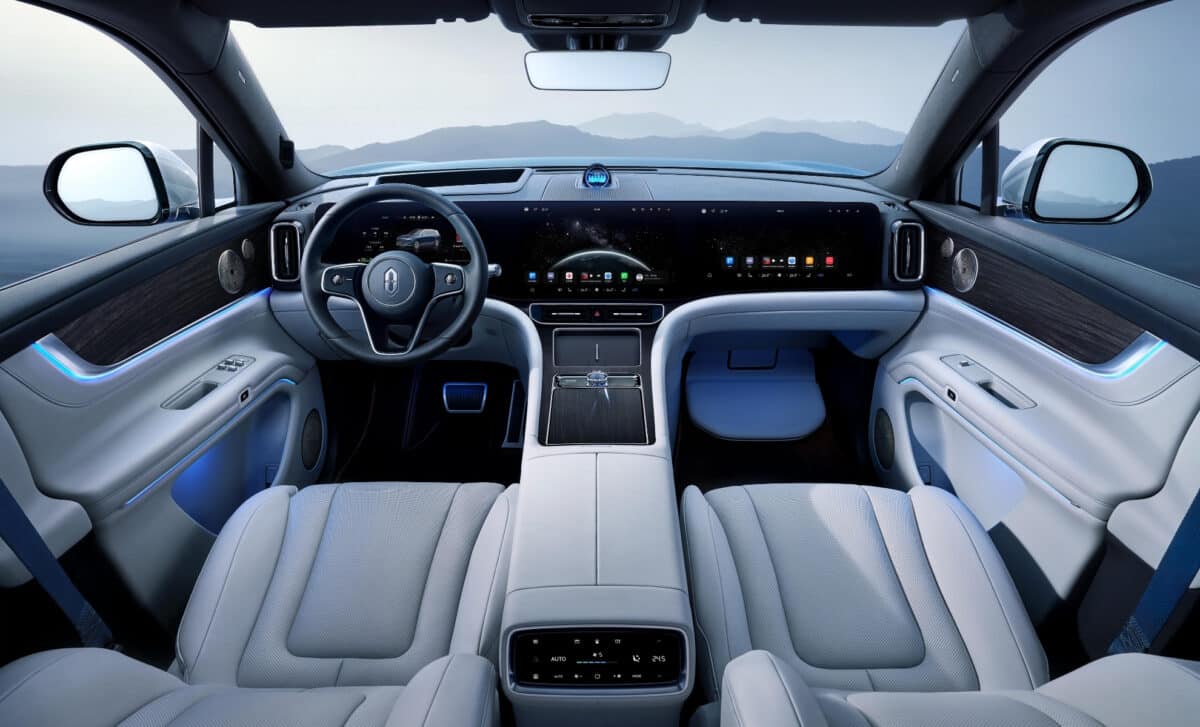
Inside, the vehicle features multiple large digital displays, including a central infotainment screen, a dedicated passenger display, and a digital instrument cluster. The M9 also includes advanced driver-assistance systems, such as LiDAR, cameras, and radar, which enable semi-autonomous driving in certain supported areas. The cabin is finished with premium materials, ambient lighting, and a high-end sound system, underscoring its luxury status.
In China, prices start at approximately 470,000 yuan (around $65,000) and go up to 570,000 yuan ($78,000) depending on the version.
Split Opinions On Screens And Digital Overload
Not everyone is on board with the growing number of digital features in cars like the AITO M9. The inclusion of in-car racing games has fueled ongoing debate about whether modern vehicles now have too many screens. In many new models, touchscreens handle nearly all functions, from climate controls to mirror adjustments, raising concerns about driver distraction and sensory overload.
Some drivers are skeptical of the constant digital engagement required in these tech-heavy interiors. Others defend the additions, suggesting that as long as interactive features like gaming are locked while driving, there’s little risk and plenty of benefit, particularly when a car is parked.
The contrast is highlighted by Bugatti, which has traditionally avoided in-car screens and only recently added one to its latest model.