
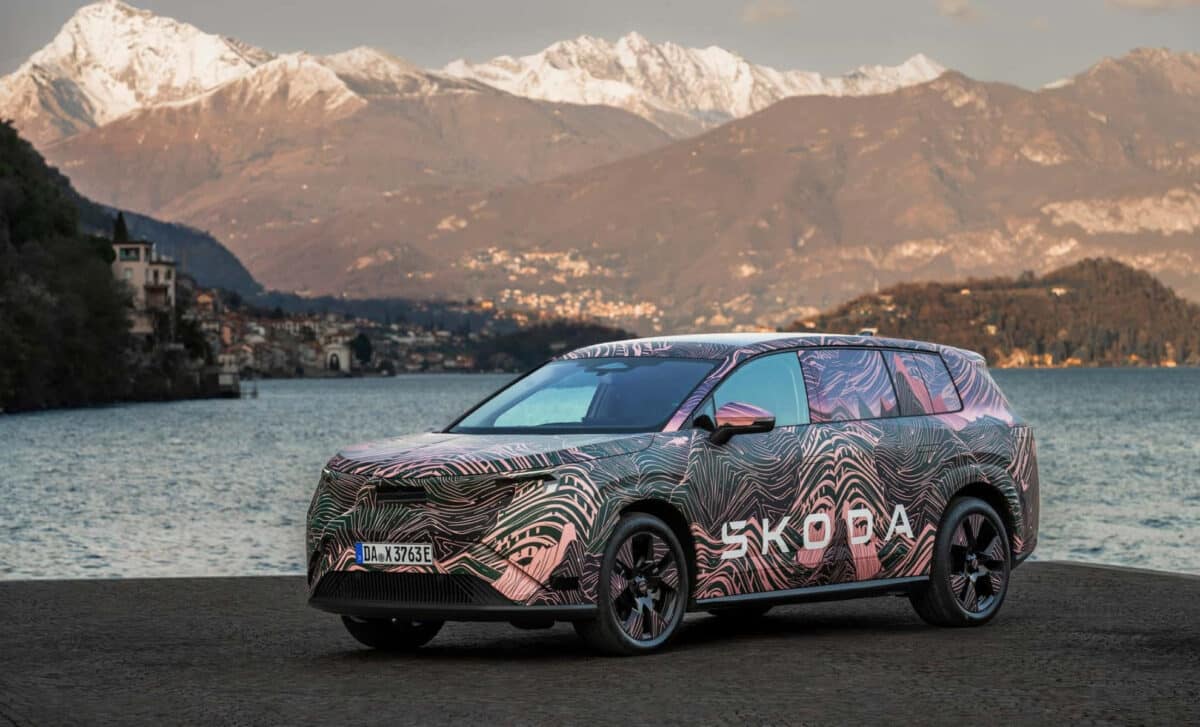
The Peaq expands Skoda’s electric lineup with a flagship model inspired by the Vision 7S concept. It introduces new design and technology elements while addressing practical concerns such as interior space and usability for larger households.
The vehicle also reflects Skoda’s continued use of the Volkswagen Group’s MEB platform, though with notable upgrades in size, battery capacity, and onboard features that distinguish it from existing models like the Enyaq.
A Focus on Size, Seating, and Cargo Capacity
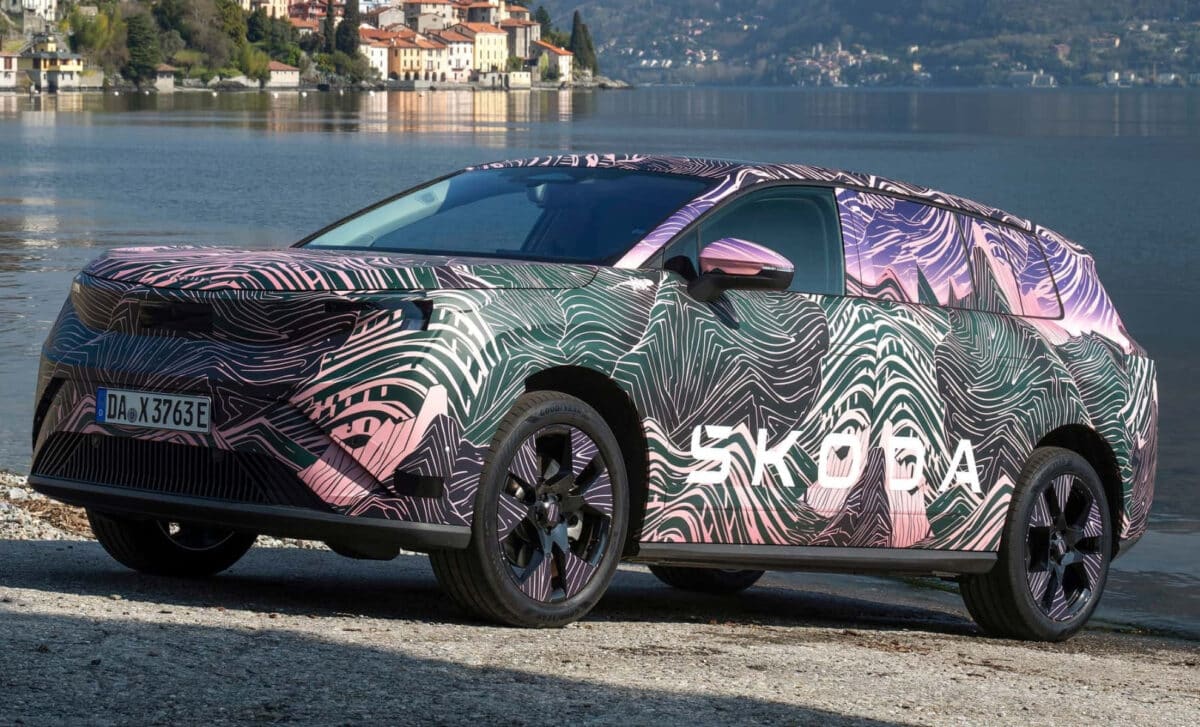
The Skoda Peaq is defined first by its dimensions and interior flexibility. Measuring around 192 inches (4.87 meters) in length, it is approximately 10 inches (25 cm) longer than the Enyaq, making it the largest model the brand has ever produced. According to InsideEVs, this places it slightly below the Kia EV9, which exceeds it by about 5.5 inches (14 cm).
The SUV can accommodate up to seven passengers. In its five-seat configuration, it offers a maximum cargo volume of 35.7 cubic feet (1,010 liters). Even with all three rows in use, the trunk still provides 10.6 cubic feet (299 liters), complemented by a 1.3 cubic foot (37-liter) front trunk.
These figures highlight a clear emphasis on practicality, especially for families requiring both seating capacity and storage space in a single vehicle.
Battery Options, Range, and Charging Capabilities
Built on the MEB platform, the Peaq benefits from a longer wheelbase that allows for larger battery integration. The long-range version features a 91-kilowatt-hour battery (86 kWh usable), delivering a WLTP range of 373 miles (600 km). A smaller 63 kWh battery (61 kWh usable) provides a range of 286 miles (460 km).
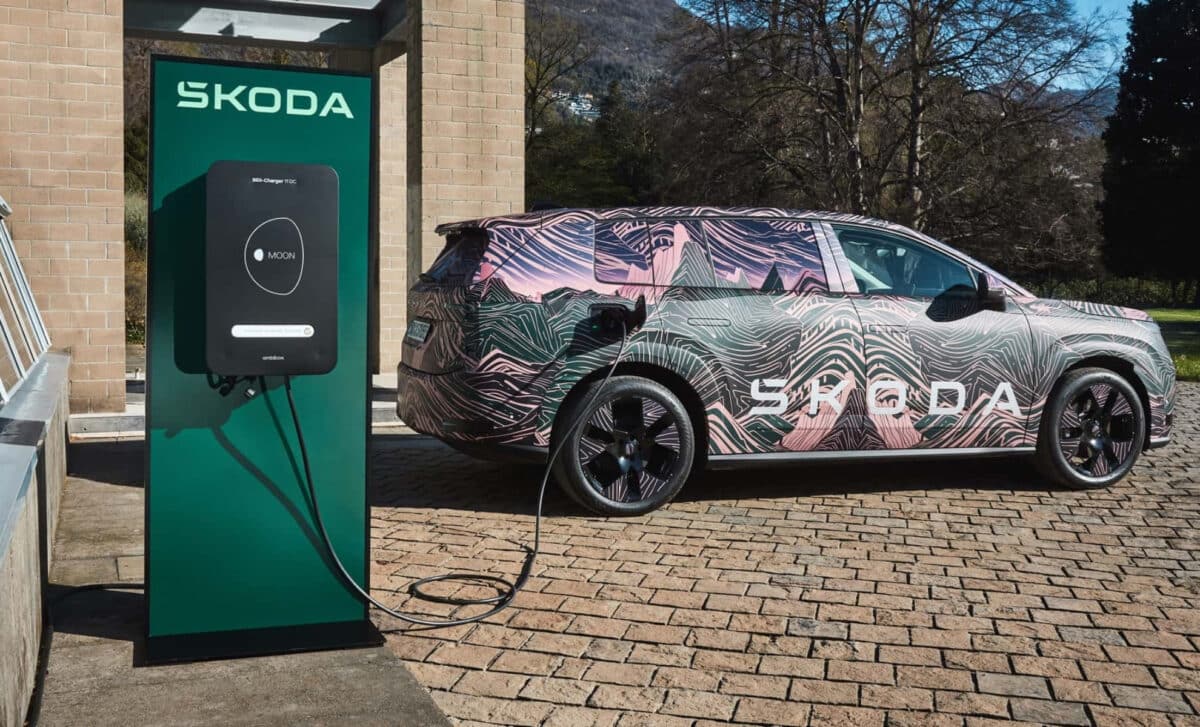
Charging performance reflects the platform’s 400-volt architecture. The vehicle supports charging speeds of up to 195 kilowatts. This is notably lower than models like the BMW iX3, which uses an 800-volt system. Despite this, charging from 10% to 80% takes 28 minutes for the larger battery and 27 minutes for the smaller one.
The Peaq also includes bidirectional charging as standard. Vehicle-to-load functionality is available, and when paired with a compatible wallbox, vehicle-to-home capability allows the car to supply power to a building.
Interior Technology and New Comfort Features
Inside, the Peaq introduces several firsts for Skoda. It features an electrochromic glass roof that can switch between transparent and opaque states, along with flush door handles and redesigned wiper blades with integrated washers for improved fluid efficiency.
A notable addition is the “Relax Package,” which includes ergonomic massaging seats with leg rests, a Sonos sound system, and a wellness app designed to create what Skoda describes as a lounge-like environment.
The infotainment system runs on Android and is displayed on a 13.6-inch portrait-oriented central screen. It includes built-in applications such as Google Maps and YouTube. A 10-inch driver display is paired with an augmented-reality head-up display, a feature already seen in other Volkswagen Group vehicles.
Under the hood, the entry-level version uses a single rear-mounted motor producing 201 horsepower. A more powerful single-motor variant with the larger battery delivers 282 horsepower, while the dual-motor version reaches 295 horsepower and accelerates from 0 to 62 mph (100 km/h) in 6.7 seconds.
Production will take place at Skoda’s plant in Mlada Boleslav, Czechia, with pricing yet to be announced.