

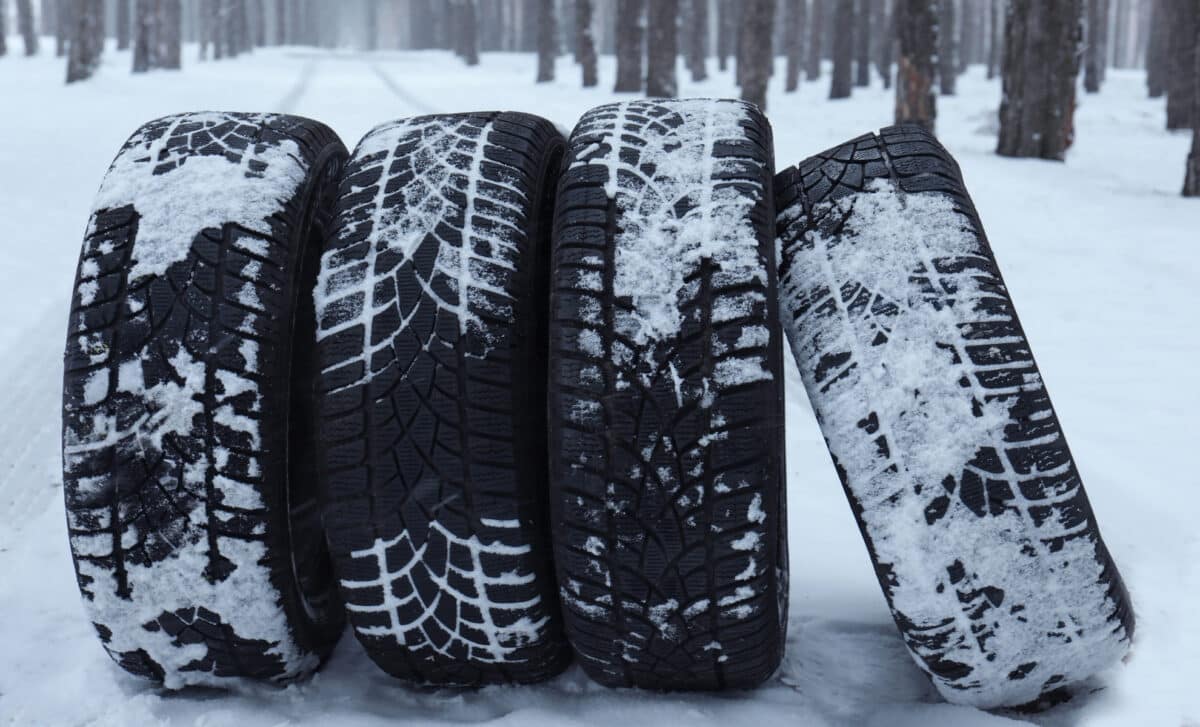
As winter conditions hit over 70% of U.S. roads with five or more inches of snow per year, according to the U.S. Department of Transportation, understanding these tools isn’t optional. It’s a necessity for safe daily driving or navigating high-elevation routes, where the law may even require specific traction aids. While winter tires often stand out as a reliable go-to for seasonal driving, snow chains and socks each bring distinct strengths, especially in extreme conditions.
Many drivers stick with what they know, but knowing how each option handles acceleration, braking, and ice can change the game. This article breaks down how each system holds up, where it thrives, and when it might let you down.
Snow Chains: Heavy-duty Traction In Deep Snow And Ice
Invented in the early 1900s by Harry D. Weed of New York, snow chains remain a trusted tool for extreme winter driving. Their relevance today is most apparent in mountainous states like California and Colorado, where snow chain requirements are enforced under specific weather conditions. California’s Department of Transportation (Caltrans) has a three-tiered chain control policy; under the strictest level, only snow chains are permitted, snow socks are explicitly disallowed.
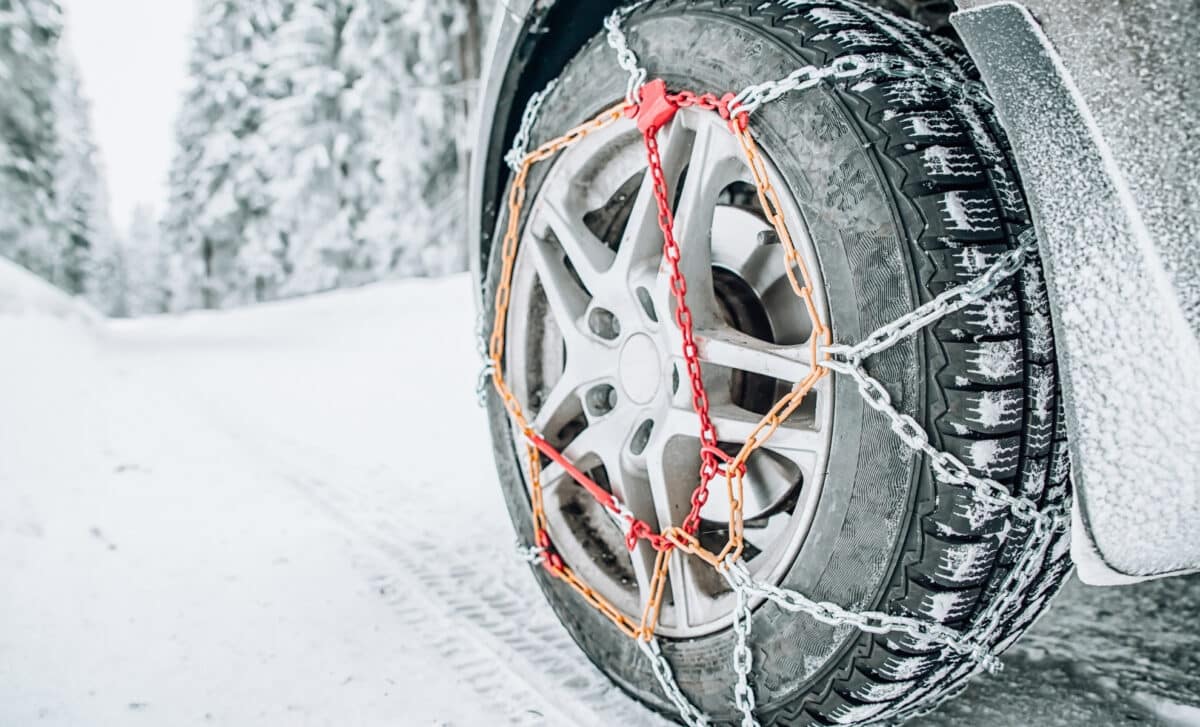
Chains work by wrapping tightly around the tire, providing multiple contact points that dig into snow and ice. They’re especially effective when the road is covered in several inches of snow, conditions under which even winter tires may struggle to maintain traction. Tests have shown that chains also hold their own on icy surfaces by preventing excessive sliding.
Despite their strength, snow chains aren’t ideal for every situation. Installation can be time-consuming, requiring careful fitting of a web of metal links and sometimes straps. Once mounted, the vehicle must not exceed 30 mph to avoid damage to both chains and tires. The driving experience is also compromised with a significant cabin vibration that makes for a rough and noisy ride.
Snow Socks: Effective Stopping, But Weak On Ice
Snow socks are a more recent invention, introduced in the 1990s by Norwegian company AutoSock. Their function is based on the way snow adheres to itself. As Bridgestone tire specialist Will Robbins explained to Popular Science, “When you make a snowball, it packs together because snow wants to stick to itself.” Snow socks harness this principle by allowing snow to cling to their textile surface, improving grip as the car moves forward.
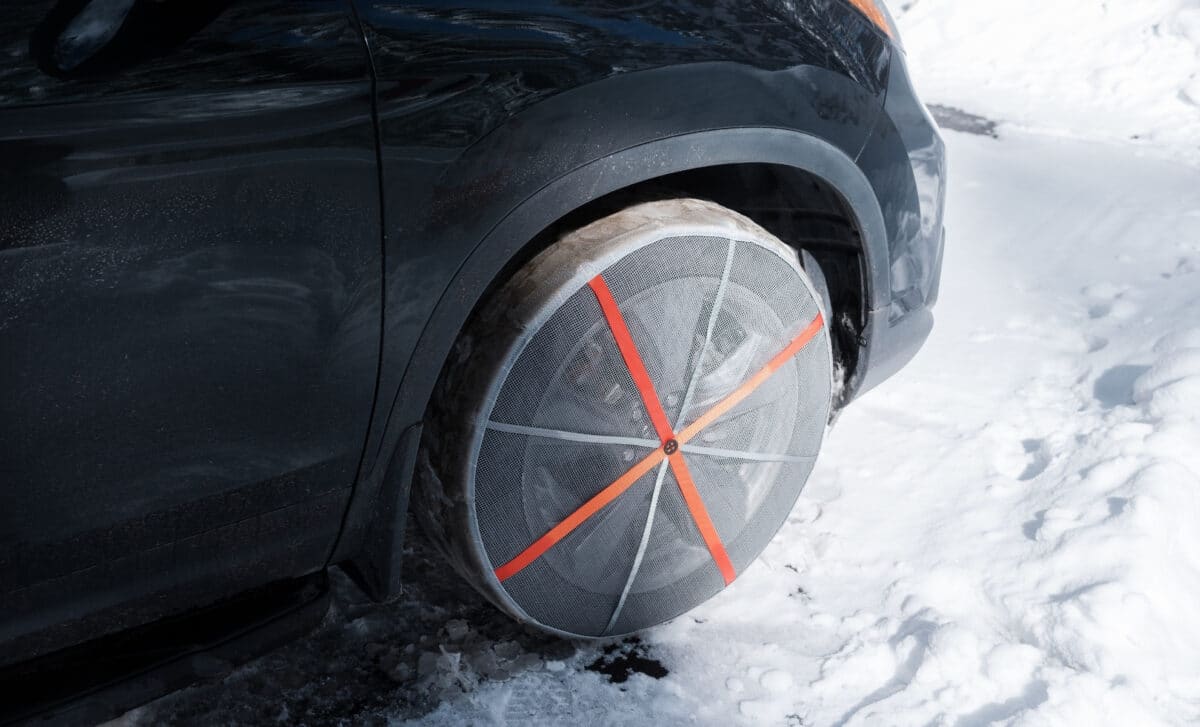
Their real-world performance has surprised many. In tests conducted by The Fast Lane Car, vehicles outfitted with snow socks on all four wheels achieved the best results in acceleration and braking on snow-packed roads in the Colorado Rockies. One test measured stopping distance by accelerating to 25 mph and braking hard on a downhill slope. Another timed how fast the vehicle could move from a stop on an uphill grade. In both cases, snow socks outperformed not only chains but also winter tires.
Still, they’re not without flaws. Snow socks lose effectiveness on ice, where the textile material struggles to grip. This is a serious drawback on surfaces with black ice, which is among the most dangerous conditions a winter driver can face. Like chains, snow socks also require drivers to keep speeds below 25 to 30 mph, depending on the model. And while installation is easier than chains, it may still require another person to help roll the vehicle slightly forward as the sock is pulled into place.
Winter Tires: Reliable Grip For Everyday Driving
Winter tires continue to offer the most seamless solution for drivers navigating regular winter conditions. Unlike chains or socks, they don’t require installation during a storm, they’re simply mounted for the season and ready to go. Winter tires are proven to outperform all-season models, especially when driving through snow, slush, and cold pavement.
Their tread is designed for winter traction, featuring deep, jagged patterns and wider grooves that allow snow to be channeled away from the tire. Unlike all-season tires, which have smaller tread gaps and a less aggressive pattern, winter tires dig into snowy surfaces to maintain control and stability.
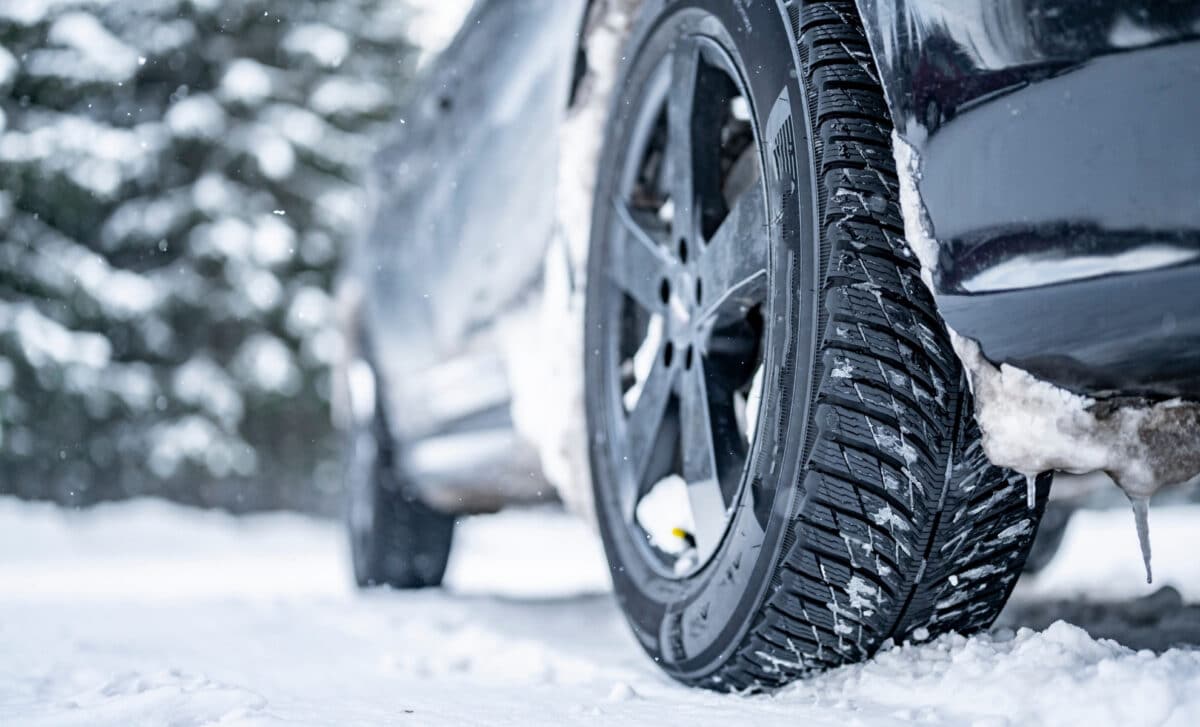
The rubber compound used in winter tires is also specialized. Some models are made with materials that remain flexible even in extreme cold, preventing the tread from hardening and losing grip. This flexibility plays a key role in how well the tire performs throughout the season.
While they don’t match the deep-snow performance of chains or the surprising acceleration of snow socks, winter tires are consistent. They eliminate the need to install or remove equipment mid-drive, and they stay effective throughout the day. Their only downside is seasonal, they must be changed once winter ends to prevent premature wear.