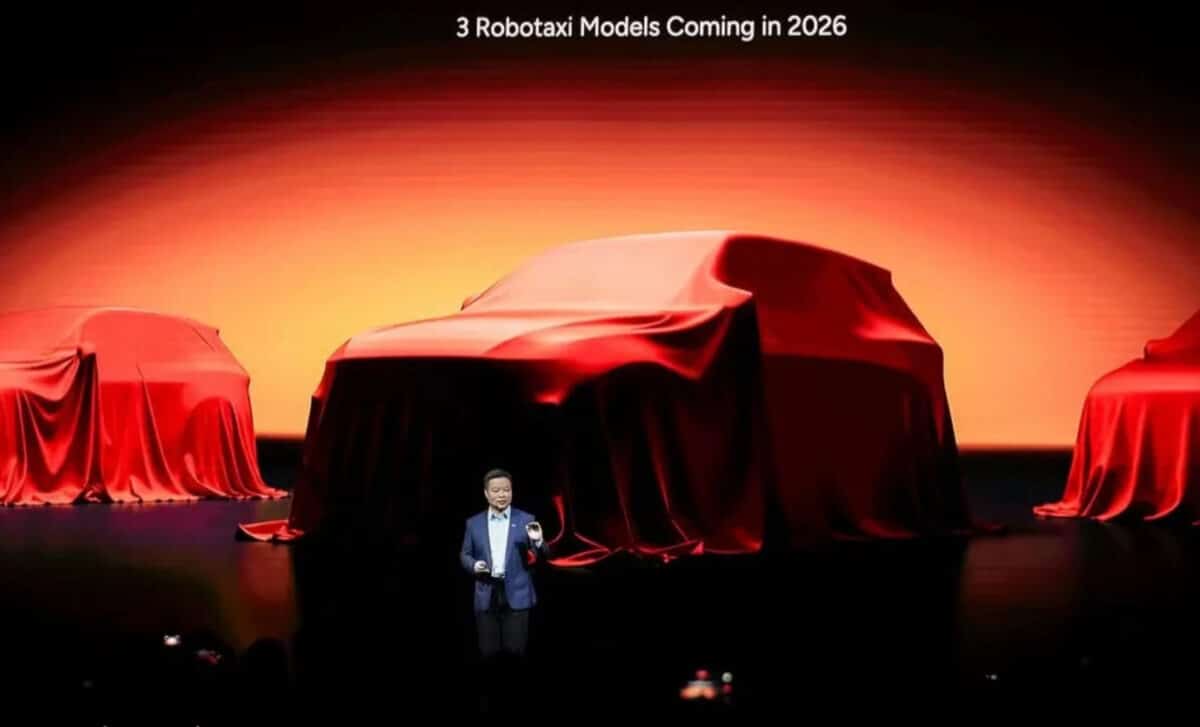
These fully autonomous vehicles—powered by Xpeng’s in-house AI systems and chips—aim to disrupt an industry long dominated by Western players like Tesla.
With a mix of bold design, human-like situational awareness, and a production strategy that blends scale with precision, Xpeng’s approach is generating buzz far beyond China’s borders. This shift positions the company not just as an EV maker, but as a serious contender in the global autonomous driving landscape.
In recent years, Tesla’s Full Self-Driving (FSD) has led conversations around autonomous vehicles, even as critics point to its ongoing reliance on driver oversight. Xpeng, by contrast, is steering in a radically different direction—one where cars don’t just assist drivers but eliminate them entirely. What makes this development more than a tech showcase is Xpeng’s decision to manufacture the robotaxis using existing production lines, slashing costs and signaling real scalability.
Beyond that, the company’s robotaxi fleet is designed around a philosophy it calls “physical AI”—a term intended to bridge artificial intelligence and the real world. By integrating its AI deeply into the hardware, Xpeng is betting that true autonomy isn’t just about smart software, but about tight control over the entire vehicle ecosystem.
From Concept to Capability: The Robotaxi Design
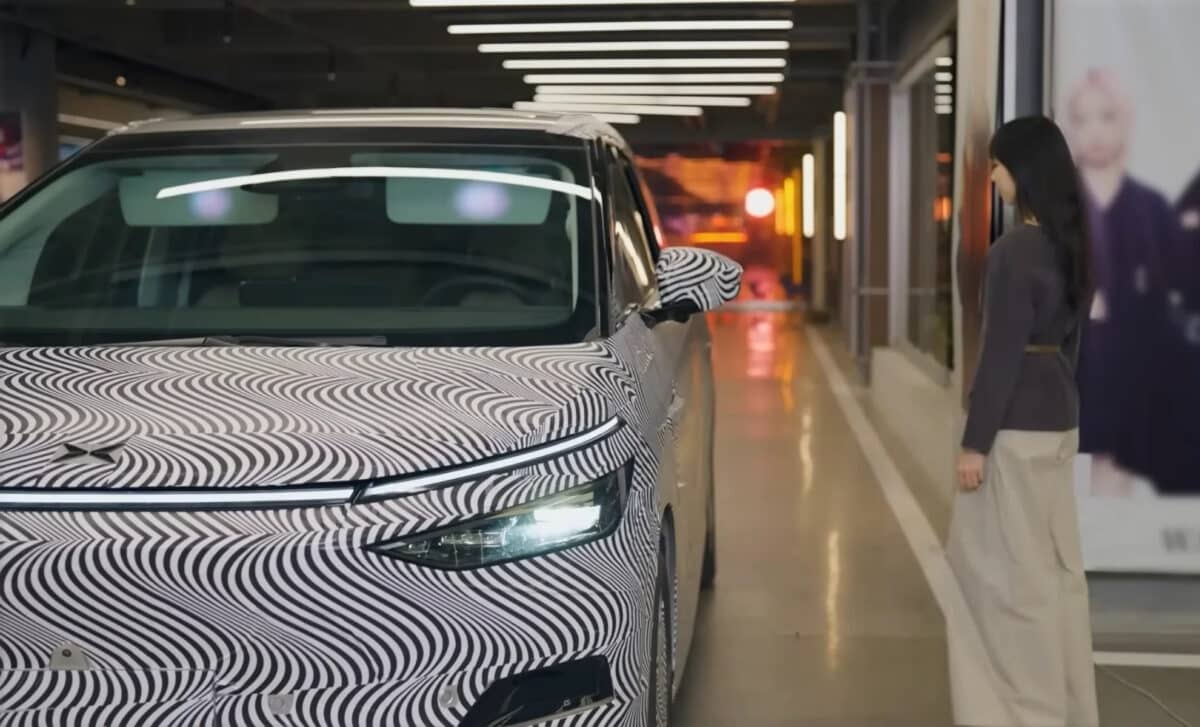
The newly revealed robotaxi concept is more than just another EV without a steering wheel. It’s a highly-integrated system of sensors, machine learning, and human interface. According to Supercar Blondie, the vehicle uses a combination of LiDAR, radar, and high-definition cameras to develop a near-human understanding of its environment. This awareness allows it to not only detect and react, but also engage in behaviors like autonomous parking and route adaptation.
Inside, the cabin strips away traditional car controls in favor of minimalist displays, some of which are tucked behind sun visors. These digital panels offer real-time updates on charging, location, and route details, transforming the car into something closer to a mobile assistant than a transport tool.
There’s no need for a driver, and not even a prompt—these vehicles operate independently, communicating with traffic and pedestrians using sensor-based decisions and pre-trained behavior models. This user-focused approach goes beyond autonomy—it reimagines what passengers expect from the in-car experience.
VLA 2.0 and the Turing Chip: The Hardware Backbone
At the core of Xpeng’s autonomous ambitions lies its proprietary Vision-Language-Action 2.0 system, or VLA 2.0. According to electrive, this second-generation model processes visual inputs into action commands using an end-to-end learning method. It was trained on nearly 100 million real-world driving videos, providing it with an equivalent of 65,000 years of human driving experience.
The system is designed to function without depending on high-resolution maps, a notable deviation from most autonomous driving stacks. This means Xpeng’s robotaxis can adapt to complex or unfamiliar traffic situations in real time, using sensor data and pre-trained behavioral responses. The goal is to create vehicles that don’t just follow scripts, but truly interpret their surroundings.
Supporting this AI model is the in-house developed Turing chip—four of them per vehicle, delivering a combined computing power of 3,000 TOPS. That’s currently the highest known performance level in commercial AV systems. It’s not just for Xpeng cars either. Volkswagen has already partnered with Xpeng to adopt both the VLA 2.0 platform and the Turing chip, making it the first major automaker to deploy these technologies outside Xpeng’s own lineup.
A Shift Toward Scalable Autonomy
Xpeng is not building science experiments. The three robotaxi models announced for 2026 will be produced using the same mass-production processes already applied to its consumer EVs. That means minimal hardware modifications and maximum manufacturing efficiency. As stated by Xpeng CEO He Xiaopeng, this approach enables cost-effective deployment and wide accessibility for future autonomous services.
Alongside the robotaxi rollout, xpeng is also introducing a new driver-assistance feature called “Robo,” which will be available on privately owned Level 4-capable vehicles. This mode shares the same hardware architecture as the robotaxi platform and is set to offer users near-autonomous capabilities with integrated safety redundancies.
Moreover, Xpeng has chosen Amap as its first global ecosystem partner for the robotaxi service, a move that points to broader international integration and possibly global service expansion in the near future.