
This strategic move responds directly to Donald Trump’s more hostile stance toward electric vehicles in the U.S., while aligning with Europe’s push for industrial sovereignty in the EV sector.
As Washington distances itself from climate-forward mobility policies, Europe is doubling down on localizing production to cut dependence on imports, especially from China. Tesla’s decision to launch battery manufacturing on European soil reflects this divide, while also addressing its shrinking market share in the region. The company now aims to reinforce its position by investing further in its only European factory, one that until now has relied on battery cells shipped from North America.
This pivot signals a renewed commitment to the European market, after previous battery production plans in Germany were shelved. It also comes at a critical time for the brand, as Tesla faces falling deliveries and rising competition across Europe.
Grünheide Factory to Host New Battery Production Line
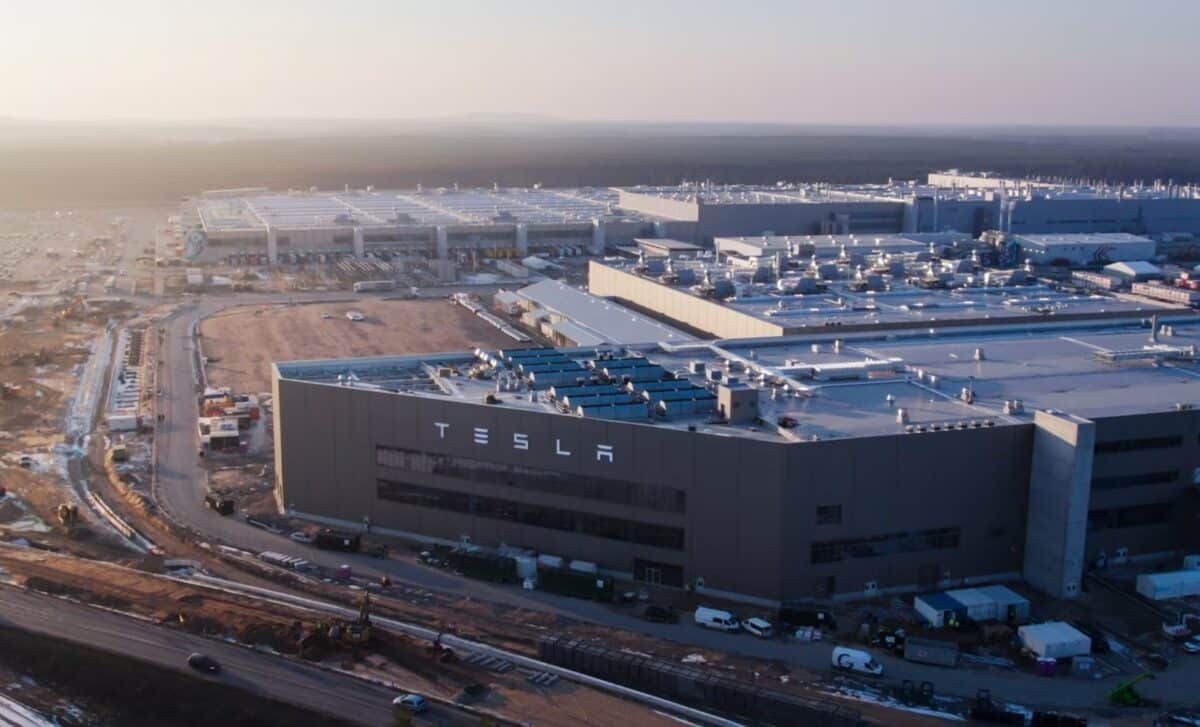
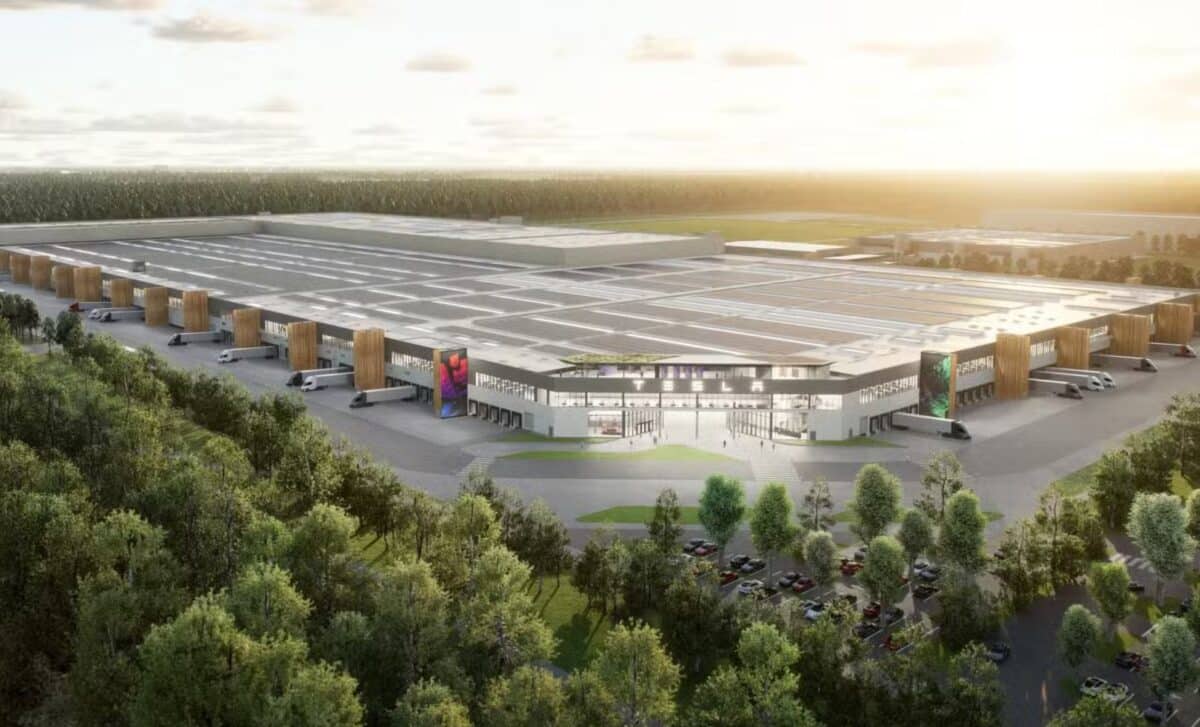
The upcoming battery production line in Grünheide, near Berlin, marks a significant expansion of Tesla’s operations in Europe. The company plans to start producing battery cells directly at the site in 2027. The target capacity of 8 GWh per year is expected to cover the battery needs of about 130,000 electric vehicles.
Currently, the Grünheide facility only assembles the Tesla Model Y using imported cells from Tesla’s American gigafactories. Introducing local battery production will reduce the company’s reliance on cross-Atlantic supply chains and could lower associated logistics costs. Tesla has announced plans to invest several hundred million euros to adapt the existing site, although it has not provided a detailed financial breakdown at this stage.
While this move appears ambitious, it’s not entirely new. When the German factory was first announced, Tesla had initially planned for it to produce 50 GWh of battery cells annually. That plan was later abandoned in favor of production being redirected to the United States. With the 2027 plan, Tesla is essentially reviving a scaled-down version of its earlier ambitions.
The company acknowledges the challenges. Producing low-cost battery cells in Europe remains “extremely complex” in Tesla’s own words. Yet it maintains that, if the right conditions are met, the entire battery value chain could eventually be concentrated at Grünheide.
European Context Drives Tesla’s Repositioning
Tesla’s renewed focus on Germany aligns with growing political and industrial momentum in Europe to localize EV production. While the U.S., under Trump’s returning influence, appears to be backing away from electric vehicle incentives, Europe is moving in the opposite direction.
The European Union is actively supporting battery production projects as part of a broader effort to secure key industrial sectors. In mid-2025, EU institutions pledged €852 million in funding across six major projects, equivalent to approximately $930 million USD, aimed at strengthening local battery cell manufacturing for electric vehicles. This reflects a strategic effort to catch up with China, which currently dominates the battery sector.
Tesla’s plan to start manufacturing in Germany fits directly into this framework. By investing in local production, the company could improve its standing with European policymakers and partners. It also brings Tesla in step with the EU’s desire to secure the entire EV supply chain, from raw materials to final assembly, within its borders.
This industrial pivot is also part of a political message. Europe’s leaders are increasingly emphasizing technological sovereignty in the face of global competition. Tesla’s presence in this dynamic may help the brand regain relevance in a market that’s rapidly evolving both politically and commercially.
Plunging Sales in Europe Highlight Commercial Urgency
Tesla is not only reacting to political pressure, it’s also facing pressing market realities. Since early 2025, the company has recorded sharp declines in deliveries across key European countries. Tesla’s sales fell by 58% in France, 59% in Sweden, 49% in Denmark, and 44% in the Netherlands during the month of November alone.
Only Norway stood out as an exception, with the country’s EV-friendly market, where electric vehicles account for more than 90% of sales, helping to cushion the blow. Still, Tesla’s overall European market share plummeted from 2.4% in 2024 to just 1.6% in 2025, a significant drop compared to 2023, when the Model Y was the most sold vehicle both in Europe and globally.
This sharp decline underscores a growing perception that Tesla is losing ground. The company faces mounting competition from both European and Chinese manufacturers, and it’s also been criticized for a model lineup that some see as outdated. Tesla’s brand image in Europe has also come under pressure, adding to the commercial challenges.
Against this backdrop, launching battery production in Germany could be a way to restore industrial credibility and offer a more responsive supply chain to European customers. It might also help Tesla align with local expectations on sourcing and environmental impact, two themes that are increasingly shaping consumer and government attitudes in the region.