


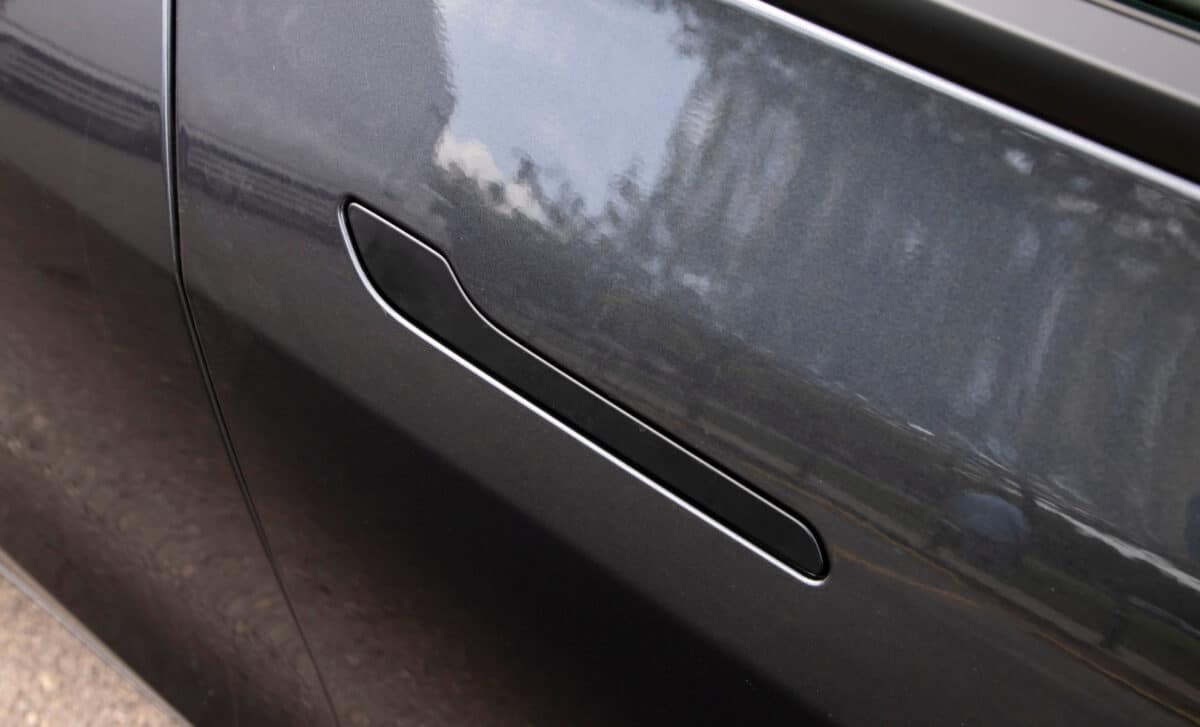
In recent years, Tesla’s sleek and minimalist designs have caught the eye of car enthusiasts worldwide. One of the standout features in many of its vehicles has been the innovative hidden door handle, which sits flush against the vehicle’s body, creating a smooth, futuristic look. However, this signature feature, once a symbol of modern automotive design, is now facing a major setback. In a groundbreaking move, China has decided to ban hidden electric door handles, marking a significant shift in the country’s regulations for vehicle safety. As the first nation to impose such a restriction, China is making waves in the global automotive industry.
This new policy, announced by China’s Ministry of Industry and Information Technology (MIIT), has sent ripples across the electric vehicle (EV) sector. Though Tesla is the most famous adopter of hidden handles, other Chinese manufacturers like Xiaomi and Aion have also embraced the design. However, the decision to outlaw the feature by 2027 is rooted in safety concerns. In particular, these handles, which require a user to press or slide them to release the door, have been problematic in emergency situations, especially after accidents. In instances where the electric mechanism fails, rescue teams have struggled to open the doors, leading to tragic consequences.
Safety Concerns Spark a Major Shift
The crux of the matter lies in the concern that in the event of an accident, passengers may become trapped inside the vehicle if the electrical system fails, preventing the door from opening. The new Chinese regulations now require all cars sold in the country to have both an electric and a mechanical release system. This dual-mode design aims to ensure that even if the electric system malfunctions, a mechanical backup will allow the doors to be opened manually, offering a crucial safety feature.
The move comes after several high-profile incidents, including a tragic crash involving a Xiaomi vehicle last year, where passengers were unable to escape due to the malfunctioning electric handles. These issues, coupled with similar reports from Tesla owners, have sparked public outcry. In fact, investigations by the U.S. National Highway Traffic Safety Administration and Bloomberg revealed multiple incidents where people were trapped inside their Tesla vehicles, some resulting in severe injuries or fatalities.
This policy change is likely to have far-reaching effects, not just within China but globally. China is the world’s largest car market, and the decisions made there often influence trends in other regions. Manufacturers like Tesla, who have heavily relied on the hidden handle design, will now need to rethink their strategy for the Chinese market, and possibly even reconsider how they approach vehicle design globally.
A Challenge for Automakers
For companies like Tesla, which have incorporated hidden handles for their aesthetic appeal, adapting to these new regulations could present both a technical and logistical challenge. While Tesla is known for its innovative designs, it has also been at the forefront of addressing safety concerns. The company has already announced plans to modify its door systems to comply with the new law, possibly integrating a hybrid system that keeps the sleek, electric release mechanism but adds a manual backup.
However, it raises an interesting question for automakers: will the dual-mode system become the new standard, or will it be seen as an unnecessary complication? Mechanical handles have been a tried-and-true design for decades, and for many, the question is whether manufacturers will continue to pursue electric handles at all if a mechanical alternative works just as well.
One thing is clear: as China continues to lead the charge in automotive regulations, the global industry will likely follow suit, especially as manufacturers continue to expand into the Chinese market.
A Wider Impact on Global EV Design
As we watch these regulatory shifts unfold, it’s important to think about the broader implications. The push for more stringent safety measures in China may set a precedent that other markets could follow. In Europe and North America, the adoption of hidden handles has been met with mixed reactions, largely due to concerns over safety and reliability. This move by China may prompt other countries to reassess their own regulations, potentially leading to a universal standard for EV door designs.
The move also brings into question how safety features are balanced with design innovation. As electric vehicles continue to push boundaries in both style and performance, it’s crucial that safety remains a top priority. Perhaps this is a moment for automakers to pause and rethink their approach to cutting-edge designs, ensuring that functionality and security always go hand in hand.