
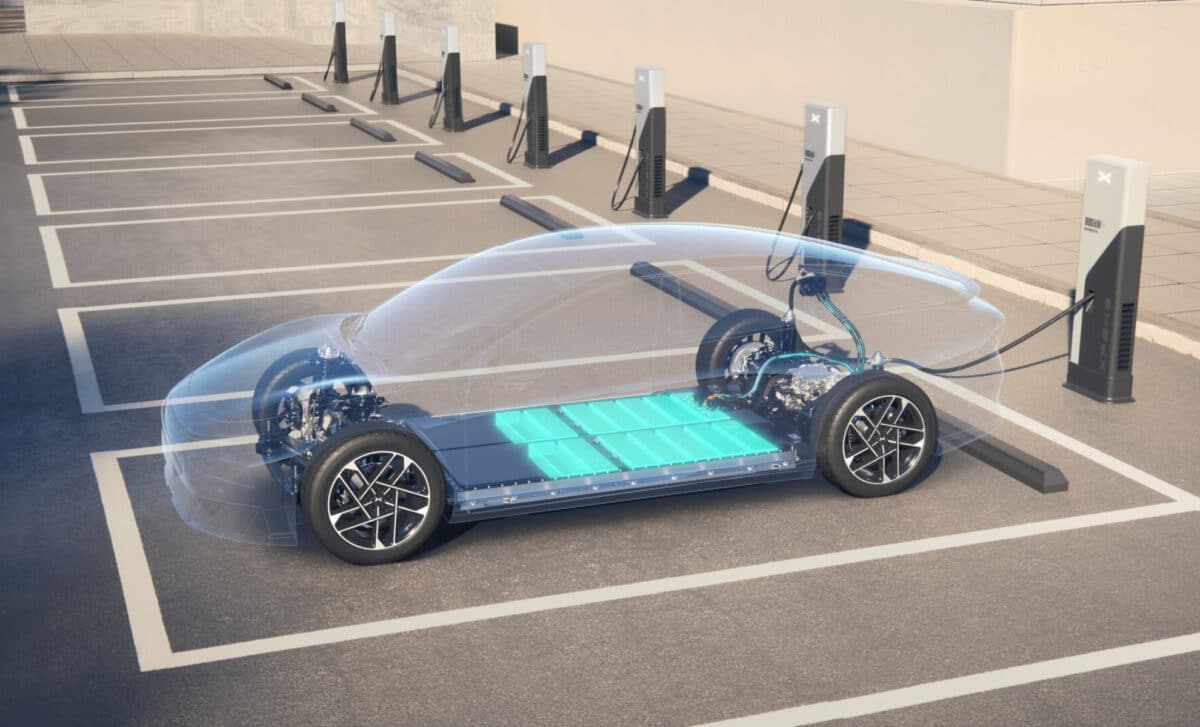
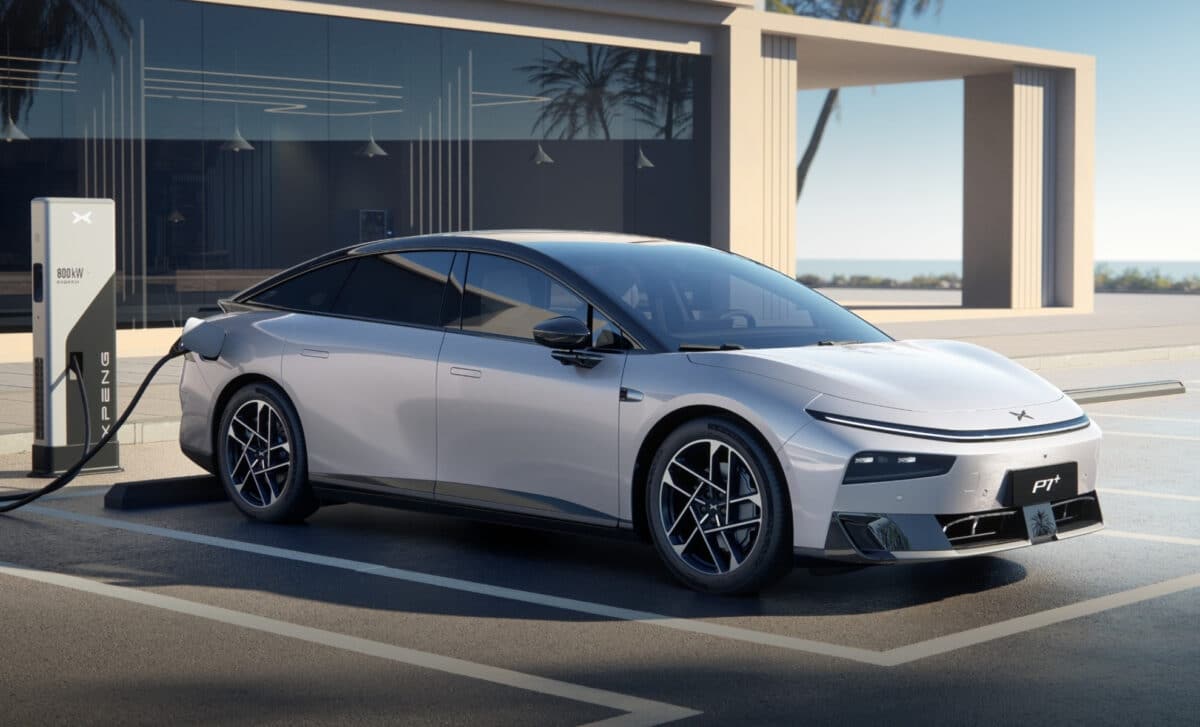
By the end of 2026, Xpeng will launch a network of ultra-fast charging stations capable of reaching up to 1,000 kW. This new infrastructure, which will be unique to the continent, aims to speed up electric vehicle (EV) adoption by dramatically reducing charging times. However, this bold move also reflects Xpeng’s broader strategy to control not just the vehicles, but the charging ecosystem as well.
Xpeng’s decision to roll out its own network of ultra-fast charging stations comes at a time when the electric vehicle market is becoming increasingly competitive. While European manufacturers are working to improve vehicle performance, the time spent at charging stations has become a key battleground. Xpeng’s new 1,000 kW stations promise to charge multiple vehicles simultaneously, a feature designed to support its current models, like the G6 and G9, which already support up to 525 kW charging speeds. However, it’s also a signal that the company is preparing for future models that could take full advantage of this technology.
A New Frontier in Charging Power
Xpeng’s upcoming ultra-fast charging network will deliver a power output that surpasses what is currently available in Europe. The majority of fast-charging stations on the continent provide between 150 and 350 kW, with a few recent installations reaching 600 kW, such as those from Ionity in Germany.
In contrast, the 1,000 kW capacity Xpeng plans to offer will be a game-changer, even though no car currently on the European market can fully exploit such high charging speeds. For now, only Xpeng’s G6 and G9 models can handle up to 451 kW and 525 kW, respectively. Despite this, the company’s plan suggests that it is preparing for a future where more powerful EVs will be able to utilize such stations.
According to Xpeng, the integration of large storage batteries into each charging station will help mitigate grid load and reduce installation costs, reports Automobile Magazine. This design will allow the stations to manage demand spikes more efficiently, with a network connection that never exceeds 100 kW. This system even opens the possibility for these stations to feed energy back into the grid when demand is low, further optimizing the infrastructure.
The Race to Expand Charging Networks
The rollout of Xpeng’s charging stations will begin in Denmark, specifically in peripheral areas like Lolland and Northern Jutland, with plans to gradually expand into other European countries starting in 2027. This strategy mirrors the company’s model in China, where it already operates over 3,000 stations. The stations will be capable of charging up to 15 vehicles at the same time, an approach designed to increase the availability of fast-charging options in areas where current infrastructure is limited.
While Xpeng is pushing forward with its own network, it’s far from the only company eyeing expansion in the electric vehicle charging market. Competitor BYD is also developing its own high-power network, with plans to have 3,000 stations up and running by the end of 2026.
Tesla, meanwhile, continues to dominate the infrastructure space with over 20,000 Superchargers across Europe, and Ionity is ramping up its own installations, reaching 600 kW power levels in Germany. As more manufacturers like Polestar integrate into existing networks, the competition is set to become even more intense.
Building an Ecosystem Around the Electric Vehicle
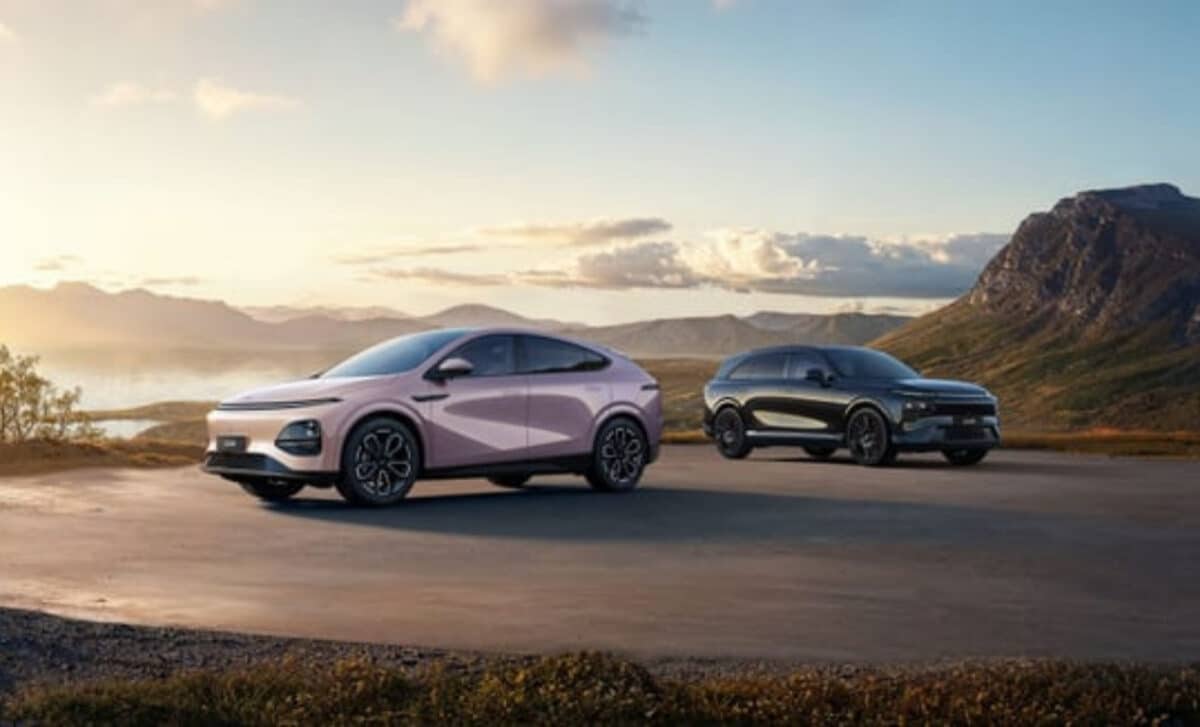
For Xpeng, its new charging network is not just about providing faster service for its customers, it’s a key part of a larger strategy to create a fully integrated ecosystem around its electric vehicles. The company already has partnerships in place with other charging networks, such as Plugsurfing, which gives its customers access to more than 940,000 charging points across 27 European countries. By investing in both vehicles and infrastructure, Xpeng aims to ensure that its customers can charge their cars quickly and easily, no matter where they are.
This ecosystem approach isn’t limited to Europe. According to Xpeng, the company is also collaborating with Volkswagen Group China to build one of the largest ultra-fast charging networks in China. Meanwhile, it has launched a unified payment service for EV charging in Hong Kong, expanding its reach into Southeast Asia. This interconnected approach to charging infrastructure could give Xpeng a significant edge as the global EV market continues to expand.