The American pickup has been getting bigger, heavier, and more expensive. Even midsize models now flirt with price tags that would have bought you a luxury sedan not long ago. Add a battery pack, and the climb becomes steeper still. So when word spreads that Ford is working on a $30,000 electric pickup, it naturally raises an eyebrow.
Not because Ford lacks EV experience. The F-150 Lightning proved it can electrify its most iconic nameplate. The real question is different: can an electric truck be built cheaply enough to feel accessible again? Ford believes the answer lies in rethinking the way it designs and builds vehicles from the ground up.
A Startup Mentality Inside a Century-Old Company
The project reportedly began as a small internal “skunkworks” initiative in Long Beach, California. What started with a single employee has grown into a team of roughly 450 people, supported by another 200 in Palo Alto. That scale alone signals ambition.
Alan Clarke, head of Ford’s Advanced Electric Vehicle Development Team, said, as reported by MotorTrend, that this effort may represent the largest platform and product shift in the company’s history. That is a bold claim for an automaker that once revolutionized industrial production.
The pickup, expected in 2027, is only the first visible outcome. Behind it sits something larger: a new development blueprint that could underpin several future models.
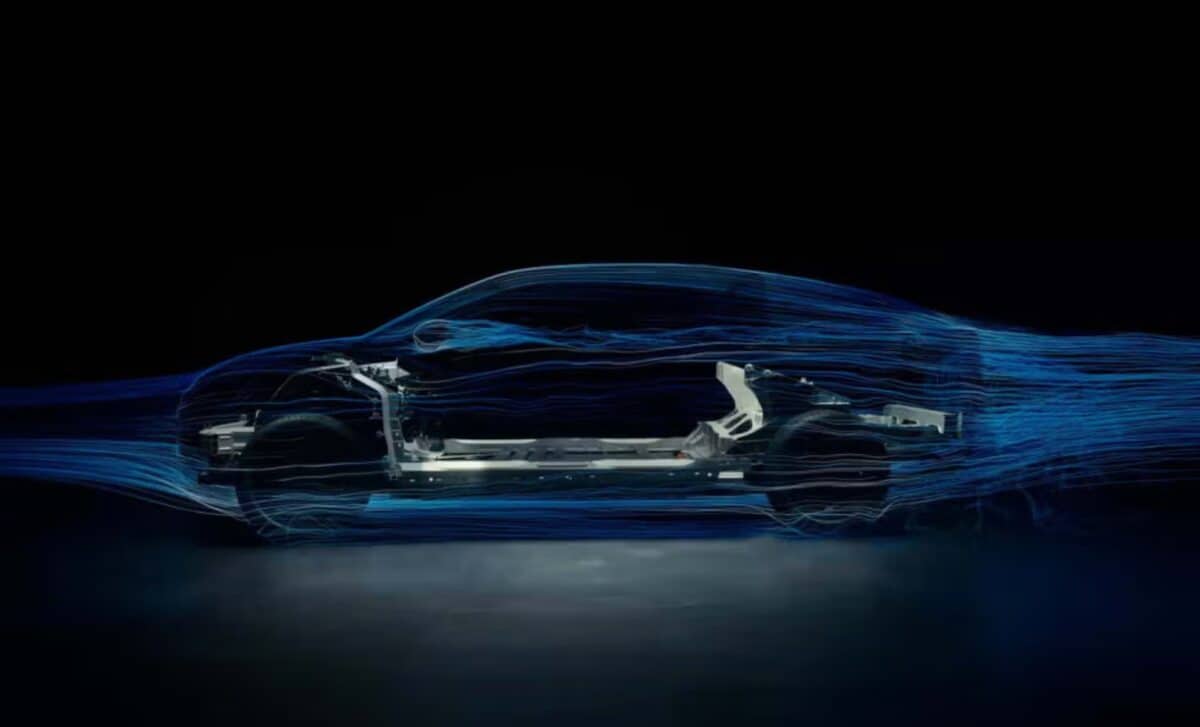
NEWS: Ford has announced that its upcoming ~$30,000 mid-size electric truck will have 48v architecture and have 15% more aerodynamic efficiency than any other pickup truck on the market today.
— Sawyer Merritt (@SawyerMerritt) February 17, 2026
EV truck info:
• LFP battery (prismatic). Structural battery, a first for Ford. LFP… pic.twitter.com/SZhZDJZYAh
The Universal Electric Vehicle Platform
At the technical core is Ford’s new Universal Electric Vehicle platform, known internally as UEV. Unlike adaptations of existing combustion platforms, this one was conceived specifically for electric models.
It is designed to support not only the midsize pickup, but also two- and three-row SUVs, a subcompact, a larger sedan, and even a van. That breadth matters. By spreading engineering costs across multiple segments, Ford improves its chances of hitting aggressive pricing targets.
Ford claims the new approach reduces parts by roughly 20 percent compared with a conventional program. It requires 25 percent fewer fasteners and 40 percent fewer workstations at the Louisville, Kentucky plant that will build the truck. The facility, which most recently produced the Ford Escape, is being retooled around this simplified production system.
Betting on LFP Chemistry
Battery chemistry often determines whether an EV is aspirational or attainable. Ford plans to use lithium iron phosphate (LFP) cells assembled at its own facility. LFP batteries are typically cheaper and more stable than nickel-based alternatives, though they offer slightly lower energy density.
Reuters has highlighted how LFP technology is becoming central to cost-focused EV strategies, particularly as manufacturers respond to competition from Chinese brands that have mastered lower-cost production. In this context, Ford’s decision feels pragmatic rather than experimental.
Range figures have not yet been detailed, but the positioning suggests balance rather than excess. This truck is unlikely to chase record-breaking mileage; it will aim for usability at a realistic price.

A Truck That Looks Like a Truck
One potential pitfall of affordable EV design is visual compromise. Aerodynamics can push designers toward softened, rounded shapes that blur identity. Clarke reassured that the new pickup will remain clearly recognizable as a truck.
There has been significant aerodynamic work, including a sculpted roofline to improve airflow over the bed. Yet Ford insists it will not resemble a “lozenge.” That choice signals awareness: pickup buyers value familiarity as much as innovation.
Interestingly, Ford expects many customers to come not from traditional truck owners, but from SUV and car buyers. The cabin is said to offer more interior room than a Toyota RAV4, a benchmark in the compact crossover segment.

More Than a Single Model
Ford also aims to integrate advanced driver-assistance systems, with a goal of introducing Level 3 autonomy in these vehicles by 2028. That timeline aligns with broader industry ambitions and reflects the growing role of software in defining value.
CEO Jim Farley has repeatedly emphasized in earnings discussions that Ford must compete on cost structure, not only heritage. The F-150 Lightning demonstrated technological credibility. This new program seeks structural efficiency.
Whether the 2027 target and the $30,000 figure ultimately align will depend on supply chains, battery costs, and regulatory incentives. Those variables remain fluid. Still, the seriousness of the industrial overhaul suggests this is not merely a headline-friendly concept.