

The acquisition, announced on March 4, includes Kanadevia’s solid-state battery technology and its proprietary dry manufacturing process. The transaction is expected to be finalized on July 1, 2026.
Solid-state batteries are considered one of the most promising developments in EV technology because they could improve safety, extend driving range, and reduce charging times. As global competition intensifies, automakers in Japan and elsewhere are working to move the technology from research labs to commercial vehicles.
For Suzuki, which launched its first mass-produced electric vehicle only recently, the purchase signals a clear effort to strengthen its position in the evolving EV market.
Technology Developed over Nearly Two Decades
Kanadevia began developing its all-solid-state lithium-ion batteries, often referred to as AS-LiB, in 2006. The company, known as a major Japanese industrial and engineering group, has continued refining the technology over the years.
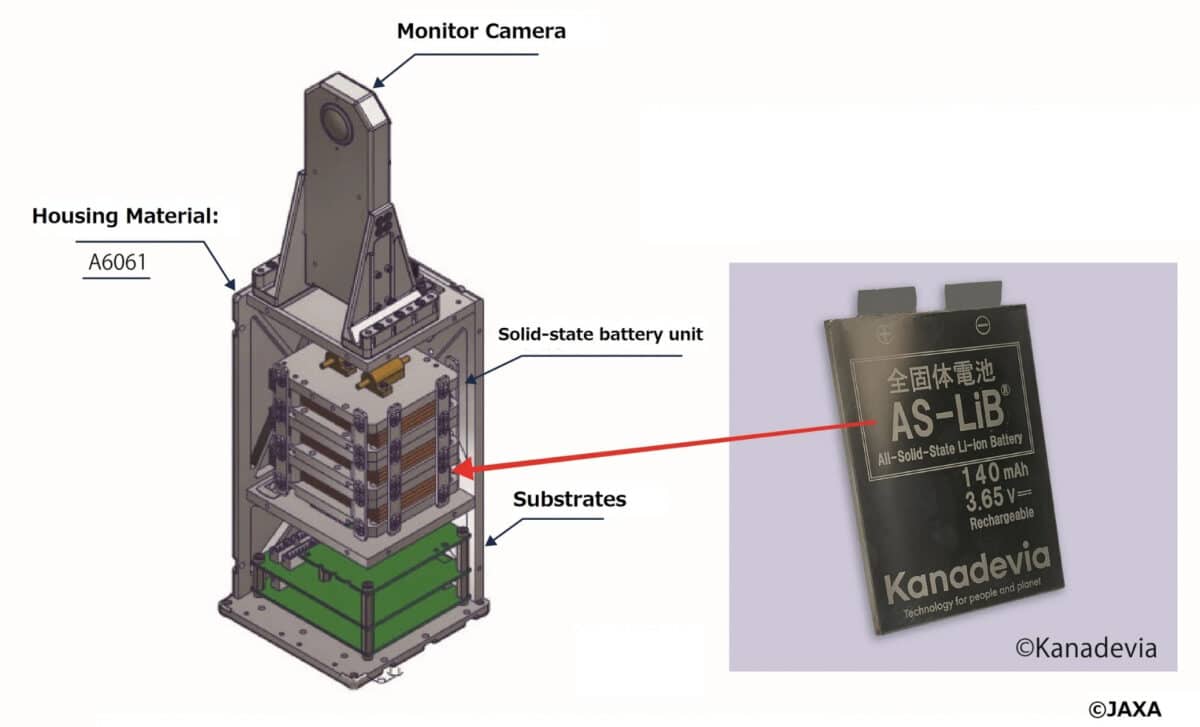
According to Electrek, the batteries have already been tested in real-world applications beyond automotive use. In February 2022, Kanadevia partnered with the Japan Aerospace Exploration Agency (JAXA) to send an all-solid-state battery to the International Space Station. The mission was described as the world’s first deployment of such a battery in space.
A camera mounted on the spacecraft relied on these batteries to capture images during the mission. One of the images reportedly shows Earth in the background, highlighting the system’s ability to function in extreme conditions.
Through the acquisition, Suzuki will gain access not only to the battery technology itself but also to Kanadevia’s specialized manufacturing process designed for producing solid-state cells.
Designed to Operate in Extreme Temperatures
Kanadevia states that its solid-state batteries can operate across a temperature range from −40°C to +120°C. This wide tolerance makes the technology suitable for demanding environments, including aerospace applications and vacuum conditions.
Safety testing has also been a key aspect of development. The batteries were subjected to nail-piercing tests and did not ignite, smoke, or explode during the trials.
Under the same conditions, conventional lithium-ion batteries typically ignite. This difference in behavior is often cited as one of the main advantages of solid-state battery systems, which replace the liquid electrolyte used in traditional batteries with a solid material.
Japanese Automakers Intensify Solid-State Battery Development
Suzuki’s decision to acquire the battery business places it alongside several other Japanese manufacturers pursuing the same technology. Toyota, Honda, and Nissan have all announced plans to develop vehicles powered by solid-state batteries.
Toyota has already revealed a prototype solid-state battery pack that could deliver a driving range of up to 1,200 kilometers with charging times of under 10 minutes. These claims remain part of ongoing development efforts across the industry.
Suzuki itself entered the electric vehicle market in late 2025 with the e-Vitara, its first mass-produced EV. The model shares its design base with the Toyota Urban Cruiser EV.
The broader race to commercialize solid-state batteries is not limited to Japan. Electrek reports that companies in China, Germany, Europe, and the United States have also announced advances as the technology gradually moves closer to real-world deployment.
At the same time, other battery innovations continue to emerge. During its Disruptive Technology event, Chinese manufacturer BYD introduced the LFP Blade Battery 2.0 and a Flash Charging system that the company says can enable more than 1,000 kilometers of range under the CLTC test cycle with charging times of around 10 minutes.