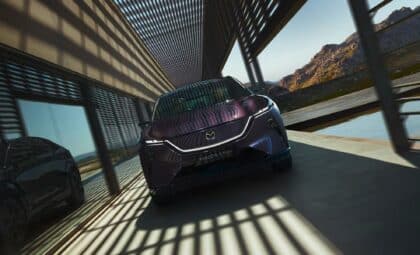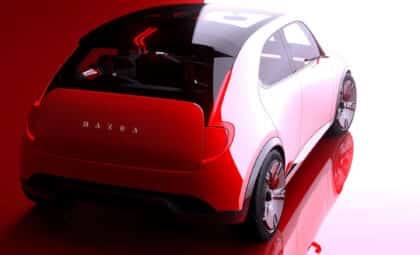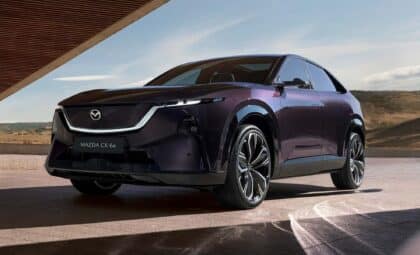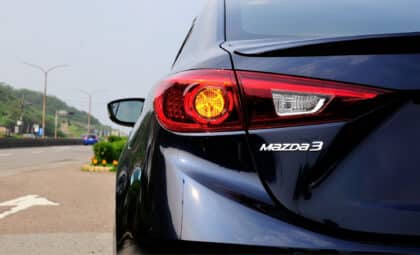

Despite a 3.3% decline in U.S. sales last year, Mazda executives remain optimistic about the company’s trajectory. Mazda Motor America CEO Jim Donnelly believes the brand can still surpass the 400,000-unit threshold for the third consecutive year while positioning itself for future growth.
The strategy reflects Mazda’s historically unconventional approach to powertrain development. While many automakers are prioritizing fully electric vehicles, Mazda is emphasizing a mix of hybrid technologies and alternative solutions, continuing a long-standing pattern of pursuing its own technological path.
Mazda Expands Its Hybrid Strategy with the New CX-5
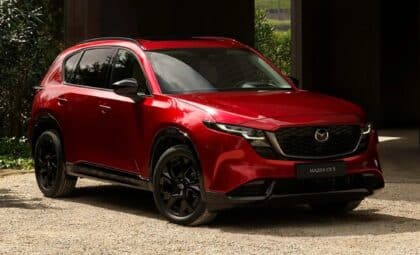
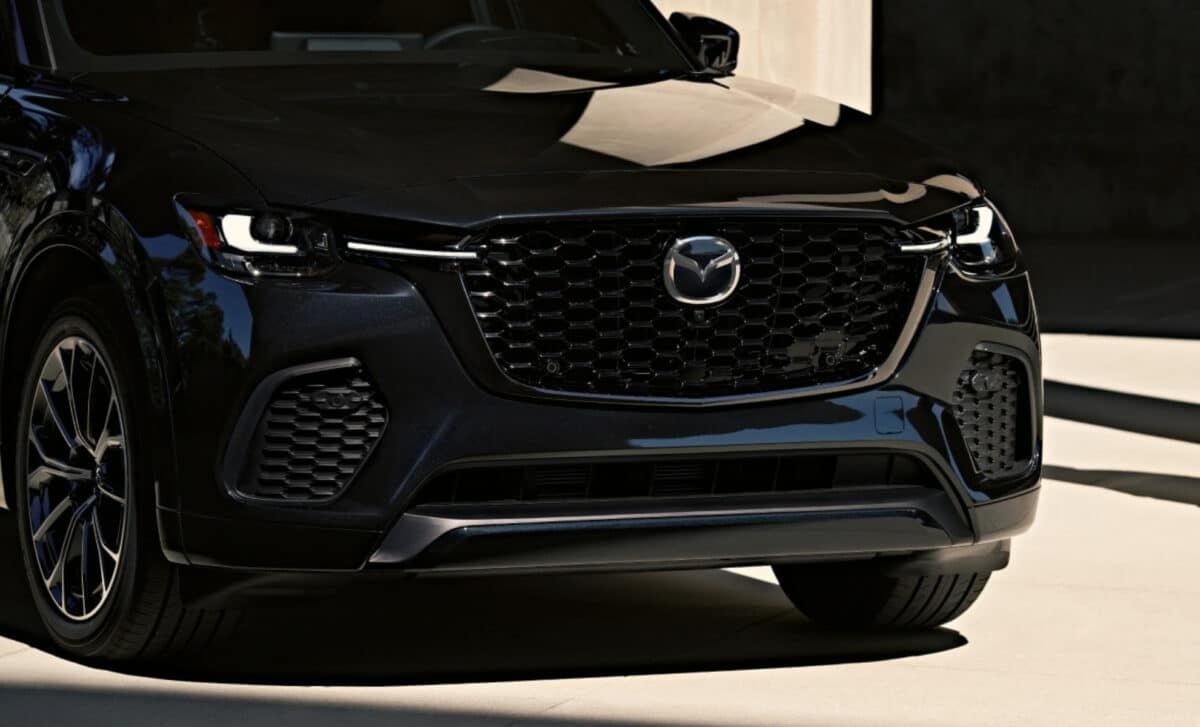
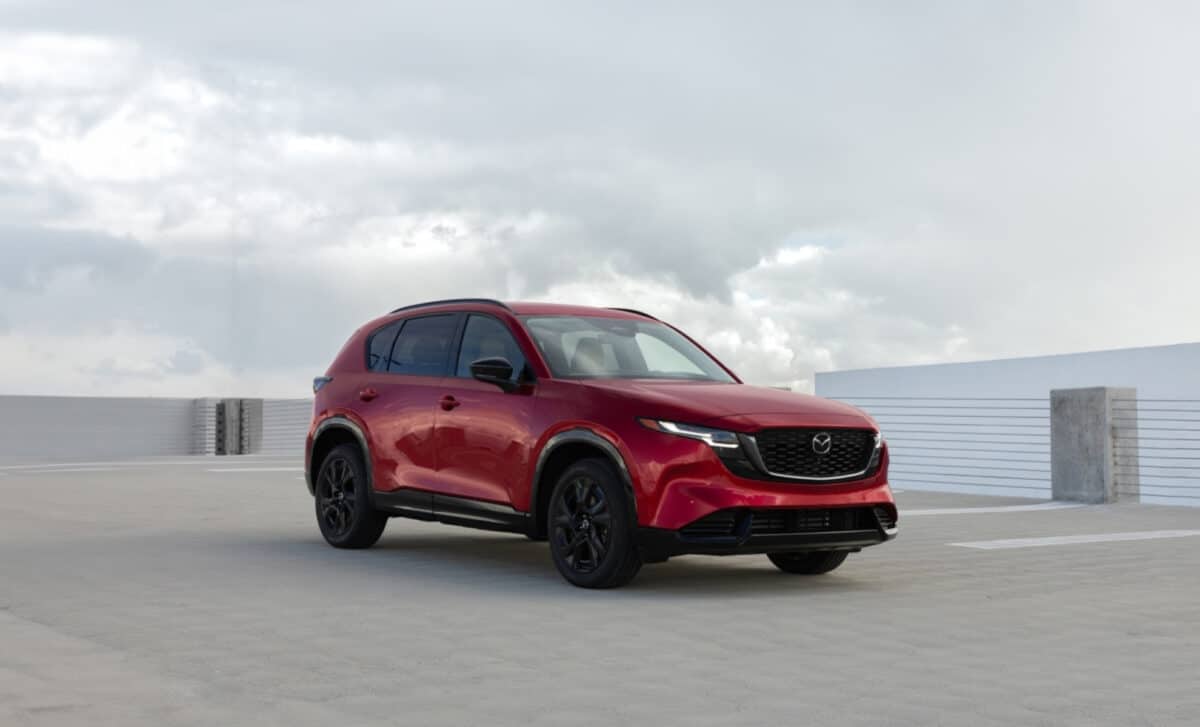
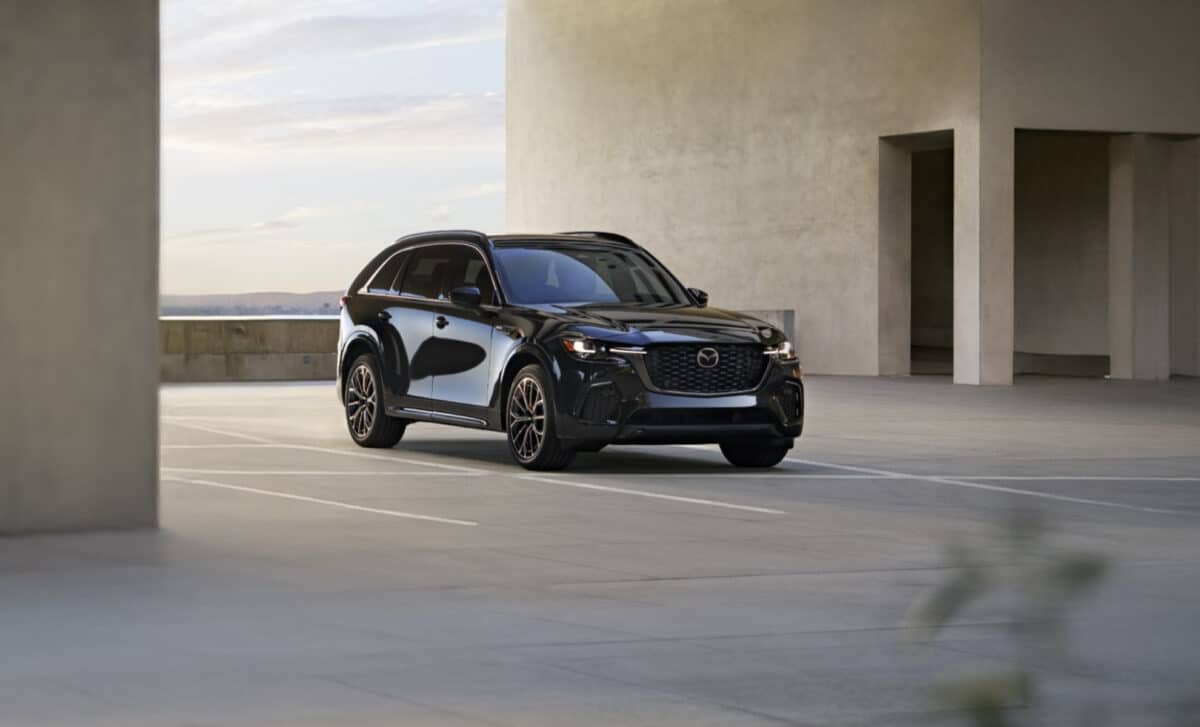
The centerpiece of Mazda’s next phase is the third-generation CX-5 crossover, which will introduce the company’s first hybrid drivetrain developed entirely in-house. This new system marks a significant step for the Hiroshima-based manufacturer as it strengthens its presence in the hybrid segment.
According to Autoblog, the new CX-5 hybrid will be part of a broader electrification push that includes conventional hybrids and plug-in hybrids across several models. The flagship CX-90 already offers a plug-in hybrid configuration, while additional electrified variants are expected within the next 24 to 36 months, Donnelly said during an interview with the publication.
Mazda’s internal hybrid system, called SkyActiv-Z, is designed to deliver both improved fuel efficiency and driving performance. Donnelly described the concept as a “driver’s hybrid,” explaining that it aims to preserve the brand’s driving characteristics while improving efficiency compared with existing gasoline SkyActiv engines.
A Cautious Approach to Full Electric Vehicles
Mazda’s strategy toward electrification has been deliberately gradual. Donnelly acknowledged that the company has adopted what he called an “intentional follower mindset” when it comes to electric vehicles.
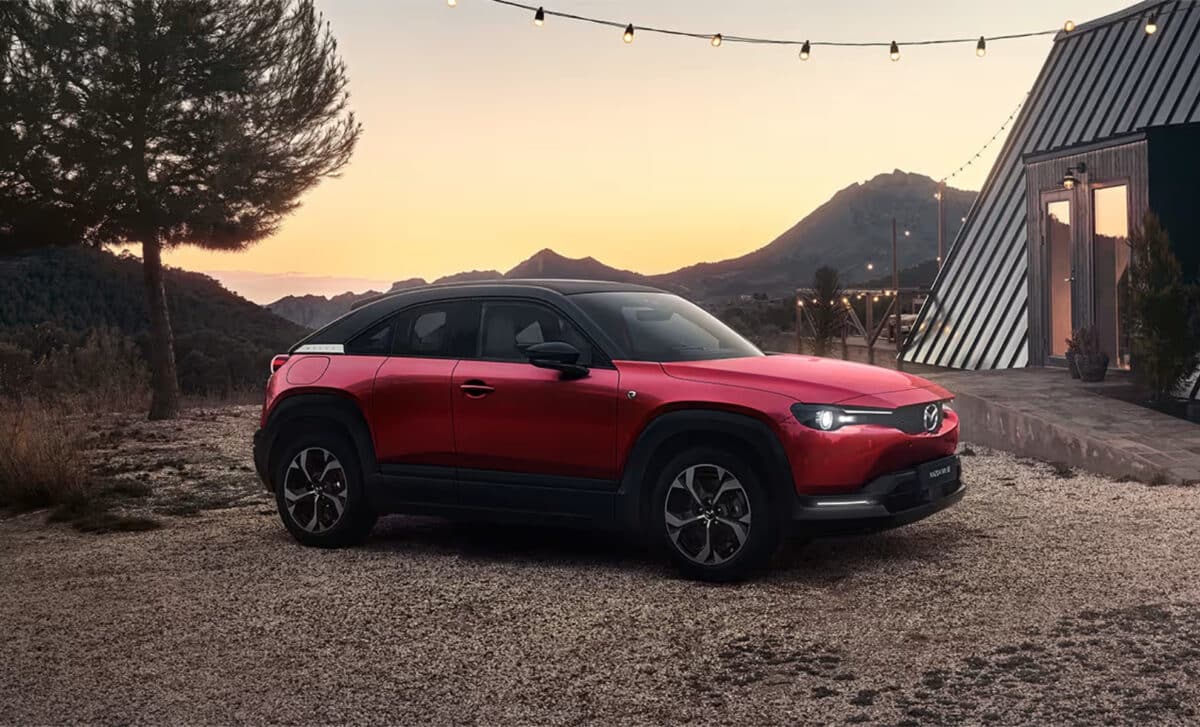
The automaker’s first fully electric model, the MX-30, struggled to gain traction in the U.S. market and was eventually withdrawn. A longer-range version had initially been expected earlier but is now reportedly delayed until 2029, based on a January report from the Japanese news service Nikkei.
Donnelly did not confirm the timeline shift directly, though he did not dispute it either. Instead, he emphasized that Mazda believes its current mix of powertrains better aligns with current U.S. market conditions.
The company’s multi-solution approach already includes several electrified technologies. One example is the twin-motor hybrid system developed by Toyota and used in the CX-50. Mazda also offers plug-in hybrid systems in the CX-70 and CX-90, expanding its electrified portfolio while maintaining multiple propulsion options.
The Rotary Engine Remains Part of Mazda’s Future
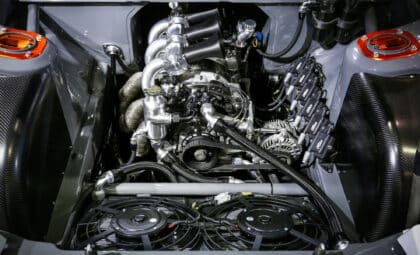
Even as Mazda invests in hybrid technology, the company has not abandoned one of its most distinctive engineering signatures: the rotary engine.
The automaker recently revived the technology as a range extender in an electric version of the MX-30 currently sold in Japan. The system uses the compact rotary engine to generate electricity and extend driving range, rather than directly powering the wheels.
Donnelly indicated that development work on the rotary engine continues. He described the technology as an integral part of Mazda’s heritage and suggested it could remain part of the company’s long-term plans, though he stopped short of announcing specific future products.
Mazda also hinted at possible new applications during the Japan Mobility Show in October, where it unveiled the Vision X-Coupe Concept. The concept features a rotary-powered range-extended drivetrain combined with a technology called Mobile Carbon Capture, which Mazda claims can capture CO₂ from the atmosphere while driving.
At the event, the company plans to test this system in real-world conditions by installing it on a Mazda Spirit Racing car competing in the Super Taikyu endurance racing series, a demanding environment intended to evaluate the technology’s potential outside the auto show stage.