
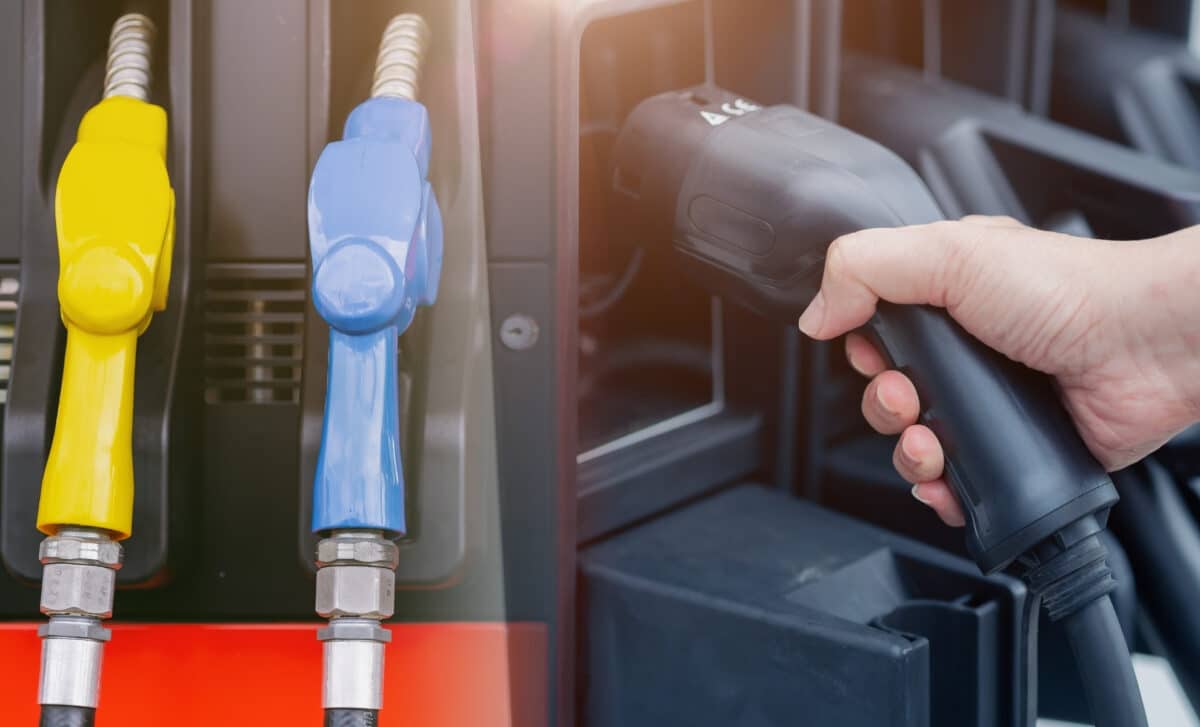
The debate comes as electric vehicles account for roughly 10% of new car sales in the US, while policymakers search for ways to sustain the Highway Trust Fund. At the same time, critics argue that the proposed fees risk slowing adoption at a moment when electrification is gaining traction.
The issue is not just about revenue, but about how fairly road usage is measured and taxed. Flat fees, unlike fuel taxes, do not vary with mileage, raising questions about equity among drivers.
Flat Fees Would Exceed Typical Gas Tax Contributions
According to Electrek, the federal gas tax has remained at 18.4 cents per gallon since 1993. Based on an average of 11,484 miles driven annually and fuel efficiency of 22.3 miles per gallon, a typical gasoline vehicle owner pays about $95 per year in federal fuel taxes.
By contrast, a proposal introduced by House Transportation and Infrastructure Committee Chairman Sam Graves would set an annual EV fee at $200. An earlier version suggested $250. This would place EV owners at more than double the contribution of the average gas driver.
Electrek reports that a $200 fee is equivalent to taxing roughly 1,087 gallons of gasoline, which corresponds to more than 100,000 miles of driving in an average car. In practice, neither EV nor gasoline vehicle owners reach that level of annual mileage.

State-Level Policies Are Already Increasing Costs
The federal proposal adds to an existing patchwork of state-level fees. According to data cited from the Atlas EV Hub, 36 states already impose EV registration fees that result in higher annual payments for EV drivers than those made by gasoline vehicle owners through fuel taxes.
Some states have adopted particularly high charges. Texas applies a $400 initial registration fee along with $200 annually. New Jersey approved a $250 fee that will rise by $10 each year until reaching $290 in 2028, meaning more than $1,000 in upfront costs for new EV buyers. Georgia charges $210.87 annually, while the average gasoline driver in the state pays about $152 in fuel taxes.
Pennsylvania introduced a $250 EV fee in 2026, and Minnesota recently doubled its EV-related surcharges. The trend is expanding rather than stabilizing.
Alternatives and Broader Policy Context
Some states are experimenting with different models. Oregon’s OReGO program charges 2.3 cents per mile, directly linking fees to road usage. Utah and Hawaii have adopted similar per-mile systems.
The broader funding challenge stems from the stagnation of the federal gas tax, which has not increased in 32 years and has lost significant purchasing power due to inflation. A one-cent increase in the gas tax would generate twice the revenue of the proposed $200 EV fee.
The policy debate unfolds as EV adoption in the US remains lower than in other regions. Global EV sales reached 25% in 2025, compared to about 10% in the United States, while countries such as Vietnam and regions like the European Union report higher shares.
At the same time, federal incentives have been reduced. The $7,500 EV tax credit ended in September 2025, and charging infrastructure incentives are being phased out. Against this backdrop, the introduction of additional annual fees highlights ongoing tensions in how the transition to electric mobility is managed in the United States.