
The situation follows a broader shift within the company, which recently ended remote work arrangements and required employees to return to the office five days a week under the leadership of Antonio Filosa. This decision has increased pressure on already crowded parking facilities and brought renewed attention to internal policies that had previously gone largely unnoticed.
According to reporting relayed by the Wall Street Journal, the enforcement of these rules has surprised many employees. What might have once been an informal guideline has now taken on a more rigid and visible form, with tangible consequences for those who do not comply.
A Parking Hierarchy Based on Brand Loyalty
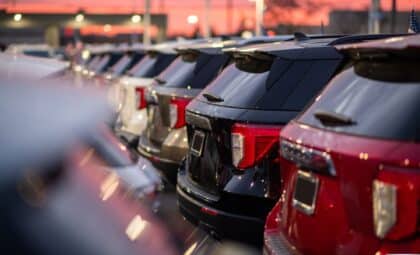
At the core of the issue is a strict distinction between vehicles produced by Stellantis brands, such as Jeep, Ram, Dodge, and Chrysler, and those made by competitors. The most convenient parking spots, particularly those near building entrances or in covered areas, are reserved for employees driving company-affiliated vehicles.
Those arriving in cars from other manufacturers, including Tesla, Toyota, or Ford, are directed to more distant parking zones. According to the Automobile Magazine, this often means longer walks and exposure to weather conditions, a detail that might seem minor at first glance but has become a daily frustration for some workers.
The policy is framed internally as a matter of corporate image. Employees driving Stellantis vehicles are effectively given preferential treatment, reinforcing a visible alignment between staff and the company’s products.

Enforcement Sparks Confusion and Criticism
While the policy itself is not entirely new within Detroit’s automotive culture, its strict enforcement has triggered criticism. Some employees interpret the fines as indirect pressure to purchase Stellantis vehicles, especially at a time when new car prices have risen significantly.
There have also been cases that highlight inconsistencies in enforcement. Some employees received penalties despite driving models from defunct brands historically linked to the group, such as the Eagle Talon. These incidents have led to internal remarks questioning whether security teams fully recognize the company’s brand history.
Stellantis acknowledged these issues, stating that employees who believe they were penalized in error can contact security for review. The company also admitted that identifying older or discontinued brands can sometimes be challenging for staff responsible for enforcement.
Company Response and Escalating Tensions
Faced with growing dissatisfaction, Stellantis has defended its approach by presenting preferential parking as a benefit reserved for employees who support its brands. This position, however, comes at a sensitive time marked by layoffs and broader social tensions within the company.
Enforcement measures can escalate for repeat offenders. Security teams have the authority to immobilize vehicles using wheel clamps, requiring employees to contact their managers to resolve the situation, an added layer of inconvenience and potential embarrassment.