
The Atlas has played a central role in Volkswagen’s American strategy, with SUVs accounting for 80% of its U.S. sales as of 2025. The outgoing model had been on the market for nearly a decade, making a full redesign increasingly necessary in a crowded and evolving category.
The new version builds on the same foundations while introducing visible refinements and upgraded features intended to keep pace with rivals in the large SUV market.
Exterior Design Aligned with Global Models
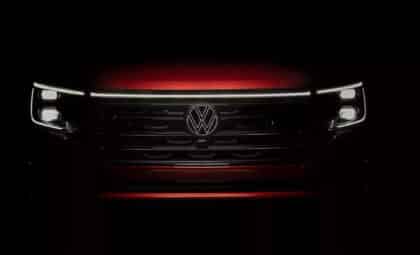
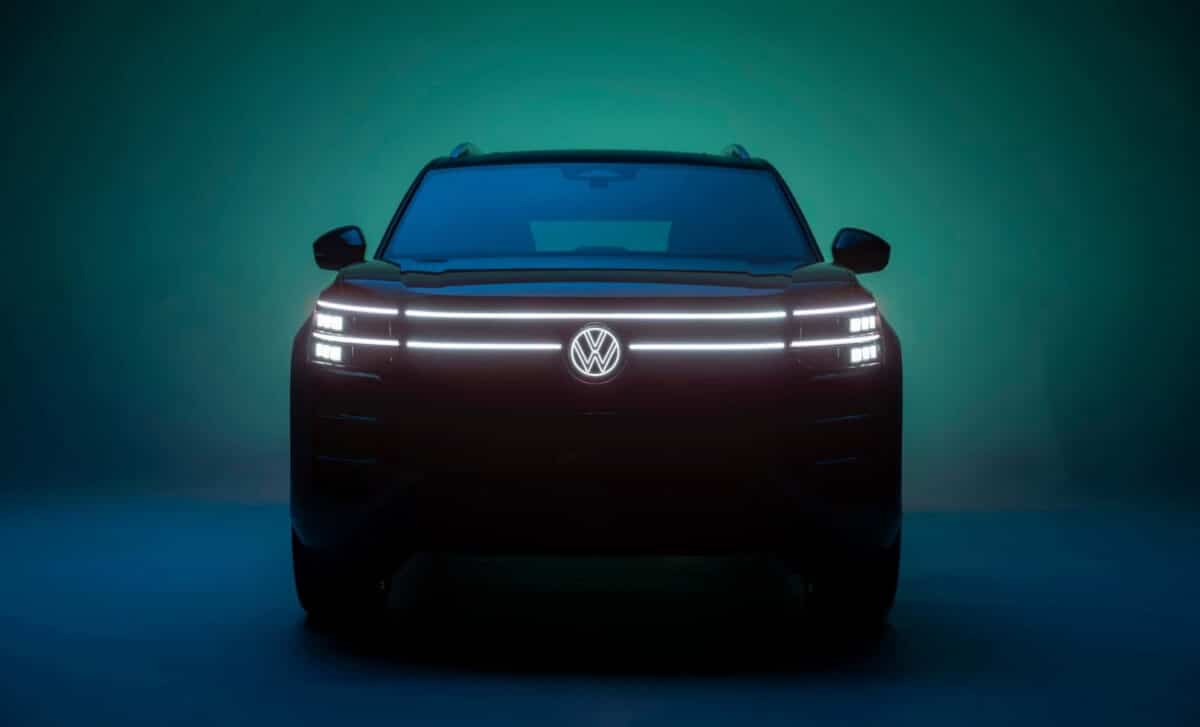
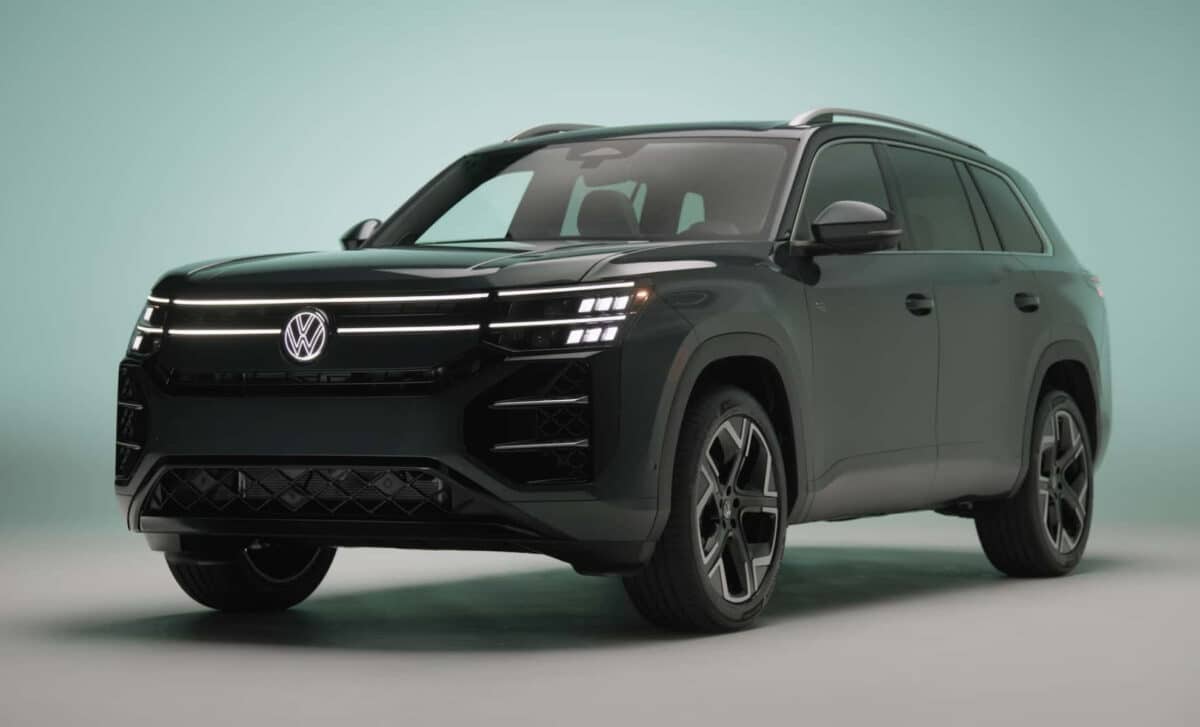
The 2027 Atlas adopts a design closely related to the Teramont Pro sold in China. According to Motor1, both vehicles share nearly identical exterior elements, including the front fascia and rear light bar.
Some distinctions remain. The Atlas retains traditional physical door handles, unlike the electronic ones used on the Teramont. The overall shape stays consistent with the previous generation, though the model now rides on an updated MQB platform used across several Volkswagen Group vehicles.
Volkswagen is also introducing three new exterior colors: Sacramento Green, Blackberry, and Sandstone. The Sacramento Green variant was previewed in person and stands out as a notable addition to the palette.
A Redesigned Cabin with Expanded Technology
Inside, the changes are more substantial. The dashboard and front cabin have been fully reworked, with a strong emphasis on digital interfaces and upgraded materials.
A 12.9-inch touchscreen comes standard, while higher trims offer a 15-inch version. This system is shared with other Volkswagen models such as the Tiguan and includes the brand’s haptic touch sliders for volume and climate controls, features that have drawn mixed reactions.
Volkswagen has kept a physical control element in the form of a multifunction volume knob located on the center console. This knob also adjusts drive modes and ambient lighting settings.
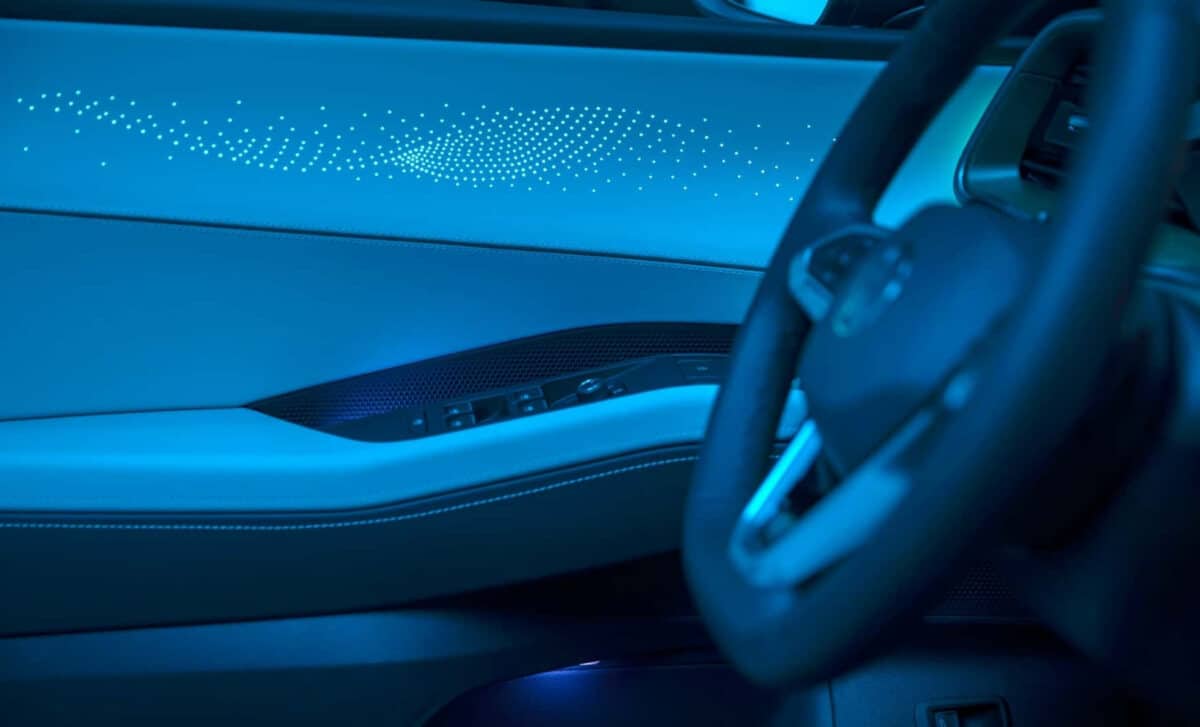
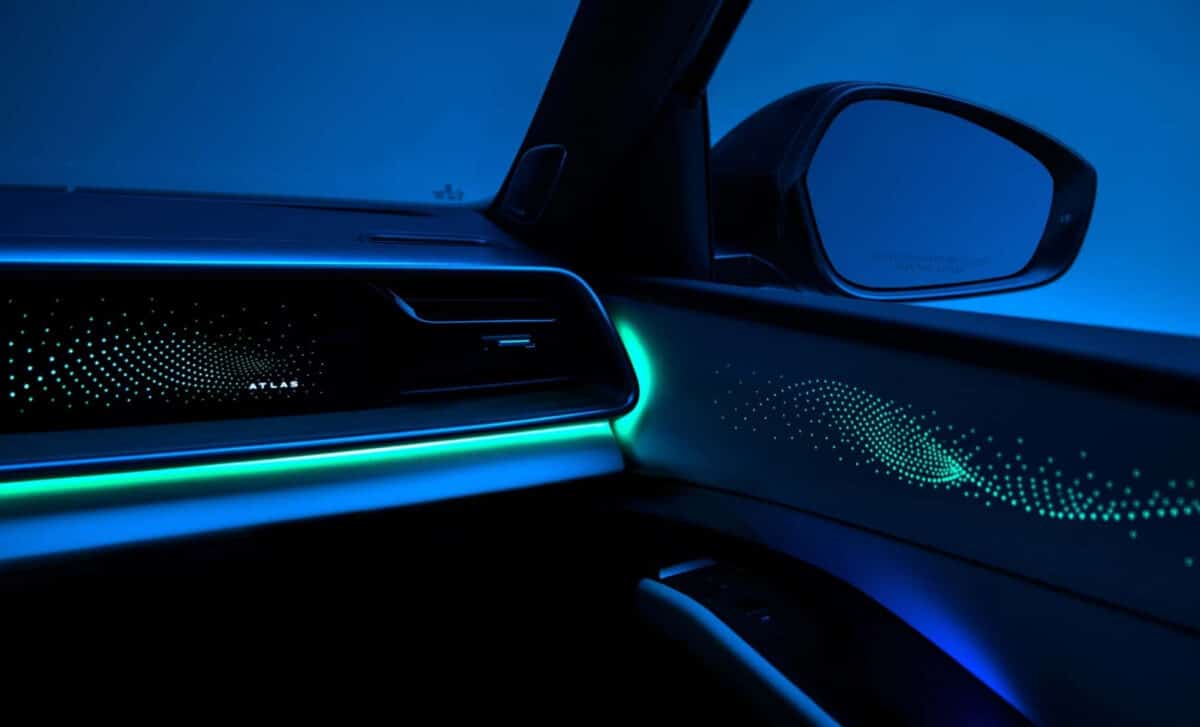
Material quality has improved, with available real wood trim and Nappa leather offered in two color options. The interior also features LED-lit design elements on the door panels and passenger-side dashboard, integrated into the ambient lighting system. Still, piano black surfaces remain present and prone to visible smudging.
Additional features include dual wireless MagSafe charging pads, USB-C ports across all three rows, and available heated and ventilated seats in both the first and second rows. Higher trims add massaging seats for front passengers.
Powertrain Remains Focused on a Four-Cylinder Engine
Under the hood, the new Atlas uses an updated 2.0-liter four-cylinder engine, also found in the Tiguan. In this application, it produces 282 horsepower and 253 pound-feet of torque.
The base configuration comes with front-wheel drive, while Volkswagen’s 4Motion all-wheel-drive system is available across the range. No alternative powertrains, including hybrid options, have been announced for this generation.
Pricing has not yet been confirmed, though estimates place the starting point in the mid-$40,000 range, with higher trims approaching $55,000. The model is expected to arrive in dealerships by fall.
The updated Atlas enters a segment where nearly every major automaker now offers a three-row crossover. While the redesign addresses aging elements of the previous generation, some aspects, such as the absence of electrification and the continued reliance on touch-based controls, may influence how it is received.