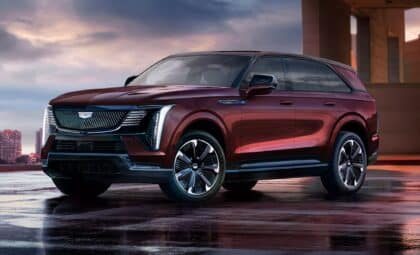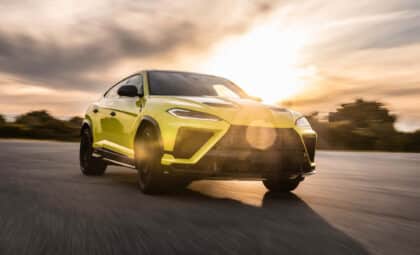
The segment, often referred to as EREV, is not entirely new. Early examples such as the BMW i3 REx and Fisker Karma introduced the concept years ago. Yet, according to InsideEVs, the technology is now receiving renewed attention as manufacturers adapt to a market less receptive to fully electric vehicles than initially anticipated.
At the same time, the fading impact of the $7,500 federal tax credit is reshaping purchasing decisions. In this context, EREVs are emerging as a transitional solution, offering electric propulsion without fully depending on charging infrastructure.
A New Wave of Pickups and SUVs Built Around Extended-Range Systems
Several major manufacturers are preparing EREV models for launch between 2026 and the end of the decade, with pickups and large SUVs leading the charge. Stellantis, for instance, is advancing two key vehicles based on the same architecture.
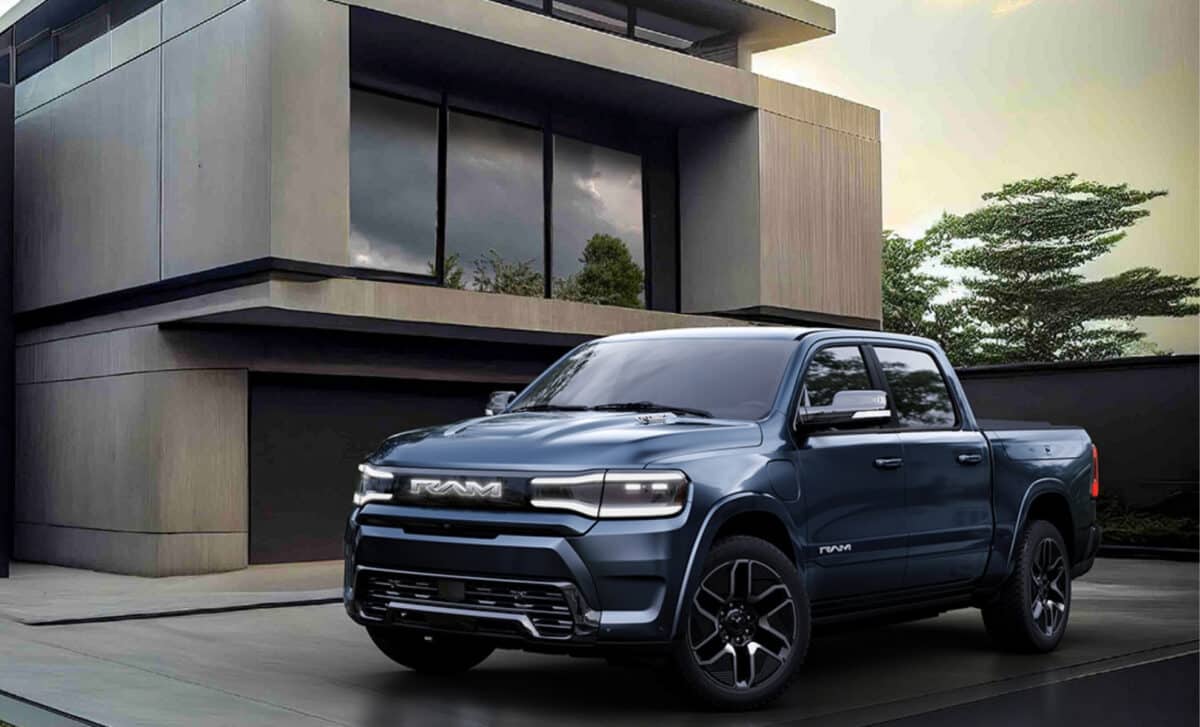
According to InsideEVs, the Ram 1500 REV will enter production in the second half of 2026 as a 2027 model, following delays and a strategic shift away from a fully electric version. The truck will feature a 92 kWh battery paired with dual electric motors delivering 647 horsepower and 610 lb-ft of torque. Its electric range is estimated at 145 miles, while the addition of a 3.6-liter Pentastar V-6 generator extends total range to 690 miles. Fast charging at up to 145 kW can add roughly 50 miles in 10 minutes.
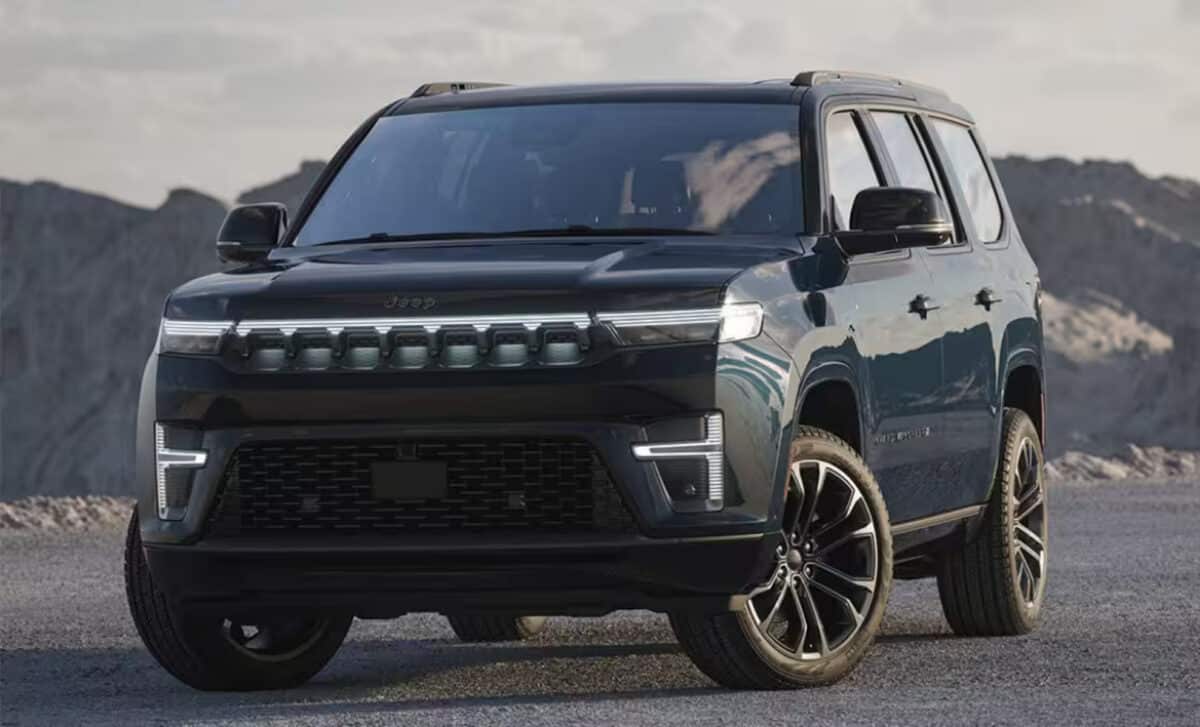
A similar configuration will power the Jeep Grand Wagoneer EREV, which Stellantis describes as “America’s first range-extended electric vehicle.” It shares the same battery capacity and engine, producing 647 horsepower and accelerating from 0 to 60 mph in five seconds. The total range is expected to exceed 500 miles, though its electric-only range has not been disclosed.
Scout Motors is also entering the segment with its Terra pickup and Traveler SUV, scheduled for production in South Carolina by the end of next year. Their EREV versions will use a roughly 63 kWh lithium-iron phosphate battery, delivering about 150 miles of electric range. A rear-mounted four-cylinder engine will extend total range to around 500 miles. Approximately 85% of reservation holders have chosen the EREV variants, highlighting strong early demand.
Hyundai, Kia and Genesis Expand the Concept Across Multiple Segments
South Korean automakers are developing their own interpretation of extended-range systems, targeting both mainstream and premium segments. Hyundai plans to introduce its first EREV models in the United States by late 2026, with sales beginning in 2027.
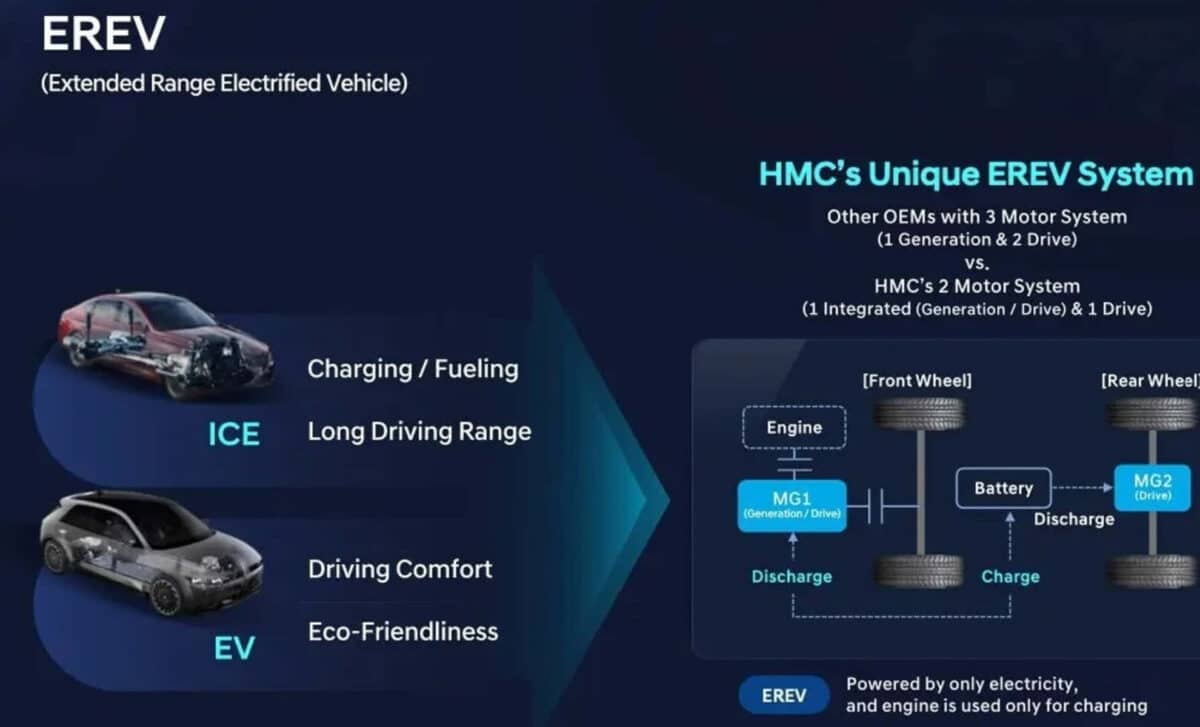
According to statements from Hyundai Motor CEO Jae Hoon Chang, the system uses two motors and operates solely on electric propulsion, with the gasoline engine functioning only as a generator. The front unit, MG1, can act both as a generator and a drive source, while the rear MG2 relies entirely on battery power. The company is targeting a total range of more than 560 miles.
Genesis will adopt the same architecture for a more upscale SUV, sharing technical foundations but positioned at a higher price point. Combined annual production for Hyundai and Genesis EREVs is expected to reach 80,000 units in the United States.
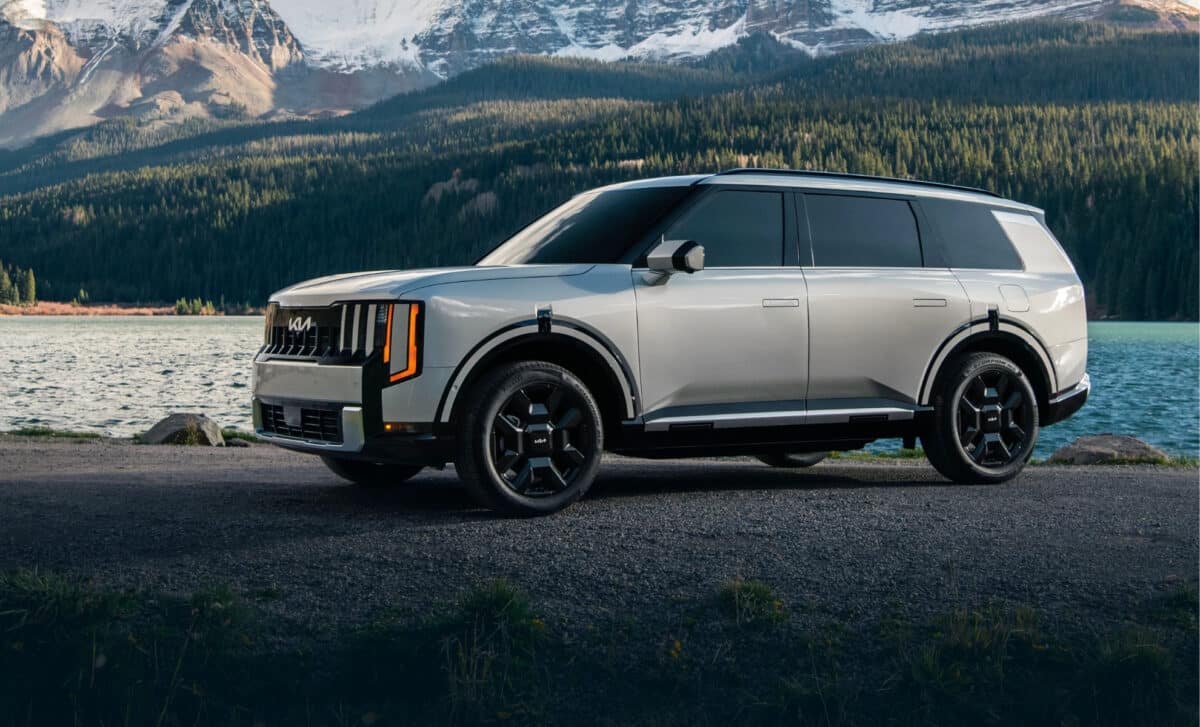
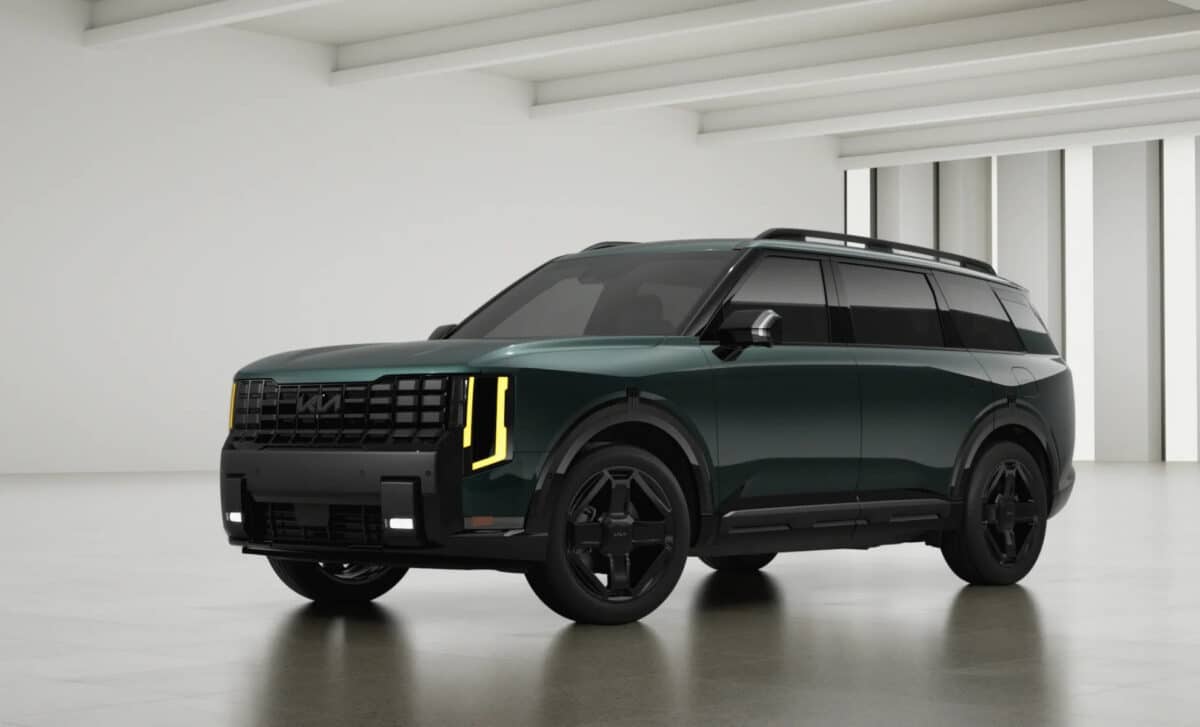
Kia, for its part, is planning two EREV models later in the decade. During its Investor Day on April 9, the automaker confirmed that the Telluride will receive an extended-range version in 2029. A pickup truck, marking Kia’s entry into the U.S. truck market, will also offer both EREV and conventional hybrid configurations. The system will be based on a 2.5-liter gasoline engine already planned for next-generation hybrids.
Legacy Automakers Revisit Electrification Strategies With Hybrid Solutions
Other manufacturers are re-evaluating their electrification roadmaps, often pivoting from fully electric platforms toward extended-range or hybrid alternatives. Ford provides a notable example.
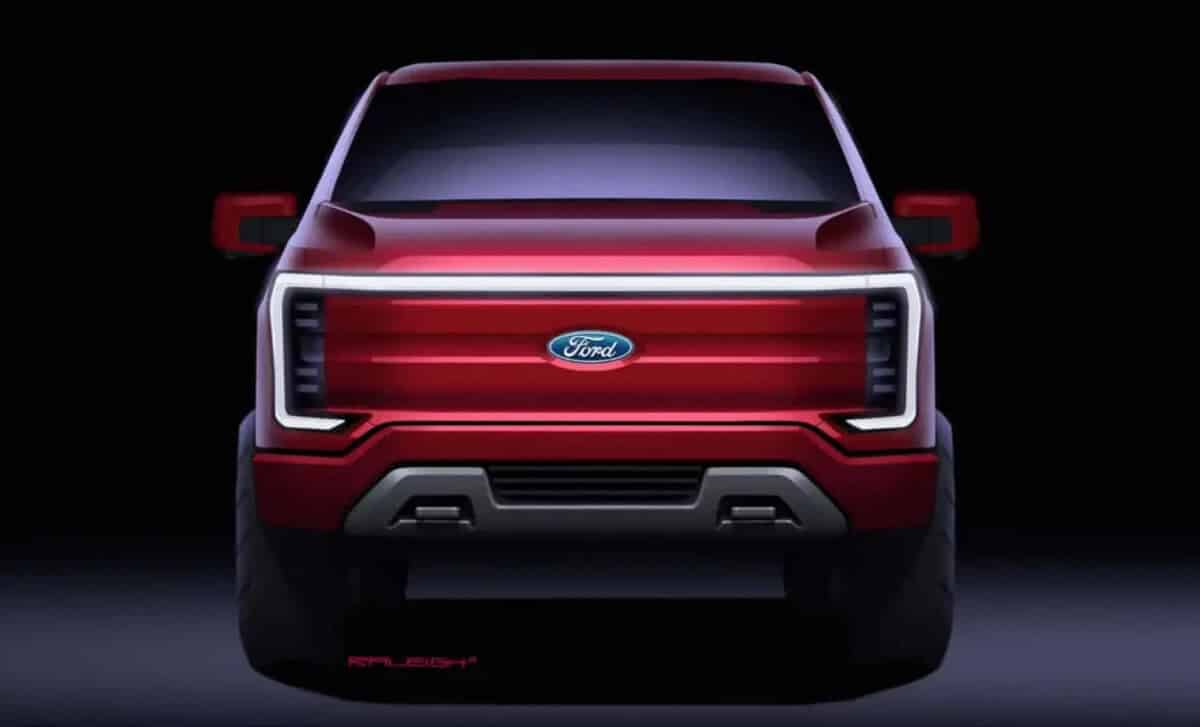
The all-electric F-150 Lightning, despite being the best-selling electric pickup for much of its lifecycle, recorded just over 30,000 sales in 2024, while the hybrid version sold roughly twice as many units. Ford has canceled its planned successor, known as Project T3, and is instead developing an extended-range version expected to exceed 700 miles of total range. The new model is also intended to improve towing performance over long distances.
Additional developments illustrate the diversity of approaches within this broader category. Nissan’s upcoming Rogue e-Power uses a series hybrid system in which a 1.5-liter turbocharged engine charges a small battery powering the wheels, achieving over 40 mpg. Volvo is preparing next-generation plug-in hybrids with around 100 miles of electric range, while still allowing the engine to drive the wheels directly at higher speeds.
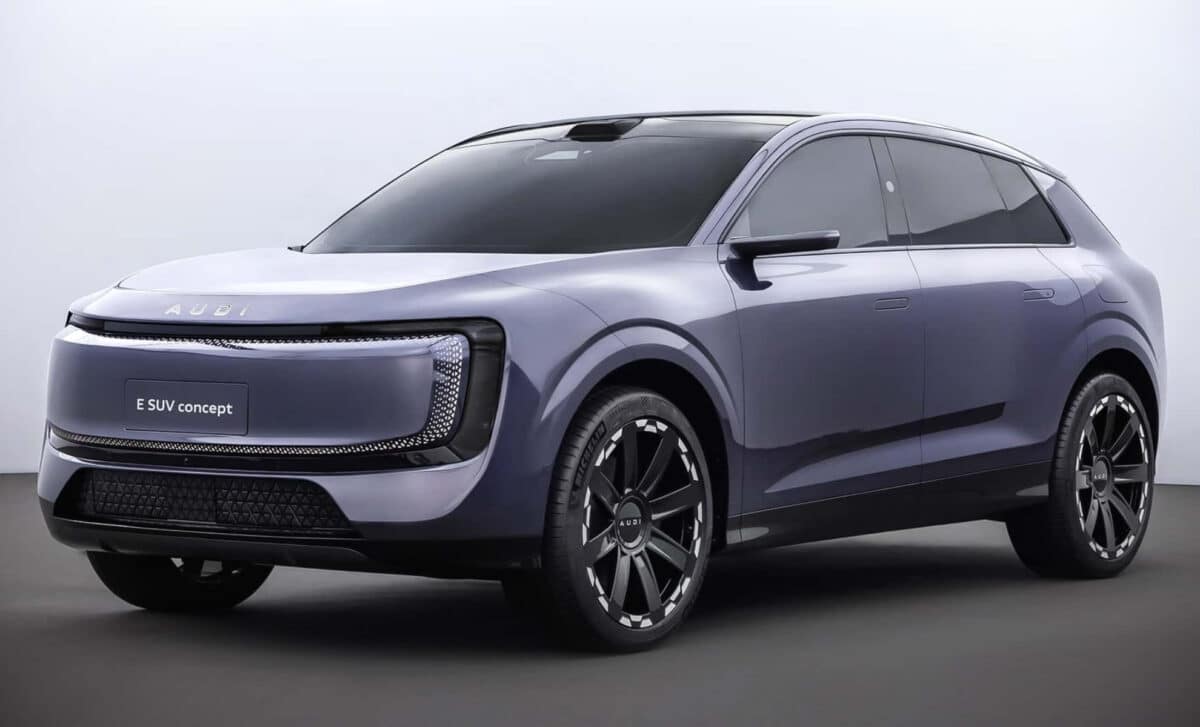
Meanwhile, unconfirmed projects from BMW, Audi and Lotus suggest that extended-range technology could expand into luxury segments. These include potential EREV versions of the BMW X5 and 7-Series, an Audi SUV linked to the Scout platform, and a plug-in hybrid Lotus Eletre already planned for China with a 70 kWh battery and a combined output of 982 horsepower.
Across the industry, these developments point to a growing focus on flexibility. Rather than relying solely on battery-electric vehicles, automakers are increasingly turning to extended-range systems as a way to bridge the gap between infrastructure limitations and evolving consumer expectations.