
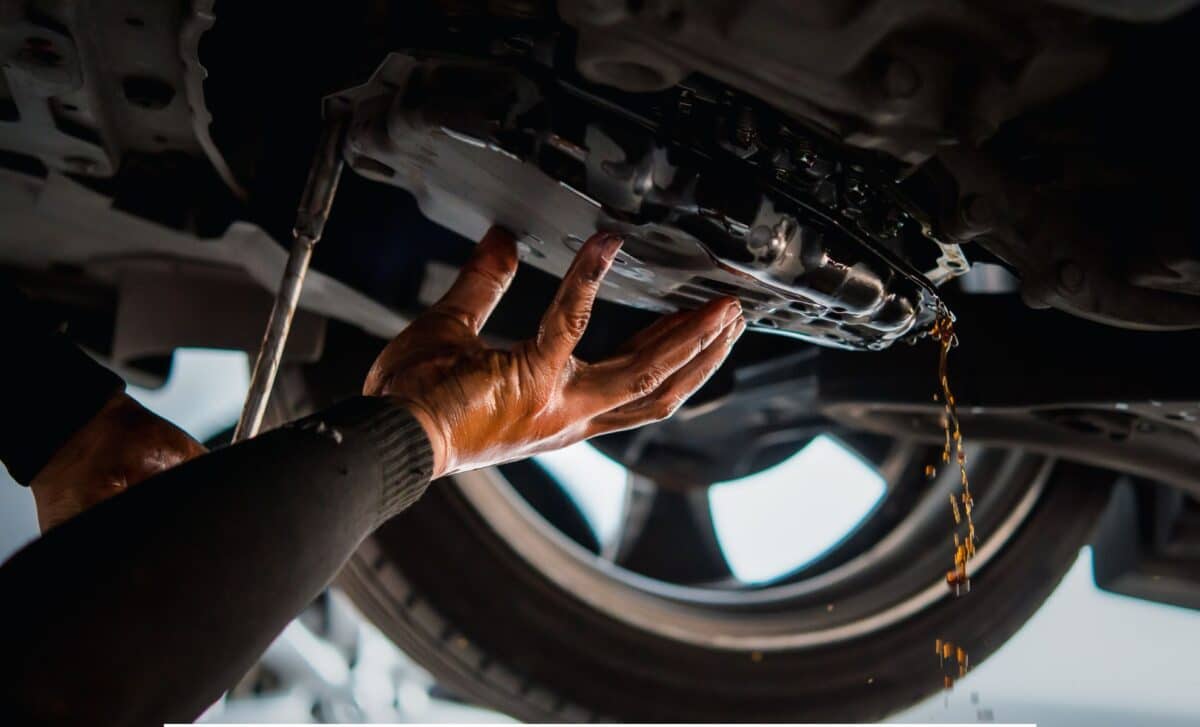
Automatic transmission fluid, or ATF, can last 60,000 to 100,000 miles before needing a flush, depending on the vehicle, driving conditions, and other factors. That longer service life is part of the problem: compared with engine oil, ATF is easier to forget. All automatic transmissions need fluid to operate smoothly and protect internal parts from early damage.
That includes continuously variable transmissions, dual-clutch transmissions, and conventional automatic gearboxes, even though the exact fluid required is not always the same. Modern vehicles have also made routine checks less obvious. Some cars no longer have a transmission dipstick, and for vehicles past 60,000 miles without one, the safest step is to have the fluid inspected by a dealership or a trusted garage.
Red, Dark Red, Or Slightly Brown Fluid Usually Points To Normal Condition
For vehicles with a transmission dipstick, the check begins with the car parked and the engine turned off. The hood should be opened, and a lint-free rag should be used to wipe the dipstick clean before it is fully reinserted into the filler neck and pulled out again.
Three things matter at that point: the fluid level, the color, and the smell. The level should fall within the HOT or COLD markings on the dipstick. The fluid itself should appear bright red, dark red, or slightly brown.
Smell also matters, even if it is an easy detail to skip. Healthy ATF should have a mildly sweet, oily petroleum scent. If the color remains in the red-to-brown range and the odor is normal, the transmission fluid is generally in acceptable condition.
In that case, the next step is not automatically a flush. The level should be checked and topped up only with the correct fluid. That distinction matters because not all transmission fluids are interchangeable. Dual-clutch transmissions require specific DCT fluid, while CVT fluid is different from ordinary ATF. The owner’s manual is the reference point for choosing the correct type.
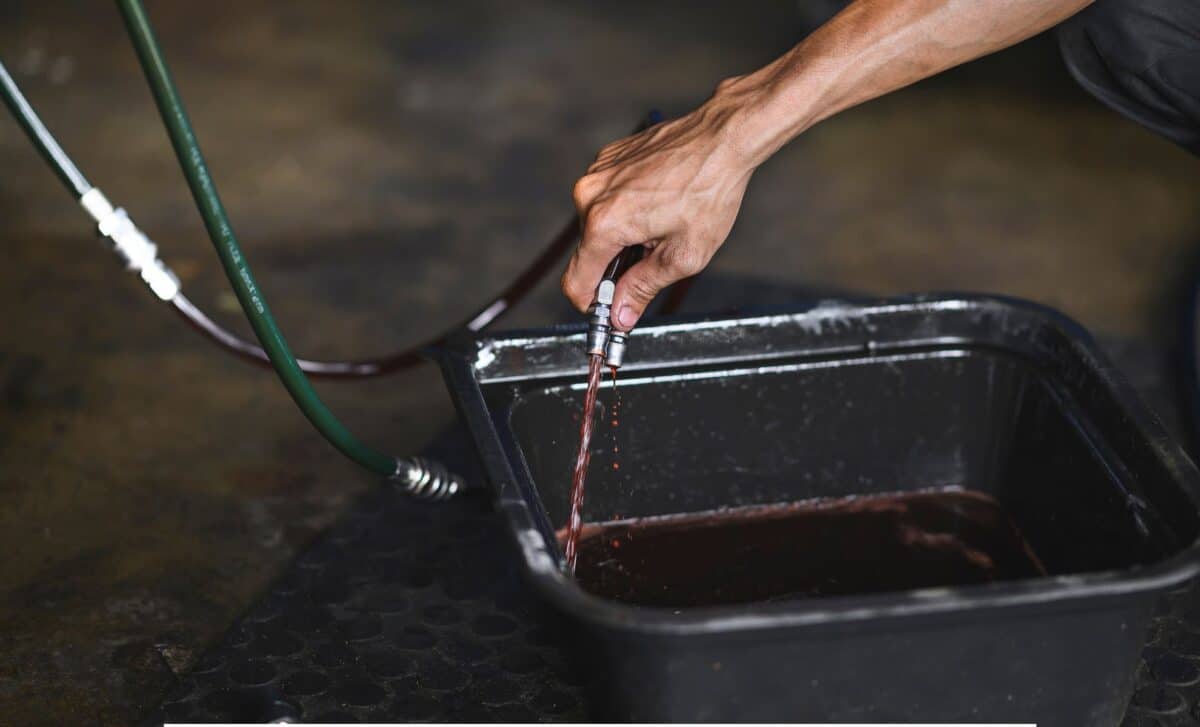
Black Or Dark Brown ATF Signals Contamination And Oxidation
Black or very dark brown ATF is a more serious warning sign. It indicates heavy contamination and severe oxidation, which reduces the fluid’s ability to lubricate, protect components, and manage friction inside the transmission.
That combination can become expensive if ignored. Low or contaminated fluid is one of the leading causes of transmission failure, and dark ATF can contribute to internal damage if it stays in service too long.
A burnt smell makes the situation worse. Dark fluid combined with that odor points to fluid that is no longer doing its job properly. At that stage, the ATF should be drained, or the car should be taken in for service as soon as possible.
In many cases, a filter change is also needed when fresh fluid is added. Replacing only the fluid without addressing the filter may reduce the benefit of the service, especially when the old ATF has been heavily contaminated.
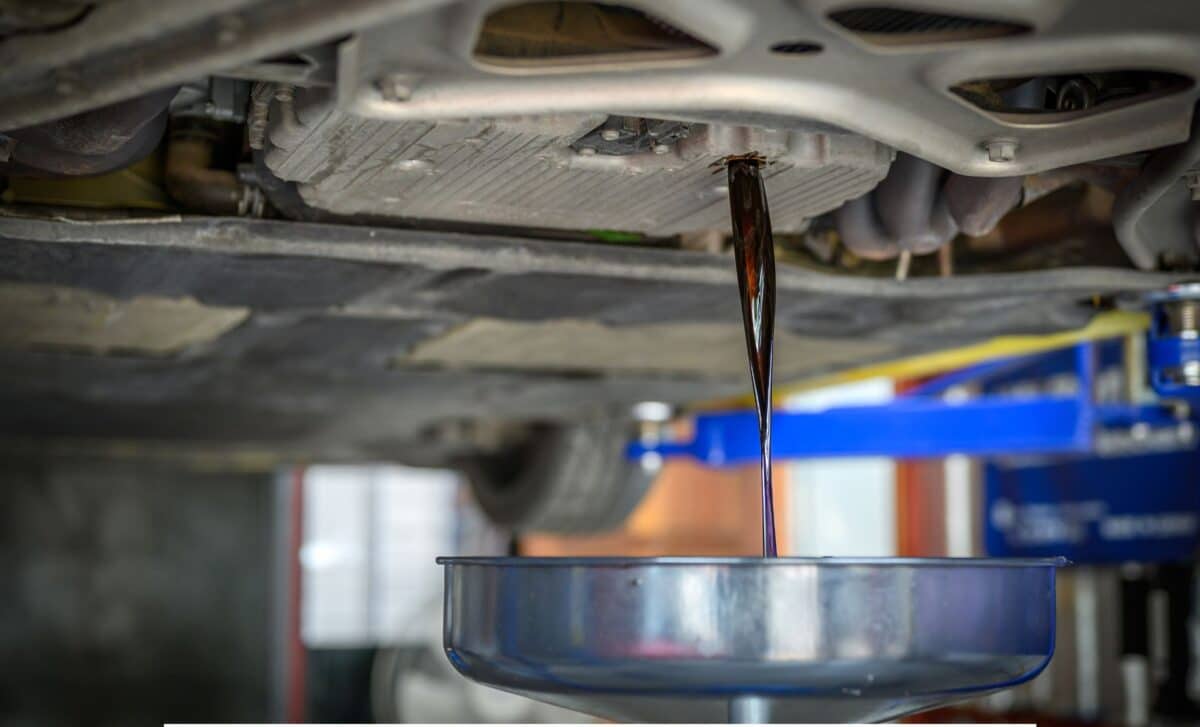
Pink Or Diluted ATF Can Mean Coolant Or Water Has Entered The System
According to Jalopnik, a hazy pink shade is another bad sign. When fluid that should be bright red or dark red turns pinkish, it typically means water or coolant has entered the transmission fluid.
That mixture can create problems beyond the transmission itself. The same contamination can affect coolant passages inside the motor and lead to issues such as overheating. It is a messy situation, and not the kind where a simple top-up solves much.
The source of the problem can be the heat exchanger used to regulate ATF temperature. This component is located at the bottom of the radiator. Although coolant and ATF lines are separate, an old, rusted, or leaking radiator can allow the two fluids to mix.
When pink ATF appears on the dipstick, a transmission flush may not be enough. A replacement radiator or fluid cooler may be needed. The worst-case scenario is transmission damage, especially because there is no easy way to know how long the contaminated fluid has been circulating through the engine and transmission.
Regular checks remain the simplest preventive step. Avoiding driving habits that wear out the transmission helps, but checking ATF color and level, preferably every 30,000 miles, gives drivers a better chance of spotting trouble before symptoms such as grinding noises, slipping gears, surging, or difficulty shifting begin.