
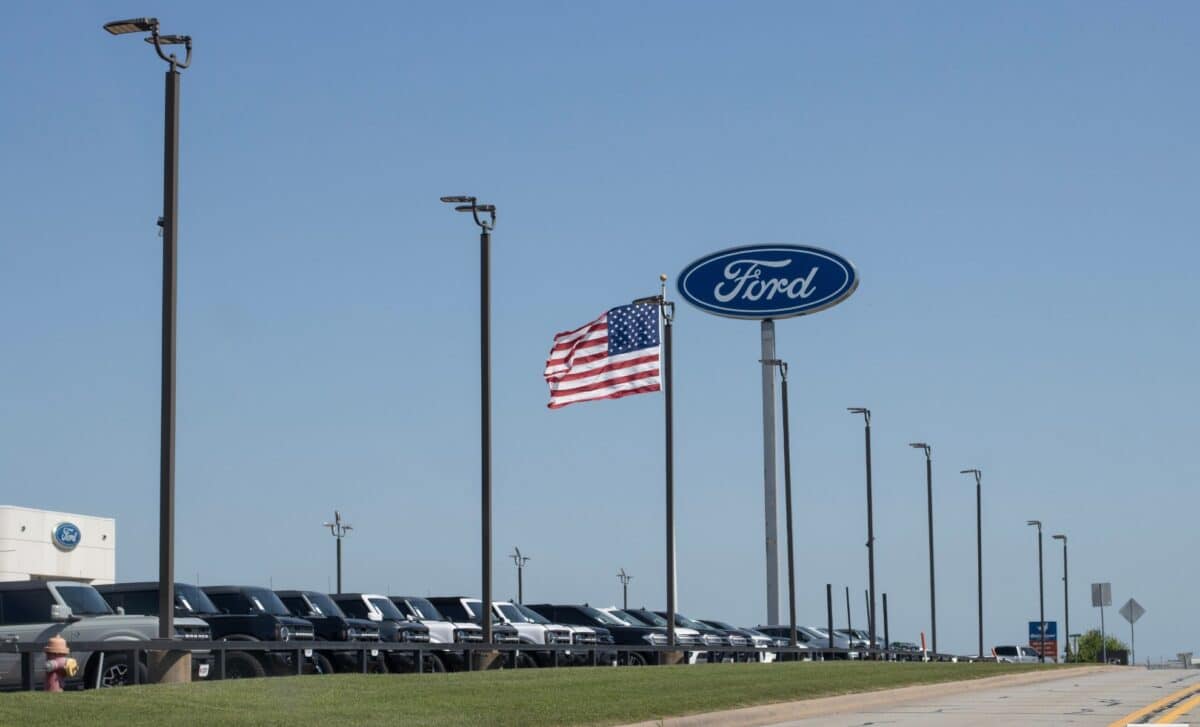
The development comes as U.S. military officials increasingly look beyond traditional defense contractors to diversify production capabilities. For decades, companies specializing in defense—rather than commercial manufacturing—have dominated this space. Now, however, automakers appear to be entering the conversation, signaling a potential change in industrial collaboration.
This context helps explain why Ford’s discussions are drawing attention. The company is not alone in being approached, and the implications extend beyond a single manufacturer. At stake is a possible reconfiguration of supply chains, production capacity, and the relationship between the government and large-scale industrial players.
A Tentative Entry Into Defense Projects
According to Ford CEO Jim Farley, the company is “in early discussions with the US government on some defense-related projects,” though he emphasized that no specifics can yet be shared. The statement, delivered during an earnings call, underscores the preliminary nature of the talks.
The move appears partly influenced by the growing involvement of other automakers in defense-related activities. As reported by Jalopnik, Ford may be responding to similar efforts undertaken by General Motors, which has already secured defense contracts.
This shift does not necessarily indicate an immediate transformation of Ford’s core business. Rather, it reflects a willingness to explore opportunities that align with government needs. The absence of detailed commitments suggests that discussions remain exploratory, at least for now.
Pentagon Seeks Broader Industrial Support
The interest in automakers is part of a wider strategy by the Pentagon to expand its pool of suppliers. Traditionally, defense production has been concentrated among specialized contractors such as Lockheed Martin and General Dynamics. However, officials are now considering partnerships with commercial manufacturers to supplement existing capabilities.
According to Bloomberg, military officials have long explored the idea of leveraging large-scale industrial players to produce equipment typically reserved for defense firms. This approach could provide additional flexibility, especially in times of increased demand.
Further indications of this strategy emerged when automakers, including Ford and General Motors, were reportedly asked whether they could “rapidly” shift to defense work if required. The outreach extended beyond the automotive sector, with discussions also involving companies such as GE Aerospace and Oshkosh.
Supply Chains And Domestic Production At The Core
Beyond direct defense manufacturing, Ford has highlighted another area where it expects to contribute: supply chains. Jim Farley stated that the company could play an “outsized role” in onshoring critical materials and components, including manufacturing-grade semiconductors.
According to Farley, Ford’s supply chain is already “heavily engaged not only with our government, but with new companies that are starting to emerge in our country to onshore some of this capability.” This suggests that the company’s involvement may extend beyond production into the broader ecosystem supporting defense and industrial needs.
The emphasis on domestic sourcing reflects ongoing concerns about reliance on foreign suppliers. While the exact motivations behind the Pentagon’s outreach remain unclear, the context includes recent geopolitical tensions and potential strain on existing stockpiles, as referenced by The Wall Street Journal.
For now, Ford’s role remains undefined. What is clear, however, is that discussions are underway—and that they form part of a larger effort to rethink how the United States mobilizes its industrial base.