
The system arrives as electric vehicles increasingly rely on regenerative braking to slow down. InsideEVs reports that the Mercedes-Benz GLC EV can handle more than 90% of braking through regenerative braking alone, reducing the role of traditional friction brakes.
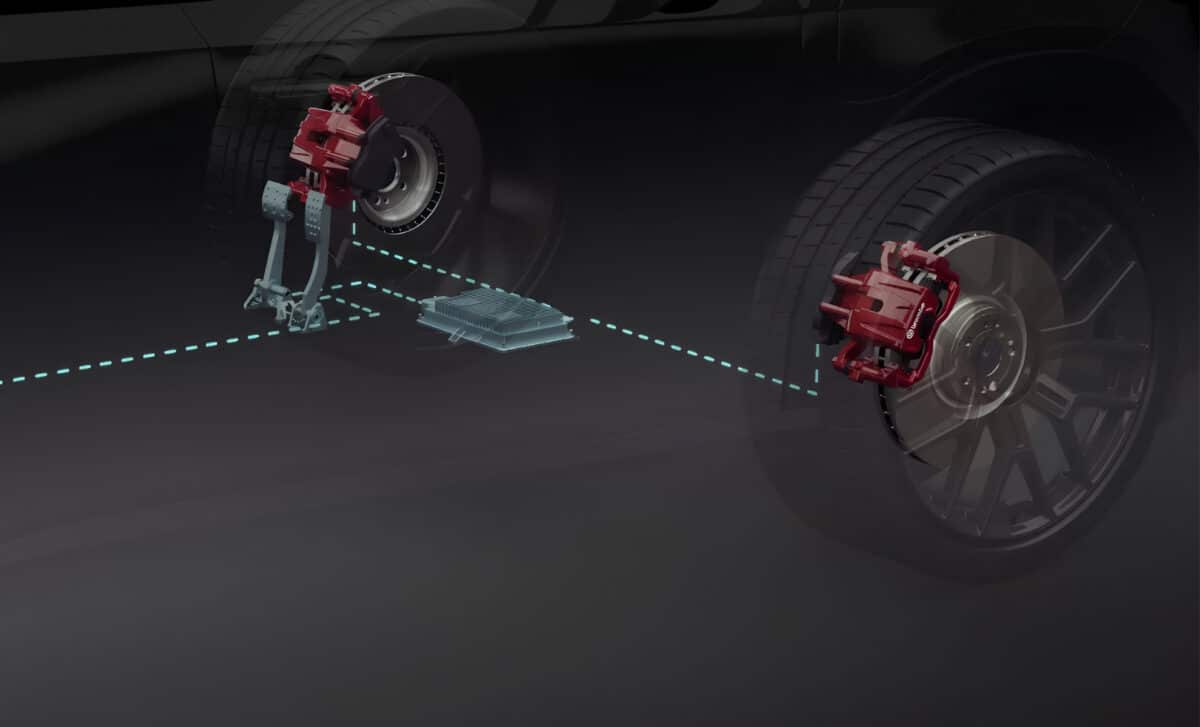
For more than a century, conventional braking systems have relied on hydraulics. Pressing the brake pedal sends hydraulic fluid through brake lines to actuate the calipers. Brembo’s Sensify replaces that process with electrical signals and actuators.
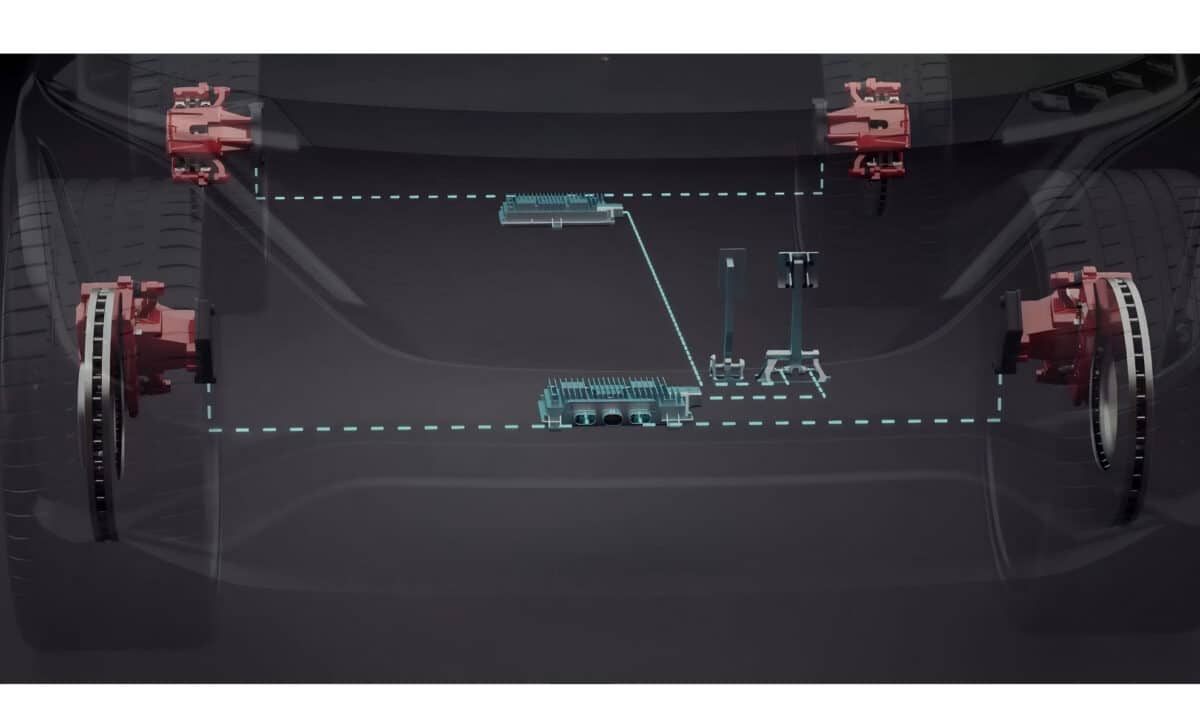
The company explains that the system “was born as a fluid-free architecture that distributes intelligence at wheel level, removing hydraulic circuits and centralizing actuation.” Instead of mechanically triggering the brakes, the pedal now communicates electronically with a control system.
Electrical Signals Replace Hydraulic Brake Lines
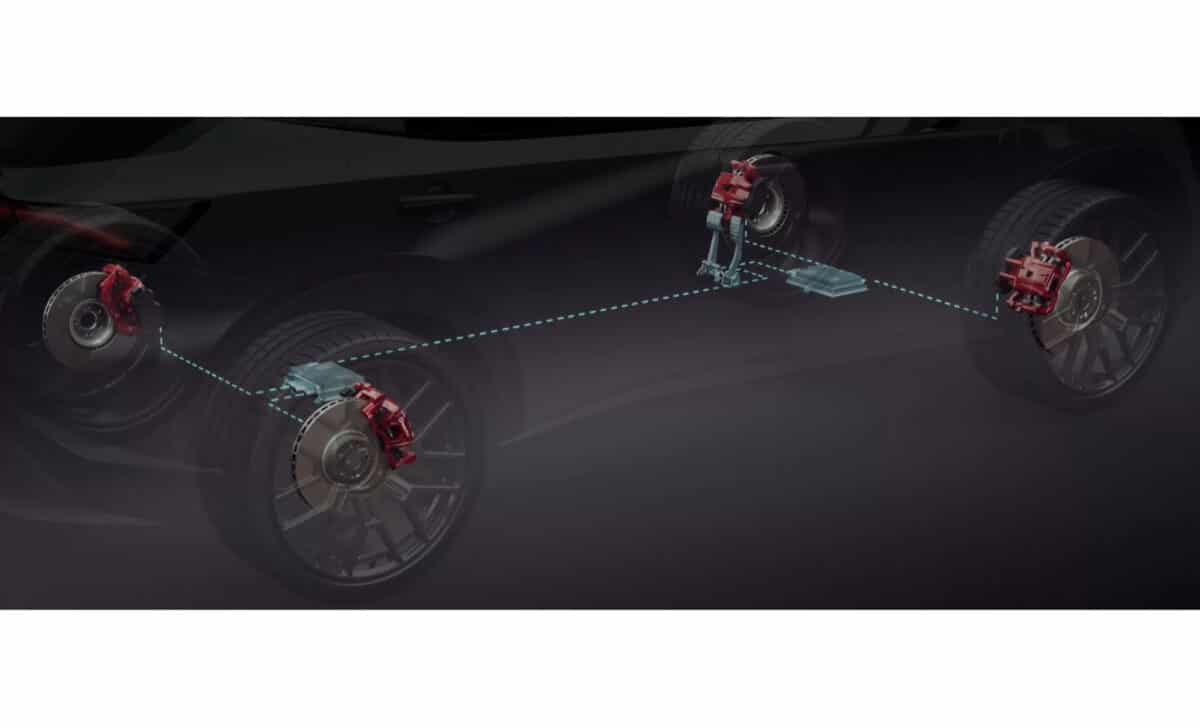
Sensify uses electrical signals and actuators to engage the brake pads and slow the vehicle. According to Brembo, each caliper contains its own actuator, allowing the system to brake each wheel individually.
The company says this architecture “enables accurate and continuous modulation of braking forces, supporting stable and controlled vehicle behavior in complex and highly variable conditions.” Brembo also states that intelligence is distributed at wheel level rather than through a centralized hydraulic setup.
The brake pedal effectively becomes a request to slow down, while the electronic control system determines how braking force is applied.
Brembo Says the System Can Improve Braking Smoothness
The new system is designed for software-driven EVs that combine regenerative and friction braking. According to InsideEVs, some current EVs still produce noticeable transitions when the friction brakes begin engaging after regenerative braking.
The publication reports that drivers can sometimes feel the brake pads gripping the rotor deeper into pedal travel after pressing the brake for several seconds.
Brembo says Sensify continuously modulates braking force electronically. The company describes the system as “enhancing peace of mind,” despite removing the traditional mechanical connection between the pedal and the brakes.
Production Has Already Started for an Unnamed Automaker
Brembo confirmed that the technology is already heading into production through “a leading global vehicle manufacturer,” although Brembo has not revealed which company will use it first.
The company also says the system is engineered to support “a wide range of advanced vehicle architectures, from next-generation driver assistance systems to fully autonomous applications.”
The system could also increase brake pad life in EVs, where regenerative braking already reduces wear on friction brakes.