
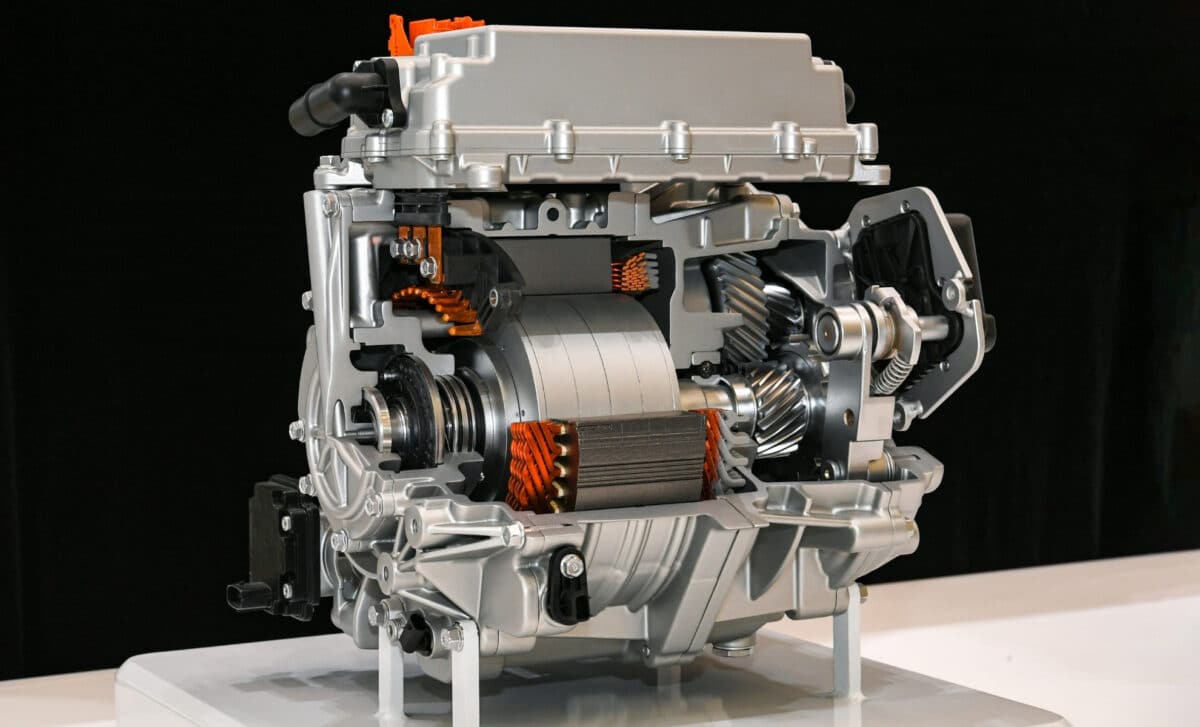
The Korean supplier says the new drive unit delivers 160 kilowatts of power while occupying less space than comparable systems currently available on the market. The company also plans to expand the lineup with both higher-performance and lower-cost versions.
Hyundai Mobis, the parts and technology division of the Hyundai Motor Group, is continuing its push toward in-house EV component development. The company has focused on creating standardized systems that can be shared across different vehicle categories rather than relying heavily on individually developed components from external suppliers.
That strategy centers on modularity. Instead of designing unique internal architectures for every powertrain, Hyundai Mobis developed interchangeable core components intended to reduce complexity during manufacturing and potentially simplify future repairs for Hyundai, Kia, and Genesis electric vehicles.
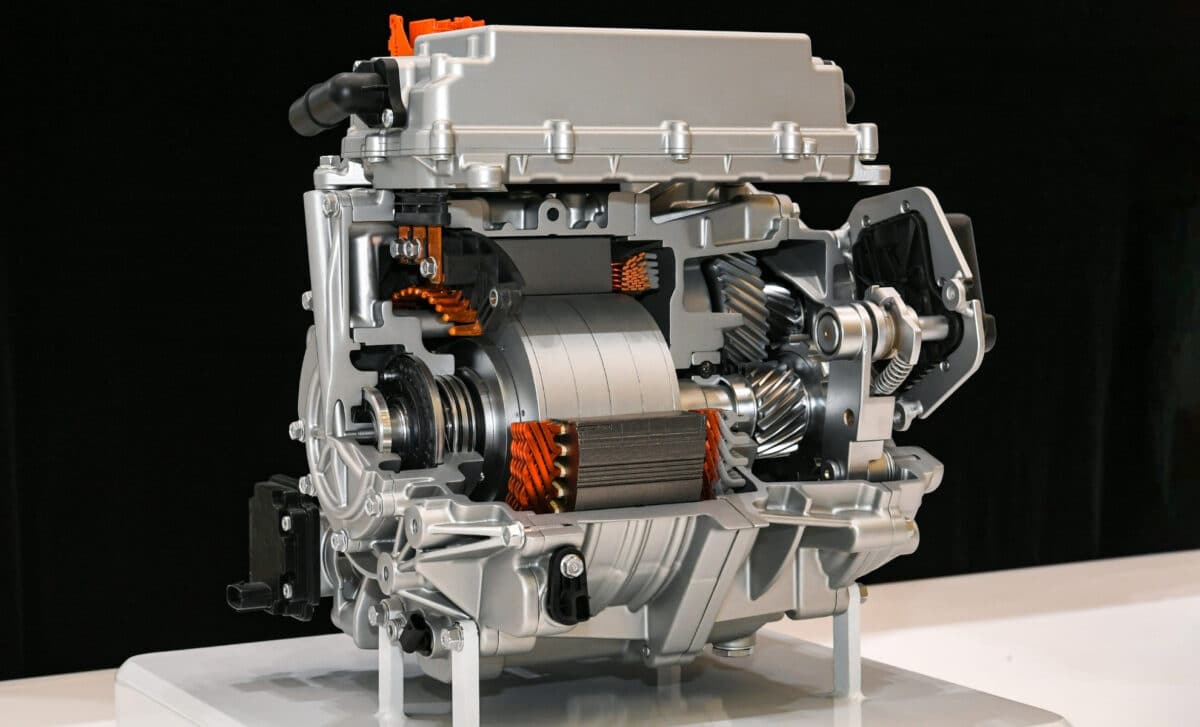
Hyundai Mobis Combines Motor, Inverter, and Reduction Gear Into One Unit
The newly revealed drive system integrates the electric motor, inverter, and reduction gear inside a single housing. According to InsideEVs, the unit produces 160 kilowatts, or approximately 215 horsepower.
This is the second integrated powertrain developed internally by Hyundai Mobis. The company previously introduced a more powerful 250-kW version aimed at high-performance applications. A third version, rated at 120 kW and intended for compact electric cars, is scheduled to arrive within the first half of the year.
The company says the compact packaging is one of the system’s main advantages. Hyundai Mobis stated that the overall volume of the unit is nearly 20% smaller than comparable products from rival manufacturers.
Standardized Components Are at the Center of the Project
Rather than sourcing separately designed internal parts from outside suppliers, Hyundai Mobis adopted what it describes as a system-level standardization strategy.
According to the company, several major components, including the stator, inverter, and power module, can now be shared across different powertrain configurations. Hyundai Mobis says this approach helps lower production costs while also improving manufacturing efficiency.
The supplier also redesigned portions of the motor structure itself. The system incorporates new cooling technology as well as more energy-efficient power semiconductors intended to improve performance.
Hyundai Mobis claims the result is a drive unit with a 16% higher specific power output compared to similar systems currently offered by competitors.
Hyundai Says the Platform Can Support Multiple EV Categories
The company says the modular design allows the same architecture to be adapted for a broad range of electric vehicles, from compact mobility models to larger high-performance EVs.
The system can also support dual-motor layouts. Hyundai Mobis noted that two of the 160-kW drive units can be installed in a single vehicle, with one motor mounted at the front and another at the rear, effectively doubling the available power output.
Hyundai Mobis believes the new modular lineup positions the company to handle both the design and mass production of its own electric powertrains. The supplier also stated that the standardized architecture could help reduce repair complexity and associated costs for future Hyundai Motor Group electric vehicles.