
Diesel engines still appeal to drivers who spend long hours on the road thanks to their ability to travel farther on a gallon of fuel than comparable gasoline engines. Yet a combination of stricter emissions standards, the aftermath of Volkswagen’s Dieselgate scandal, and the broader industry shift toward electric vehicles has steadily reduced their presence in American showrooms.
Diesel-powered vehicles now account for just 3% of new light-duty vehicle sales in the United States, based on market analysis conducted by Intel Market Research. That category includes passenger cars, SUVs, minivans, vans, and pickup trucks under the applicable gross vehicle weight limits. Passenger diesel cars have disappeared entirely from the market since production of the Chevrolet Cruze ended in 2019.
Diesel Survives Through Pickup Trucks, With GM Leading The Light-duty Market
According to Jalopnik, pickup trucks remain the strongest segment for diesel buyers in America in 2026, particularly within General Motors’ lineup.
GM is currently the only manufacturer still offering a diesel engine in a light-duty pickup. Buyers can choose the GMC Sierra 1500 or Chevrolet Silverado 1500 equipped with the 3.0-liter Duramax turbo-diesel inline-six delivering 305 horsepower and 495 lb-ft of torque.
In the GMC Sierra 1500 range, the diesel engine comes standard on AT4, AT4X, and Denali Ultimate trims, while Elevation, SLT, and Denali buyers can select it as an option. Chevrolet offers the diesel setup as standard on RST and ZR2 versions, while Custom Trail Boss, LT, LT Trail Boss, LTZ, and High Country models make it optional.
The heavy-duty segment remains firmly attached to diesel power. Chevrolet Silverado HD and GMC Sierra HD models continue with the revised 6.6-liter Duramax turbo-diesel V-8 introduced for the 2024 model year. The engine produces up to 470 horsepower and 975 lb-ft of torque and enables towing capacities reaching 36,000 pounds.
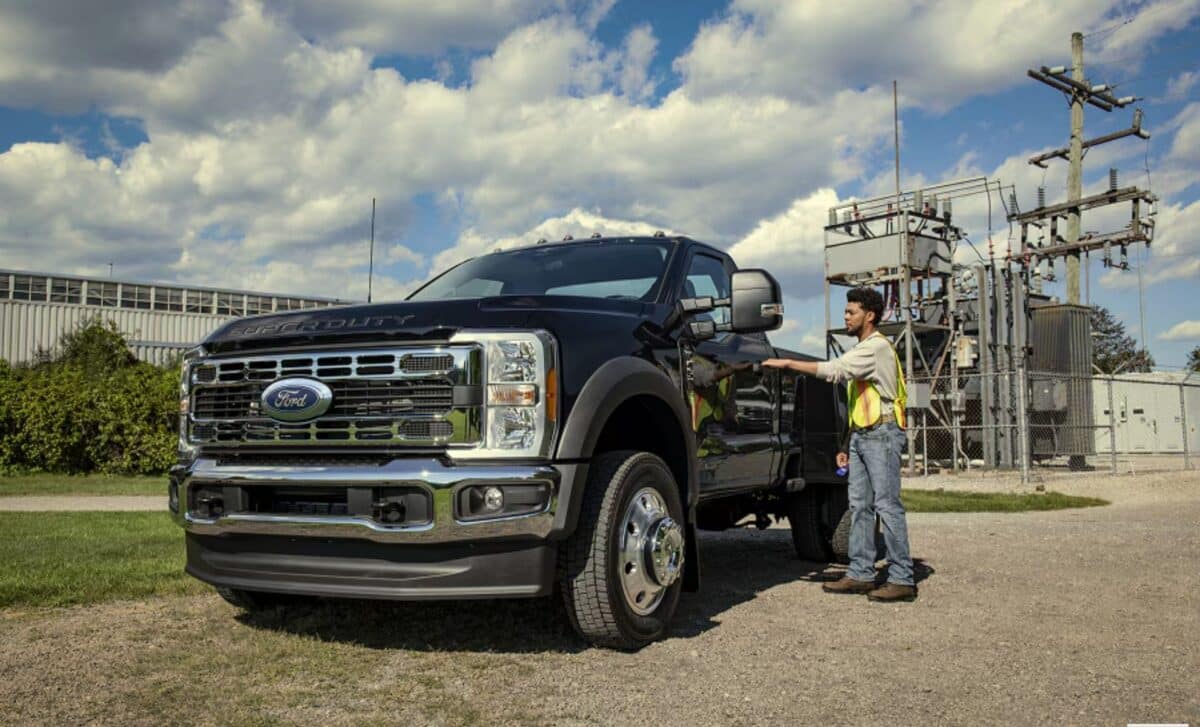
Ford counters with its 6.7-liter Power Stroke V-8 in the Super Duty lineup. Offered in the F-250, F-350, and F-450, this engine generates up to 500 horsepower and 1,200 lb-ft of torque and carries a maximum towing rating of 40,000 pounds.
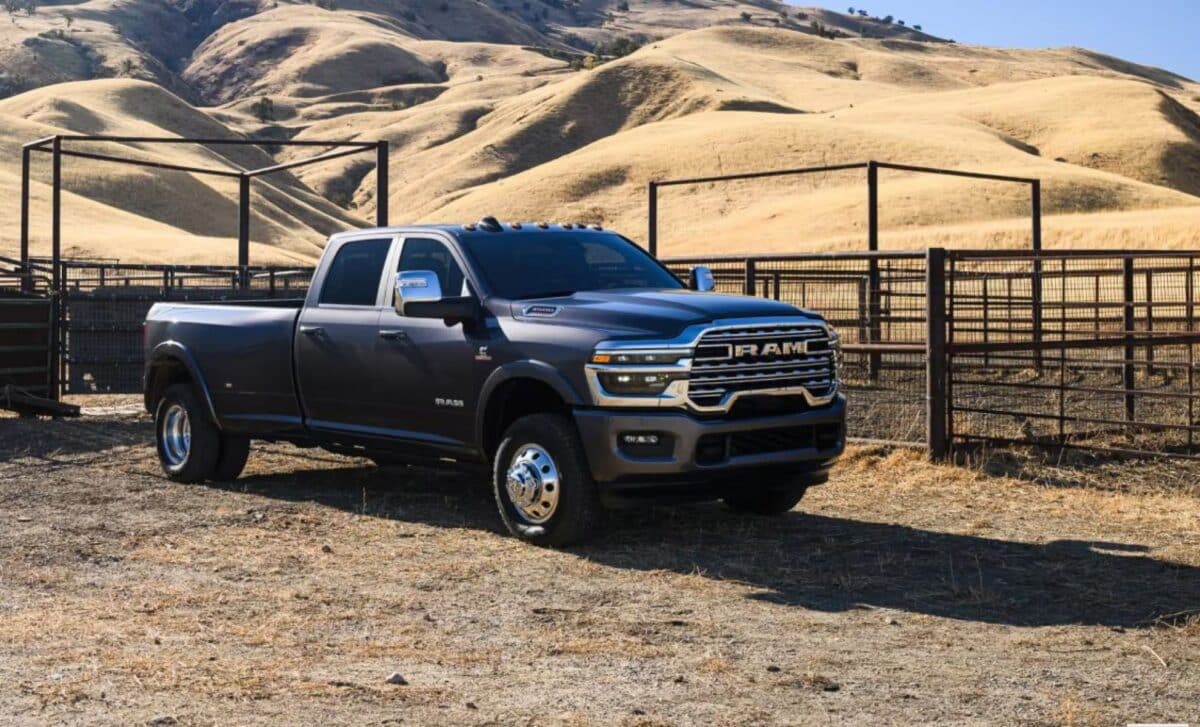
Ram remains present in the category through the 2500 and 3500 HD models. Their Cummins HO 6.7-liter turbo-diesel inline-six develops 430 horsepower and 1,075 lb-ft of torque, while the Ram 3500 HD reaches a maximum towing capacity of 36,610 pounds.
Diesel Suvs Have Become An All-GM Category
The SUV diesel market in the United States has contracted even further and now belongs entirely to General Motors.
Following Cadillac’s decision to remove the 3.0-liter diesel inline-six from the Escalade lineup due to slow demand, the remaining choices are the Chevrolet Tahoe, Chevrolet Suburban, GMC Yukon, and GMC Yukon XL.
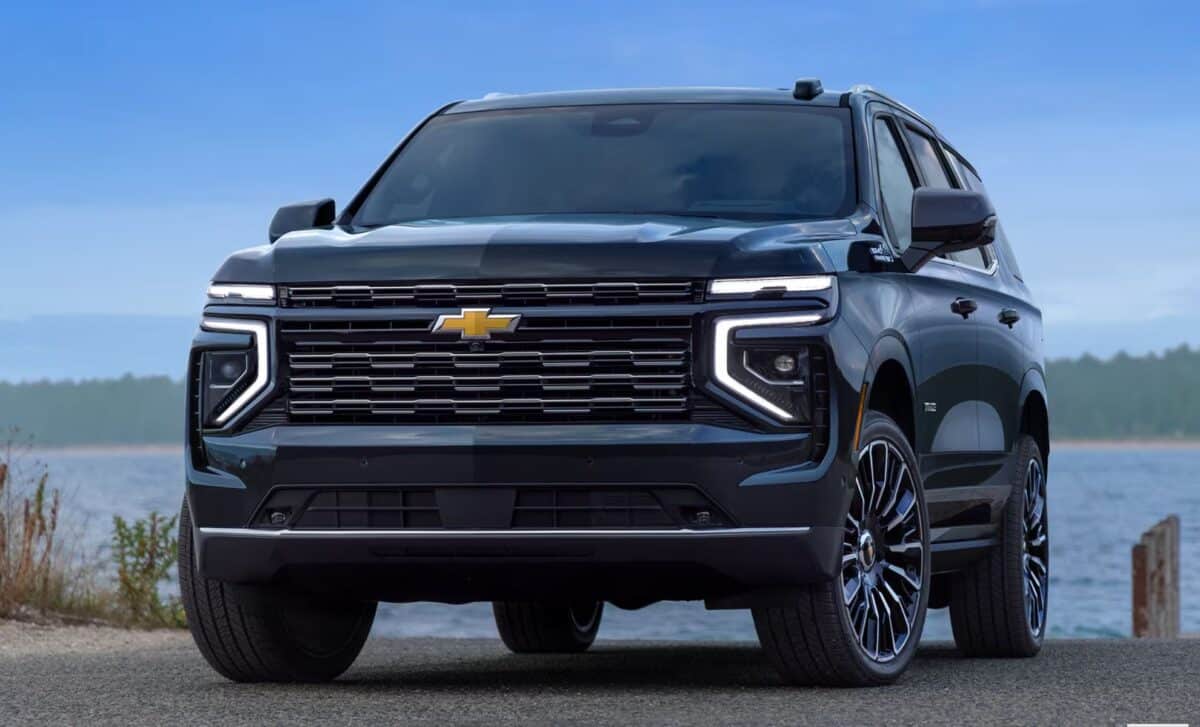
Each of these body-on-frame SUVs uses the same 3.0-liter Duramax inline-six already found in GM’s light-duty pickups and previously available in the diesel Escalade. Output remains identical across all models at 305 horsepower and 495 lb-ft of torque.
Fuel economy figures published by the U.S. Environmental Protection Agency indicate 24 mpg for the Chevrolet Tahoe and 23 mpg for the Chevrolet Suburban, GMC Yukon, and Yukon XL.
Pricing And Trim Availability Narrow Diesel Access Even Further
Access to diesel engines in these SUVs depends not only on model selection but also on trim level.
For Chevrolet buyers, the diesel option is unavailable on the entry-level LS trim. Tahoe and Suburban customers must move to at least the LT grade to access the engine, which adds $5,495 to the price.
That raises the MSRP of a two-wheel-drive Chevrolet Tahoe LT from $66,495 with the standard 355-horsepower 5.3-liter V-8 to $71,990 in diesel configuration. The Chevrolet Suburban LT starts at $74,990 including destination charges.
GMC applies a broader approach. The Yukon and Yukon XL offer the 3.0-liter Duramax diesel across every trim level. For 2026, pricing starts at $76,660 for the GMC Yukon Diesel and $79,660 for the Yukon XL Diesel.
Outside these remaining trucks and SUVs, diesel has effectively disappeared from the American light-duty vehicle market.