
China has become a major center for hybrid powertrain development, with manufacturers competing to raise efficiency standards across the segment. Thermal efficiency has emerged as a key metric, particularly for hybrid vehicles where fuel consumption and performance must be balanced.
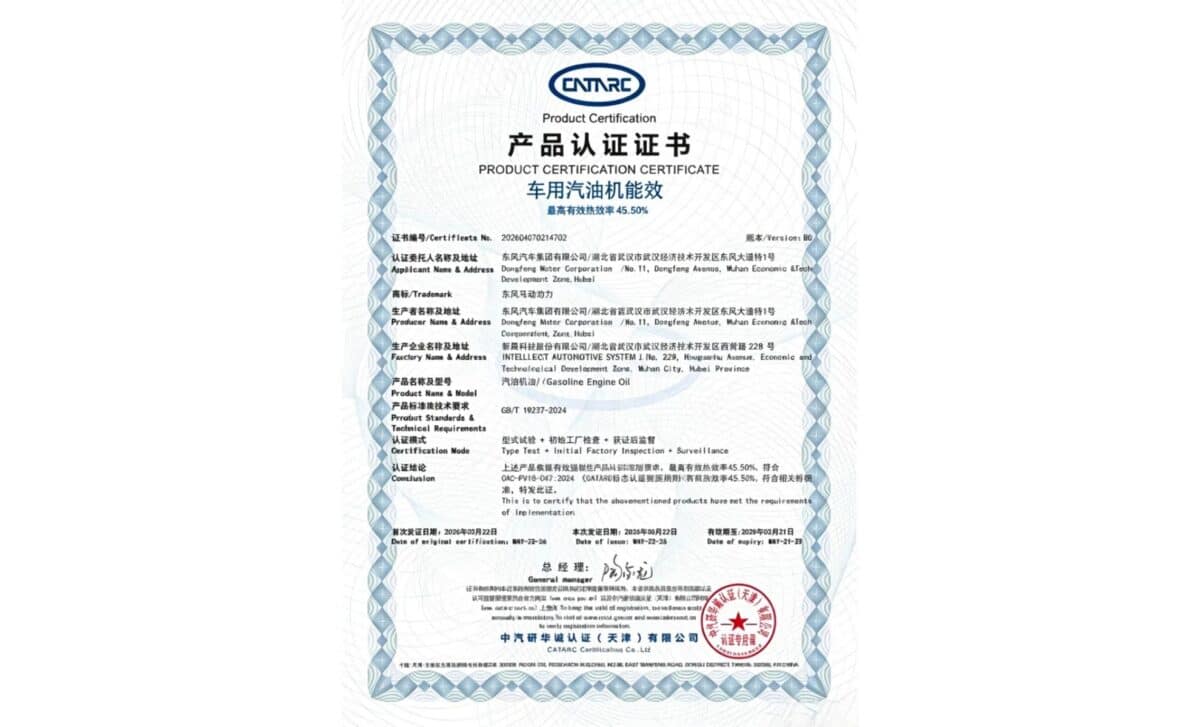
Dongfeng’s latest announcement comes as several Chinese brands continue to introduce new combustion technologies and hybrid systems. According to information released by the automaker, the Mach Power 2.0T engine was certified on May 22, with the result made public during the past week.
A Certified 45.5% Thermal Efficiency Result
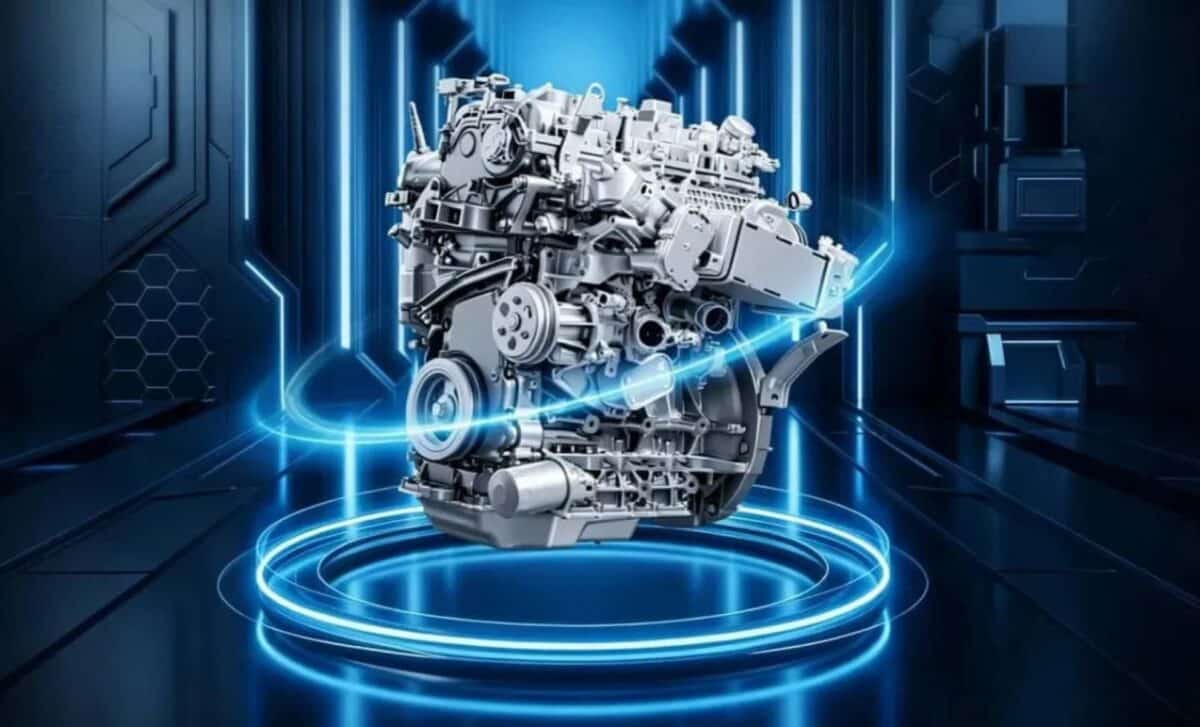
Dongfeng’s Mach Power 2.0T engine reached a peak thermal efficiency of 45.5 percent during testing conducted by CATARC Huacheng, an independent Chinese organization that verifies automakers’ performance claims.
The engine is a turbocharged 2.0-liter unit developed specifically for hybrid SUVs and larger vehicles. In this category, manufacturers seek to combine fuel efficiency with performance and towing capability. The certified result places the engine within a highly competitive area of the Chinese hybrid market, where thermal efficiency figures around 45 percent are becoming a benchmark for next-generation SUV powertrains. The certification was completed on May 22 before being publicly announced in the following weeks.
A New Combustion System Designed to Reduce Knock
At the core of the engine is a combustion technology known as MAKC, developed by Dongfeng to improve combustion control and reduce engine knock. The design uses a long-stroke architecture with a stroke-to-bore ratio of 1.29. This configuration helps fuel burn more steadily inside the cylinders.
The engine also combines a 350-bar high-pressure direct injection system with a high-energy ignition system. This setup allows the use of a higher compression ratio while maintaining efficiency across a range of driving conditions.
Dongfeng has also integrated a cooled low-pressure exhaust gas recirculation (EGR) system. The company states that this technology lowers combustion temperatures and further reduces knock. Depending on driving conditions and vehicle use, Dongfeng says the arrangement can improve fuel economy by approximately 3 to 10 percent.
Reduced Internal Losses and a Wider Efficiency Range
Beyond combustion improvements, the engine incorporates several measures intended to reduce mechanical losses.
The powertrain uses an electronically controlled variable-displacement oil pump, while key engine components are coated with diamond-like carbon (DLC) to reduce friction. These technologies are aimed at improving overall efficiency by limiting internal resistance.
The engine is also equipped with a variable-geometry turbocharger. According to Dongfeng, this helps maintain performance during demanding operating conditions, including high-altitude driving at elevations of up to 8,202 feet and sustained highway driving under load.
Dongfeng states that the combination of these technologies expands the engine’s high-efficiency operating range by approximately 30 percent compared with the previous generation. The announcement comes as other Chinese manufacturers, including Geely and Chery, continue to pursue efficiency gains and develop new hybrid systems in a market where thermal efficiency has become a central area of competition.