

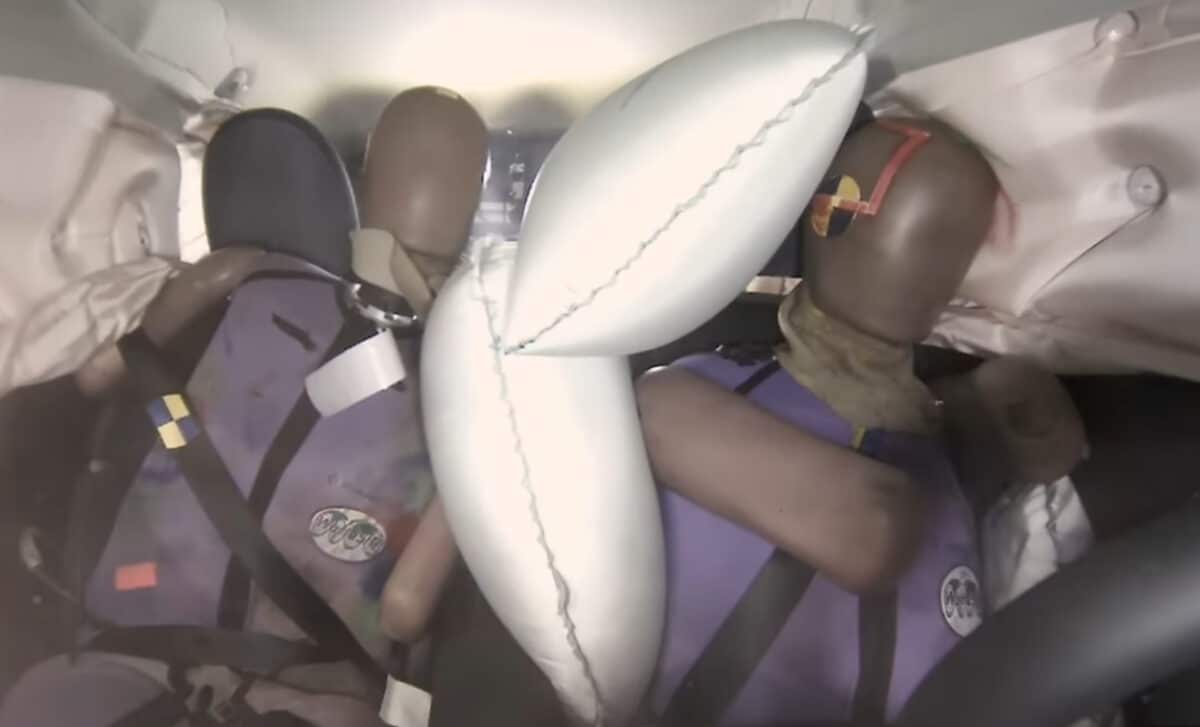
The front-center airbag, first introduced by General Motors in 2013, is specifically designed to prevent the driver and front passenger from hitting each other during certain types of collisions. It’s now joining the long list of passive safety systems found in modern cars.
This airbag doesn’t replace traditional systems, it supplements them. While early airbags were built to stop people from hitting hard surfaces like the dashboard or doors, this new version acts as a cushion between occupants, helping in side impacts, rollover scenarios, and when only the driver is present. As automakers continue adding layers to crash protection, this technology is beginning to take a more prominent role.
From Steering Wheels to Center Airbags
Modern cars are packed with airbags, but many drivers aren’t aware of just how many are hidden throughout the cabin. The first airbag appeared in 1981, when Mercedes-Benz installed a steering wheel-mounted front airbag. As expectations shifted, automakers quickly followed with a passenger-side dashboard airbag to protect those riding in the front seat.
By 1994, Volvo introduced side impact airbags, which added another layer of protection against lateral collisions. Then, in 1996, the Kia Sportage became the first car sold in the U.S. with a driver’s knee airbag, marking a new stage in occupant protection. Two years later, Volvo returned to the spotlight with the launch of the inflatable side curtain airbag in 1998.
Since then, various manufacturers have introduced new formats: the Scion iQ came with a rear window airbag, while Ford introduced an inflatable seat belt airbag. These designs aimed to protect more body regions and prepare vehicles for a broader range of accident types. The front-center airbag is the latest addition to this progression, and it targets a risk that previous systems didn’t directly address: occupant-to-occupant collisions.
GM’s 2013 Launch of the Front-Center Airbag
The front-center airbag, also known as a far-side airbag, was launched by General Motors in 2013 and debuted in its three-row midsize crossovers: the Buick Enclave, GMC Acadia, and Chevrolet Traverse. According to a GM press release cited by Jalopnik, the system “is designed to provide restraint during passenger-side crashes when the driver is the only front occupant, and also acts as an energy absorbing cushion between driver and front passenger in side crashes, as well as benefitting in rollover crashes.”
By inflating between the front seats, this airbag reduces the likelihood of head, shoulder, and torso contact between the driver and passenger, or between the driver and interior surfaces, especially when one side of the vehicle takes the brunt of an impact. When combined with front airbags, side airbags, side curtain airbags, and knee airbags, it adds another defensive layer inside the cabin.
Since its launch, more vehicles have begun to include this feature, often without drivers realizing it. It now plays a key role in forming a comprehensive barrier within the front compartment, built to absorb energy and minimize the chaos inside the car during violent movements.
Rear Seat Innovation Still Lagging
While the front-seat safety landscape continues to evolve, rear passenger protection hasn’t advanced at the same pace. The back seat occupants have not received the same level of attention when it comes to airbag design and placement.
One exception is the Mercedes-Benz S-Class, which currently stands as the only vehicle on sale with airbags that deploy from the front seatbacks to protect rear passengers in a frontal collision. This feature offers new potential for rear safety, though it’s currently limited to the luxury segment.
Whether or not rear seat center airbags will be the next major development remains unclear. For now, the focus remains on refining front cabin protection through systems like the front-center airbag, an innovation that continues to spread through the industry without drawing much attention, yet offering significant safety benefits in real-world crashes.