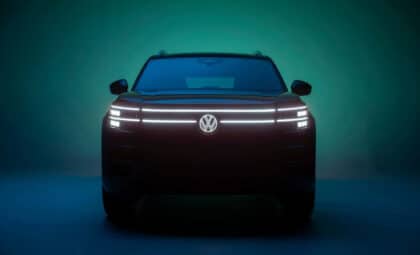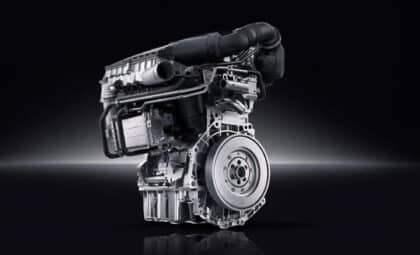

The German carmaker has just inaugurated a new battery plant in Martorell, Spain, announcing a production cadence as bold as it is rare in Europe: one battery every 45 seconds. This internal push is designed to support a major shift towards affordable electric vehicles, particularly from its Cupra, Volkswagen, and Skoda brands.
At a time when the European Union’s 2035 target for a 90% reduction in CO₂ emissions looms large, the European battery ecosystem is facing turbulence. While some continue to rely on third-party suppliers, Volkswagen is investing heavily to bring battery manufacturing in-house—despite unresolved supply chain limitations and material dependencies.
A Faltering European Battery Sector
Volkswagen’s decision comes amid growing instability among European battery makers. Northvolt is facing a serious crisis, while ACC has put some projects on hold. The latter also reports high rejection rates on its first wave of batteries, signaling a rocky start for domestic production.
The industry’s struggle threatens to delay the scale-up of electric vehicle manufacturing needed to meet future climate goals. Meanwhile, the demand for batteries is expected to surge, with hundreds of thousands of EVs required to satisfy European emissions targets. In this context, Volkswagen’s move to industrialize its battery production marks a strategic divergence.
The Martorell Plant And Its Targets
The new Spanish site, now officially opened, is part of Volkswagen Group’s “Electric Urban Car Family” project. It aims to produce compact, more accessible electric cars, moving beyond the higher-end segment C models the group previously focused on. Until now, Volkswagen’s electric range lacked a replacement for the popular but discontinued E-Up!, leaving a gap in the entry-level market.
Production will begin with the Cupra Raval, and will later extend to the Volkswagen ID.Polo and ID.Cross. Also in line is the Skoda Epiq, a mini crossover that will be manufactured at Volkswagen’s Navarra site. All these models will be built on the MEB+ platform, designed for compact EVs priced around €25,000, approximately $27,250.
Martorell becomes the third-largest Volkswagen production site in Europe, with a projected 600,000 vehicles per year, half of which—300,000 units—will be electric. The remainder will consist of internal combustion engine Seat vehicles. The group claims this output will require producing one battery every 45 seconds.
Ambitious Pace, External Dependencies
Volkswagen’s figures are ambitious, even daring, given the scale of the challenge. For comparison, Tesla’s Gigafactory in Germany, which was expected to hit 500,000 units annually, is still far from reaching that number.
Despite the speed Volkswagen is targeting, the group remains dependent on Asian suppliers for raw materials. Europe has yet to establish a solid plan for sourcing and refining these resources locally, adding uncertainty to the production chain.
Still, the manufacturer appears confident in its rollout strategy. The Cupra Raval will be the first to use the new batteries and has already confirmed a starting price of €26,000, approximately $28,340. Its top version is expected to deliver 450 km of range, a notable figure for a vehicle under four meters in length. For reference, other city EVs like the Renault 5 or Peugeot e-208 tend to stay closer to 400 km.