
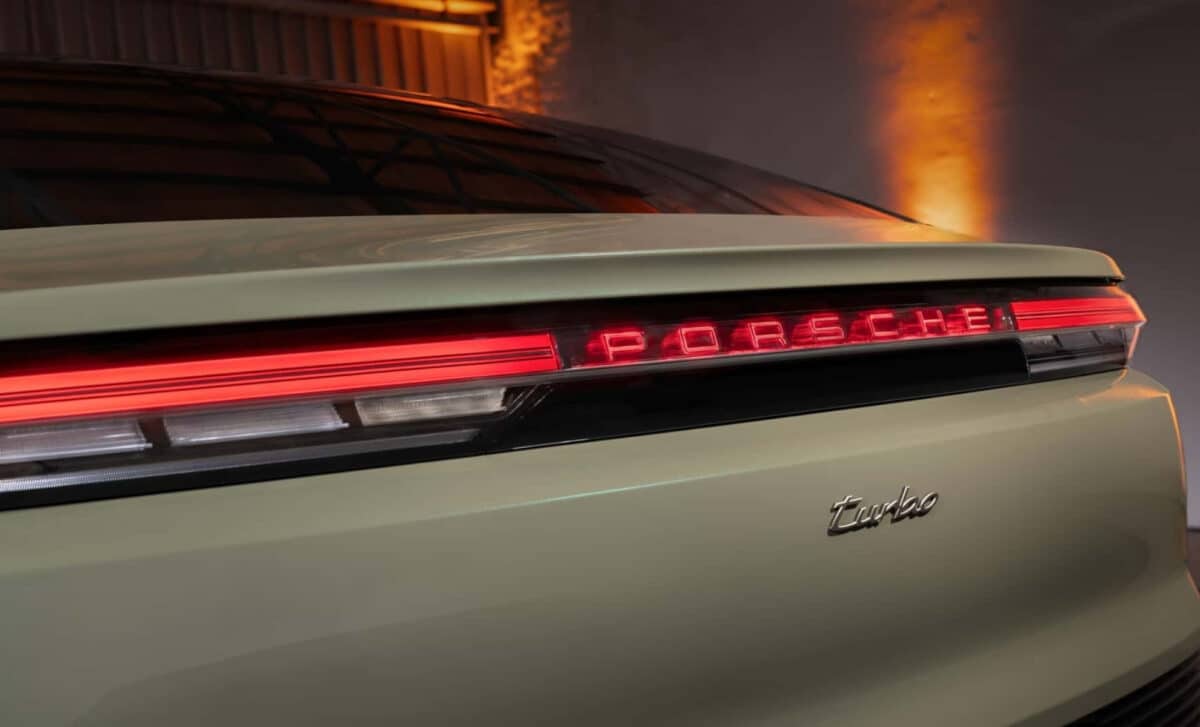
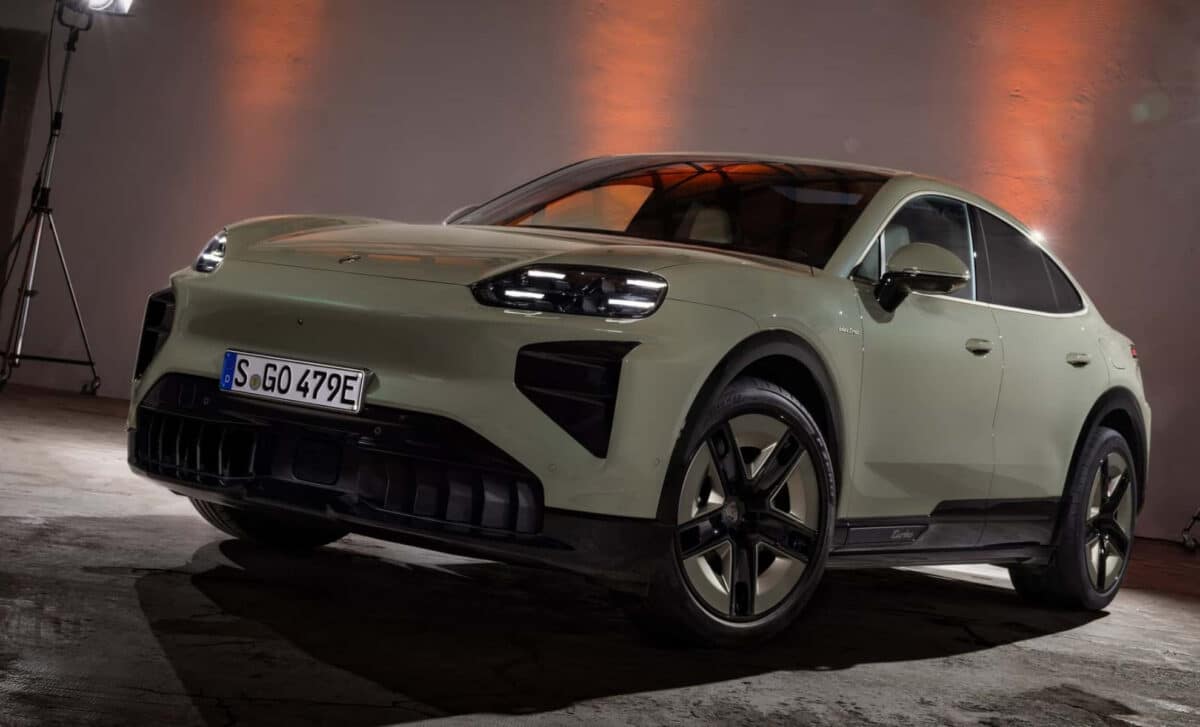
The German automaker is entering a new phase in its electric transition, with the Cayenne Electric positioned as a central pillar of that strategy. Earlier this year, Porsche revealed the standard SUV version, and this new coupe-style model expands the lineup with a stronger focus on design and aerodynamics.
While the exterior evolves, the underlying architecture remains largely unchanged. The Cayenne Coupe Electric shares its platform, battery system, and drivetrain layout with the standard version, highlighting Porsche’s approach of combining performance consistency with visual differentiation.
Record-Breaking Performance Figures Define the Model
The Cayenne Coupe Electric stands as the most powerful production Porsche ever built. According to Motor1, the top-tier Turbo variant reaches up to 1,156 horsepower with overboost, surpassing even the Taycan Turbo GT. Acceleration is equally striking, with a 0 to 62 mph time of around 2.5 seconds.
At launch, three power levels will be available. The base model produces 408 horsepower, rising to 442 horsepower with overboost. The S version delivers 544 horsepower, or 666 horsepower with overboost. The Turbo variant starts at 857 horsepower and peaks at its record figure when overboost is engaged.
The vehicle relies on dual electric motors, one on each axle, enabling all-wheel drive. To improve efficiency, the front motor can decouple when full performance is not required. The system is powered by a battery with a capacity of about 113.0 kilowatt-hours.
Advanced Electric Architecture and Chassis Technology
The Cayenne Coupe Electric uses an 800-volt electrical architecture, allowing charging speeds of up to 400 kilowatts. This enables a recharge from 10 to 80 percent in as little as 16 minutes.
Chassis systems play a central role in the driving experience. The model features adaptive air suspension and Porsche Active Ride, a system designed to manage damper control with precision. Rear-axle steering is also included, enhancing stability and maneuverability.
These elements are consistent across the Cayenne Electric range, reinforcing Porsche’s focus on maintaining high-performance dynamics even as it transitions to fully electric platforms.
Coupe Design Emphasizes Aerodynamics and Interior Technology
Visually, the coupe variant distinguishes itself from the standard SUV primarily from the A-pillar backward. The windshield is more steeply angled, and the roofline slopes more aggressively toward a shorter, sculpted rear section.
Aerodynamics are central to the design. The vehicle achieves a drag coefficient of 0.23 and sits more than 0.8 inches lower than the standard version. Functional features include an integrated adaptive spoiler and, on the Turbo model, side flaps that contribute to airflow management.
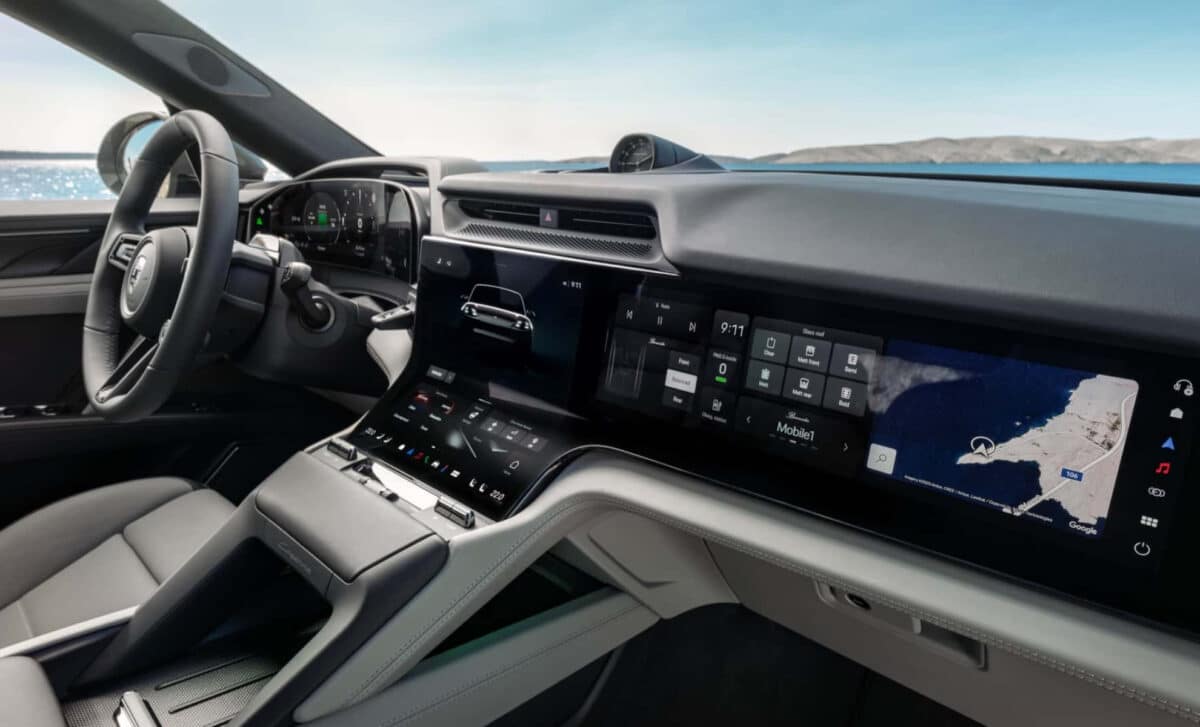
Inside, the cabin combines digital interfaces with physical controls. A fully digital instrument cluster is paired with a curved central display and an optional passenger screen. An augmented-reality head-up display projects key information onto the road ahead. Personalization options include configurable displays, app integration, and features such as an electrochromic panoramic roof and power-operated doors.
Despite the sloping roofline, practicality remains intact. The vehicle can accommodate four adults comfortably and includes a cargo area alongside a 3.2-cubic-foot front trunk.
The Cayenne Coupe Electric is set to debut at the Beijing Auto Show, with deliveries expected to begin in summer 2026. Pricing for the United States has not yet been announced, though it is expected to start at around 110,000 euros based on the German market.