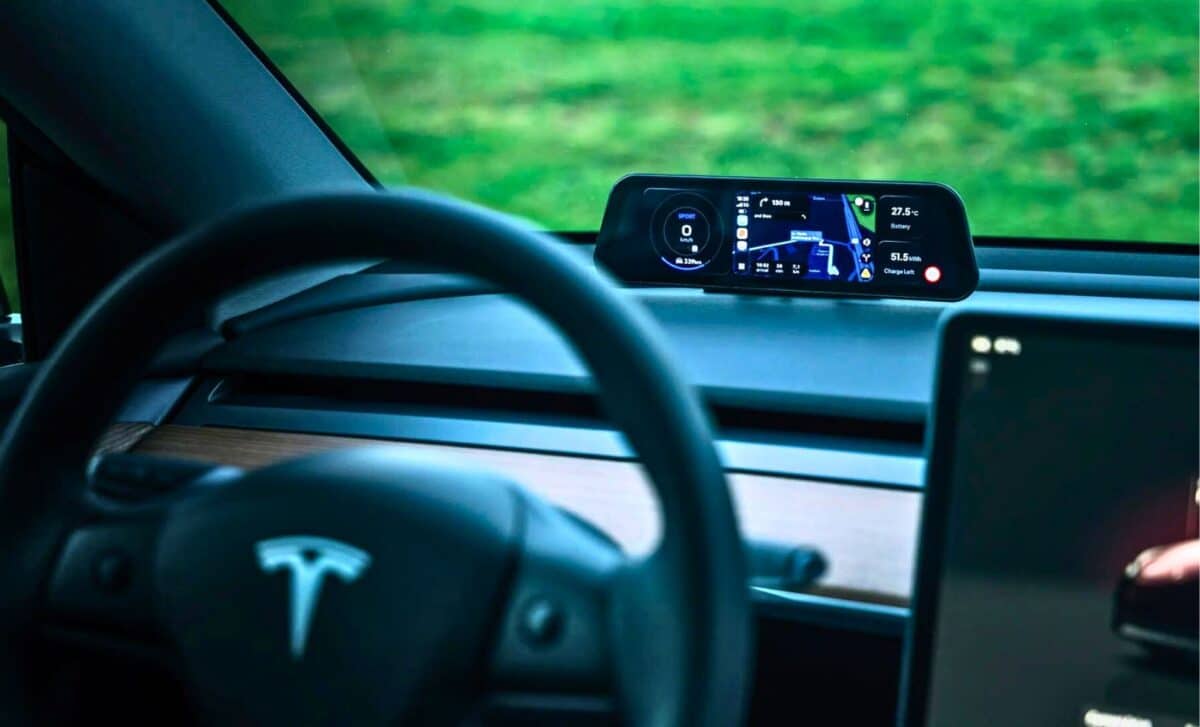
Tesla has spent years defending its decision to strip the Model 3 and Model Y of a traditional instrument cluster, betting that drivers would adapt to a single, central touchscreen. That gamble is now facing an unexpected test. A new third-party device — a compact, driver-facing digital display called the S3XY Dash — is gaining momentum among owners who say Tesla’s streamlined vision leaves out something essential.
For Tesla, the issue isn’t cosmetic. The company has built its brand on tight hardware–software integration and a walled user experience it rarely allows others to modify. The sudden popularity of an accessory that plugs directly into the car’s data system is more than a consumer trend; it hints at growing friction between automaker control and driver autonomy.
What this new display actually does — and what it means for Tesla’s design philosophy — becomes clearer only when examining how deeply it integrates with the vehicle’s systems.
A New Screen That Pushes Past Tesla’s Boundaries
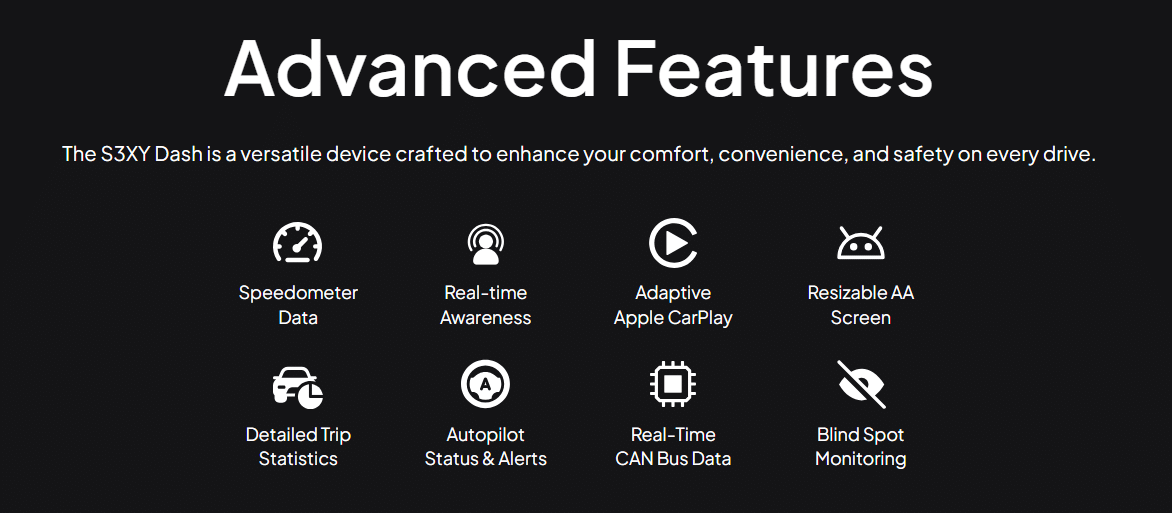
The S3XY Dash mounts behind the steering wheel or at the base of the windshield and connects through the vehicle’s diagnostic port to surface speed, battery metrics, regenerative-braking data, blind-spot indicators, and Autopilot-related alerts — functions drawn directly from Tesla’s internal telemetry. Its 9.6-inch display offers multiple customizable pages that owners can tailor to their preferred driving information.
The device also enables Apple CarPlay and Android Auto, something Tesla has consistently declined to support natively. This gives drivers access to their preferred navigation apps, messaging tools, and media services without sacrificing Tesla’s central touchscreen. The manufacturer’s product page outlines these capabilities and notes that pre-orders are open, with deliveries planned for February 2026.
A demonstration video posted by the company shows the system running Google Maps, Apple Music, and other smartphone-mirroring functions independently from the Tesla interface — a rarity in vehicles designed to minimize external software.
Why This One Gadget Exposes a Larger Fault Line
Tesla’s interior philosophy is famously spartan. Owners interact through a single center screen — a design intended to simplify the cockpit and reduce distractions. But as EVs grow more software-heavy, that minimalism is meeting resistance from drivers who expect a richer, more customizable information environment.
The popularity of devices like the S3XY Dash shows that a portion of the Tesla customer base still values a dedicated driver-facing readout, and not only for traditional speed and range metrics. The desire for CarPlay and Android Auto reflects a broader shift in consumer expectations: drivers want seamless integration between their cars and their digital ecosystems.
The implications go beyond convenience. When aftermarket hardware starts accessing vehicle data streams, it tests the boundaries of Tesla’s tightly controlled platform. The company’s over-the-air updates modify internal systems frequently; any device tapping into those systems has to withstand unpredictable changes without compromising function or safety. So far, Tesla has made no public comment on this accessory, but the tension between openness and control is increasingly difficult to ignore.
Installation, Compatibility, and the Quiet Risks Owners Weigh
Enhance, the maker of the S3XY Dash, claims the installation requires minimal disassembly: a USB-C power source, an OBD-linked cable, and optional routing for vehicles depending on production year. The company acknowledges positioning challenges, noting that placing the display behind the steering wheel may affect airflow from certain vents — a detail highlighted in Numerama’s reporting.
But the deeper risks are softer and harder to quantify. Any unofficial hardware raises questions about warranty implications, long-term compatibility with software updates, and potential conflicts with safety-related systems. The manufacturer states no major interference occurs, but Tesla has repeatedly reminded users that it does not endorse third-party modifications that plug into vehicle diagnostics.
This sets up a quiet standoff: owners pushing for expanded functionality, and a manufacturer committed to reducing variables inside a system it treats as an integrated whole.