Some things feel almost automatic these days. Like assuming that the most energy-efficient EV on the market must be a Tesla. After all, the brand has dominated the electric scene for over a decade. It’s the name most people associate with pushing boundaries in range, efficiency, and software.
But data tells its own story, and in 2025, the numbers quietly handed the efficiency crown to another player. A smaller one, less visible in the streets but very present in the specs: Lucid Motors.
A Quiet Shift in the Efficiency Race
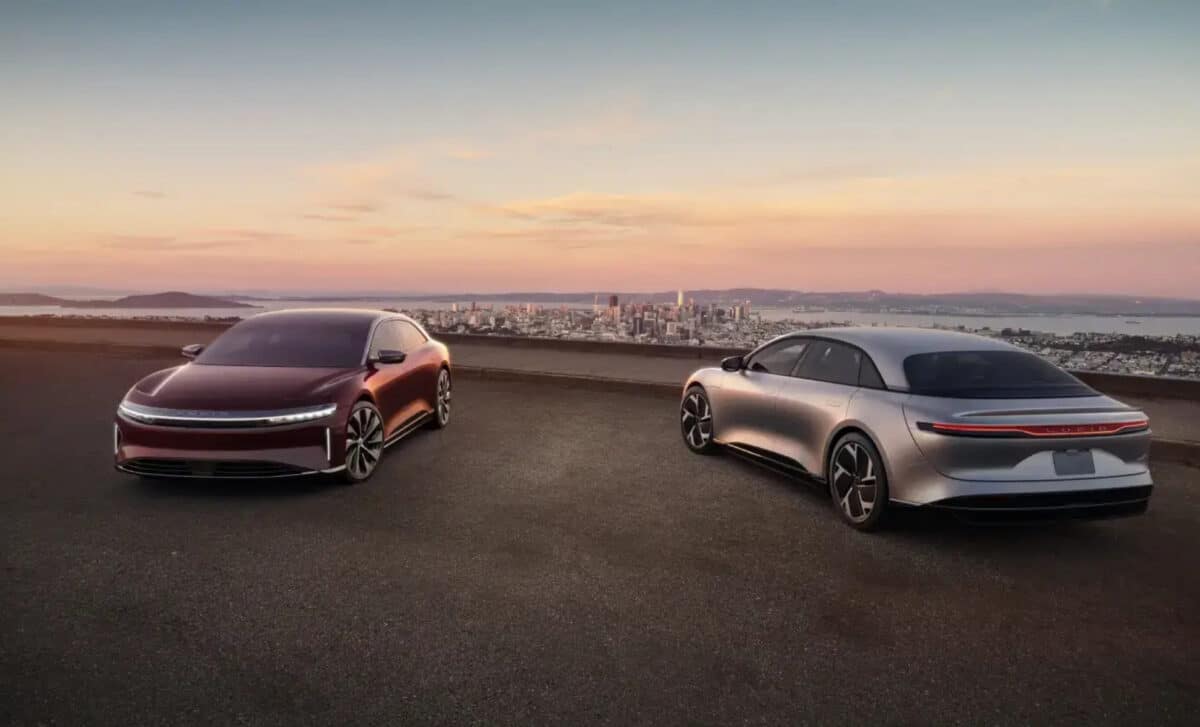
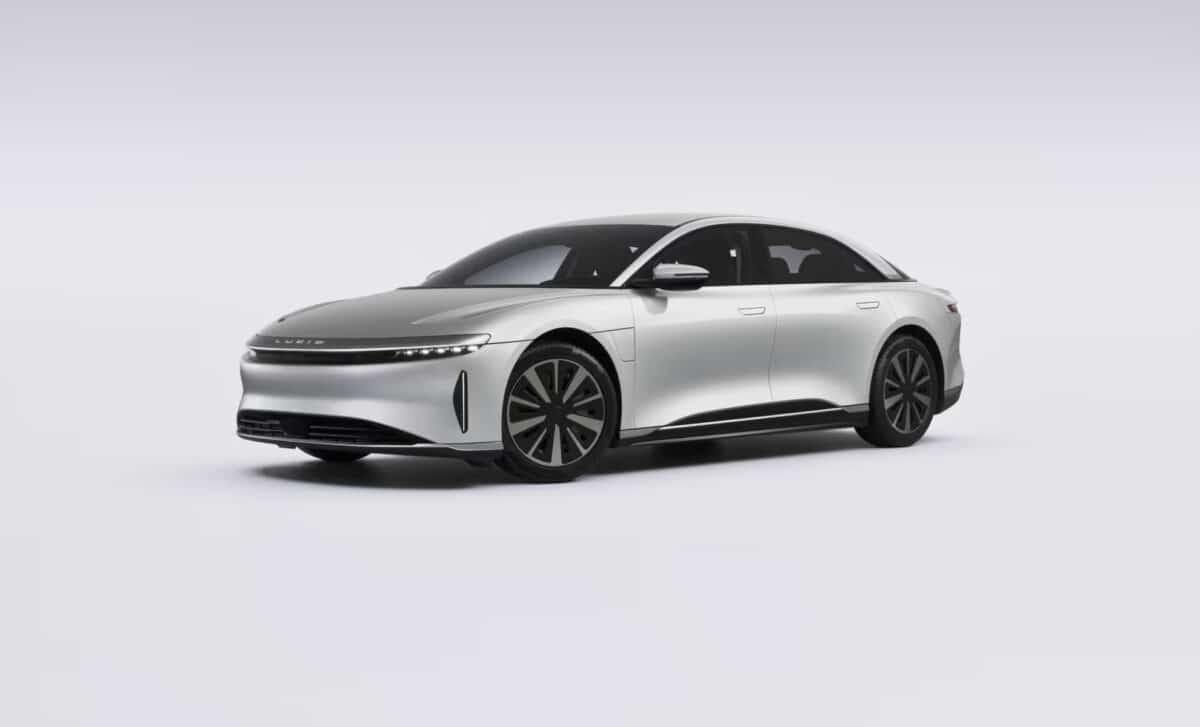
According to the latest figures from the EPA, the most efficient electric vehicle currently available in the United States isn’t a Tesla Model 3 or Model Y. It’s the Lucid Air Pure RWD, equipped with 19-inch wheels, which achieves an impressive 146 MPGe combined.
For comparison, the best-performing Tesla in the same test cycle, the Model Y Standard RWD, reached 138 MPGe. The Model 3 Long Range RWD followed close behind at 137 MPGe, as reported by Jalopnik. So, how did a newcomer like Lucid end up topping a leaderboard long ruled by Tesla?
What’s Behind Lucid’s Advantage?
Part of the answer lies in how Lucid builds its cars. The company emphasizes vertical integration, designing everything from battery packs and electric motors to vehicle software in-house. This full-stack control helps optimize every aspect of the vehicle’s energy consumption. The Air Pure’s drivetrain manages 5 miles per kWh, significantly ahead of Tesla’s best result of 4.09 miles per kWh.
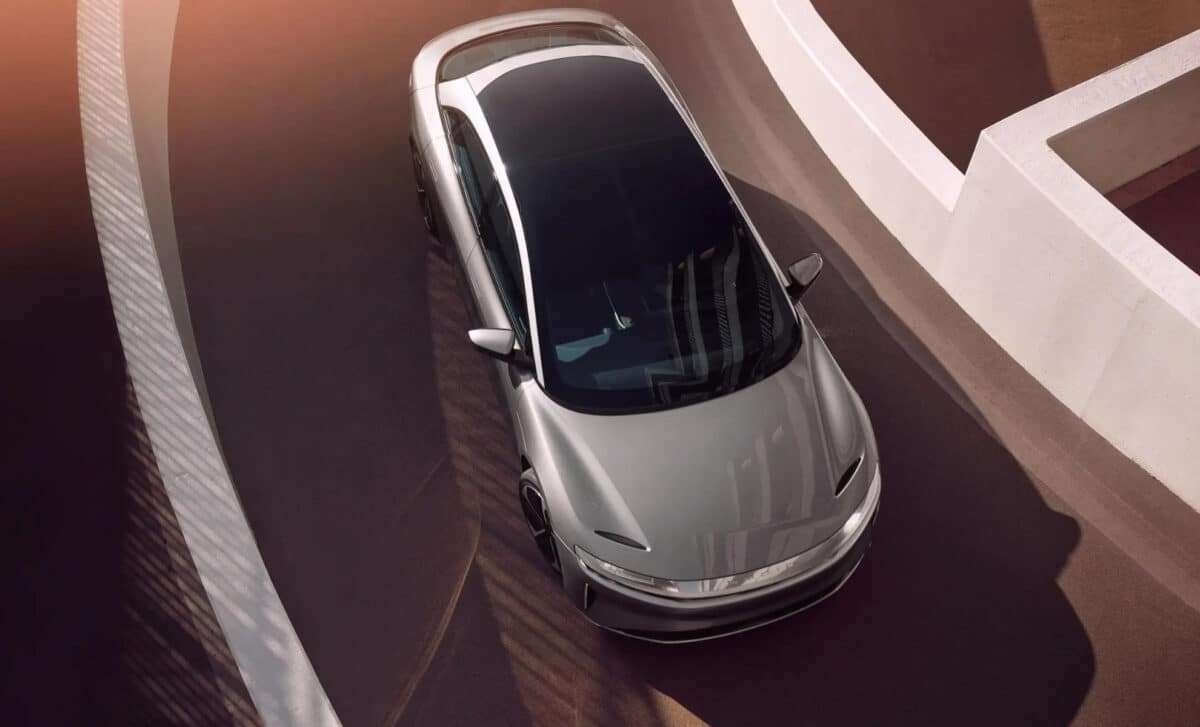
Engineering plays a major role too. The electric motor developed by Lucid is compact, light, and remarkably efficient. The body is shaped with aerodynamic precision, its drag coefficient is just 0.197, which puts it among the most aero-efficient cars ever made. Materials matter as well: the structure combines aluminum with a lightweight composite for the battery pack enclosure, improving both heat resistance and weight distribution.
Longest Range and Highest Efficiency, Together?
Interestingly, Lucid hasn’t just built a more efficient car. In several configurations, the Air also offers longer range than its Tesla rivals. That’s unusual in the EV world, where increasing range often comes at the cost of efficiency. The 2025 Air Pure, depending on configuration, can exceed 400 miles of real-world range, while still maintaining top-tier MPGe numbers.
That makes it a bit of a unicorn, low consumption and high autonomy in the same package. As Supercar Blondie notes, this dual success is particularly striking given Lucid’s limited market share. Unlike Tesla, which sold over 1.8 million vehicles in 2023, Lucid is still a niche player with a more premium pricing strategy.
The Price of Progress
That last point is worth unpacking. The Lucid Air Pure starts at just over $70,000, while a base Tesla Model 3 costs under $40,000. That gap explains a lot. Lucid’s numbers may dominate the charts, but Tesla still dominates the roads.
Still, the Air Pure isn’t an eco-warrior in sandals. It accelerates from 0 to 60 mph in the mid-four-second range and offers a driving experience that blends comfort with minimalism. Screens dominate the cabin, as in Teslas, but the layout is a bit more traditional, more grounded.
Looking Beyond the Spec Sheet
There’s no denying that Tesla remains a benchmark in the EV space, and for good reason. But Lucid is offering a reminder that innovation doesn’t always come from the biggest voice in the room. Sometimes, it shows up in decimal points, silent aerodynamics, and subtle optimizations.
Of course, efficiency isn’t everything. Infrastructure, pricing, production scale, and brand loyalty all play into the EV equation. Still, in 2025, the Lucid Air Pure showed that even in a field dominated by one name, there’s room for others to lead, at least when the stopwatch and the energy meter are watching. And that’s probably how it should be.