
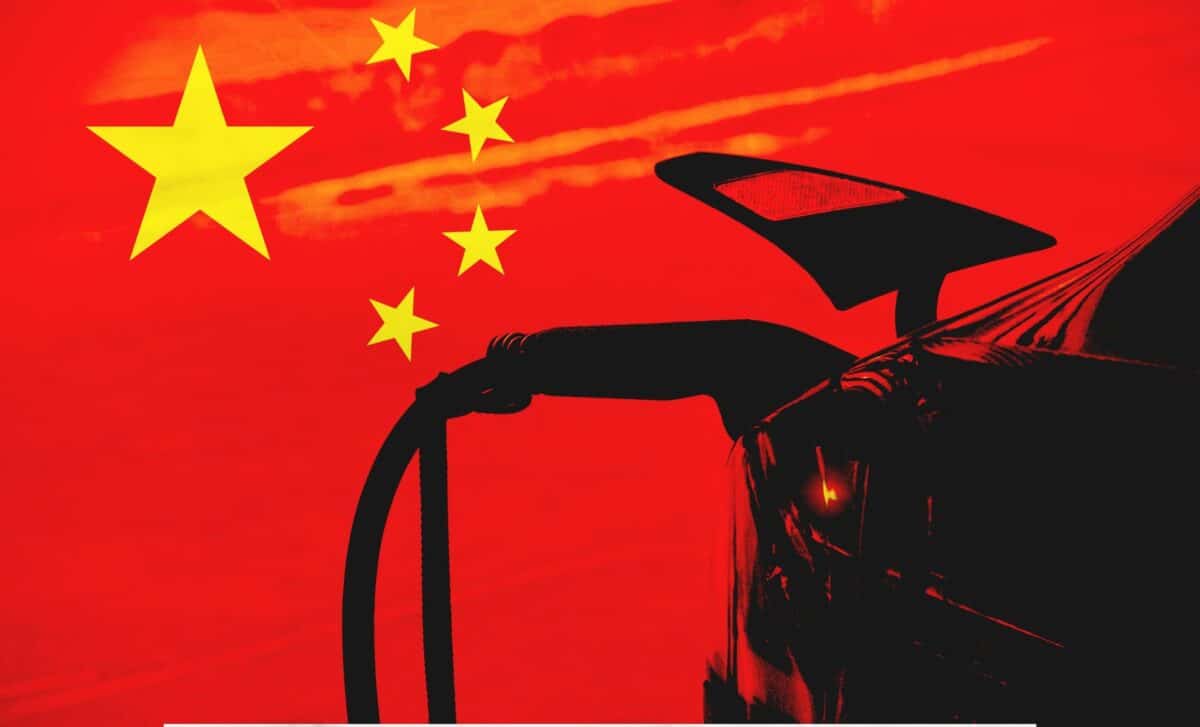
A US lawmaker is preparing legislation to permanently ban Chinese automobiles from the American market, expanding existing restrictions already in place. The proposal also calls on Europe and other allies to adopt similar measures, framing the issue as one of national security.
At the same time, Washington has already begun tightening rules on Chinese technologies in vehicles. The new proposal would go further, aiming to eliminate any remaining form of Chinese involvement in cars sold in the US, whether through software, hardware, or partnerships.
A Plan To Extend An Already Strict Framework
Senator Bernie Moreno, a Republican from Ohio, announced that he would introduce a bill designed to fully close the US market to Chinese automakers. He made the statement during the New York International Auto Show, outlining a strategy that targets not only imports but also indirect participation.
According to Auto Journal, the Biden administration had already taken action in January 2025 by effectively banning connected vehicles of Chinese origin, citing concerns over data collection. The existing roadmap includes a prohibition on Chinese software in vehicles starting in 2027, followed by a ban on hardware components from 2029.
Moreno’s proposal would go beyond these measures by blocking joint ventures between US and Chinese companies and banning any software integration involving Chinese entities, even partially. He stated that no Chinese vehicle should be allowed on American roads, comparing the sector to Huawei, which has been excluded from US telecom infrastructure.
Security Arguments At The Core Of The Debate
US authorities have justified these restrictions by pointing to the data-gathering capabilities of modern vehicles. Connected cars can collect information about drivers and their surroundings, raising concerns about how such data could be used.
The Chinese embassy in Washington has strongly criticized the proposed legislation. It described the initiative as protectionist and accused the United States of undermining the principles of a market economy and engaging in economic coercion.
Chinese officials argue that their automakers are competitive and that their growing success abroad reflects consumer demand rather than unfair practices. In Europe, Chinese vehicles already represent an increasing share of new registrations, highlighting the contrast with the US market.
Allies Divided, Us Positions Remain Mixed
Moreno has called on several regions, including Europe, Canada, Mexico, and Latin America, to adopt comparable restrictions. His appeal comes at a time when allied countries are not aligned on the issue.
Canada recently approved the import of 49,000 Chinese electric vehicles, a decision criticized by some US representatives. Moreno reacted strongly, warning allies against allowing what he described as harmful economic influence to take hold.
Within the United States, there are also differing views. While domestic automakers and industry groups broadly support stronger barriers, citing both security and job protection, political positions vary. Donald Trump said in January that he would be open to Chinese manufacturers building factories in the US if they hire local workers.
This stance contrasts with Moreno’s proposal, which seeks to ban any partnership involving Chinese companies. Planned negotiations between US and Chinese officials in May are expected to further complicate a debate that now extends beyond the automotive industry alone.