
Nissan plans to reduce its global lineup while preserving its most emblematic models and introducing AI-driven systems on a large scale.The announcement comes a little over a year after CEO Ivan Espinosa signaled a recovery phase for the company following several difficult years.
The new roadmap focuses on simplifying operations, grouping vehicles into shared families, and reinforcing key markets. At the center of this plan is a combination of cost optimization and technological investment, with Nissan targeting a more efficient portfolio and broader adoption of advanced driver assistance and AI-based features.
A Reduced Lineup Built Around Four Model Families
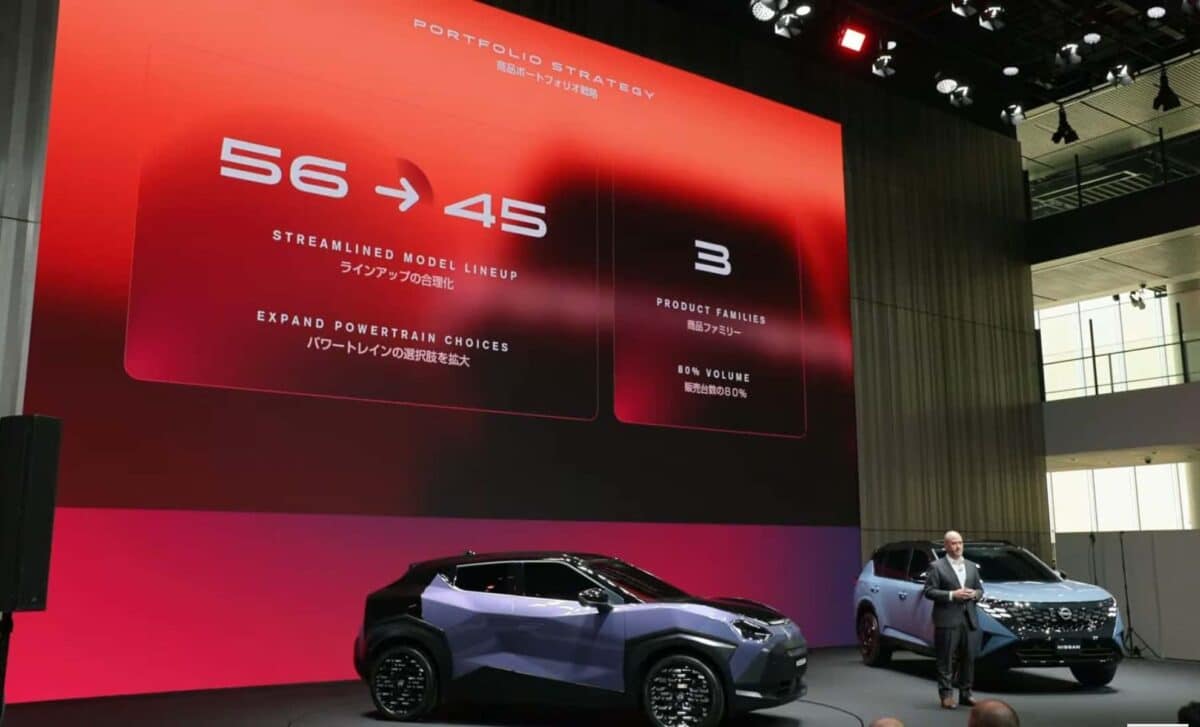
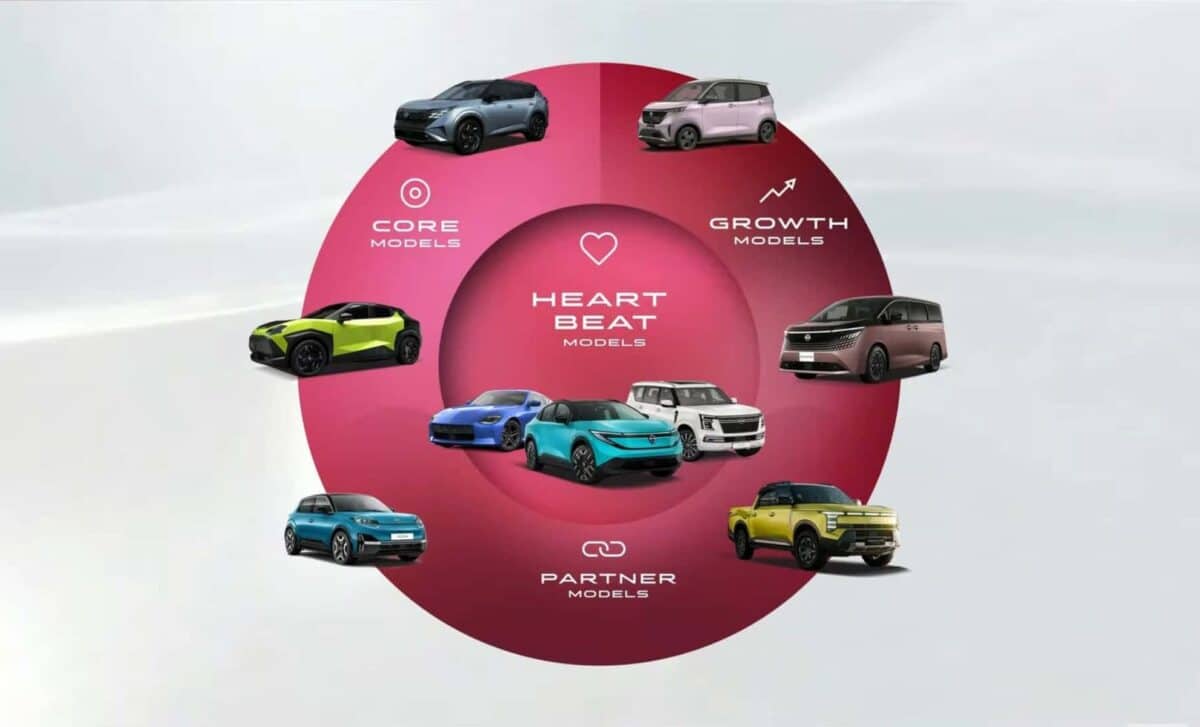
Nissan intends to cut its product portfolio from 56 models to 45, removing what it describes as “low-performing models.” According to The Drive, this restructuring will organize vehicles into four distinct families: Heartbeat, Core, Growth, and Partner.
The Heartbeat category will include models that define the brand’s identity and emotional appeal. This group retains iconic nameplates such as the Z and GT-R, which are explicitly protected. The next-generation GT-R is expected to be a hybrid retaining the VR38 engine block, with a target arrival by 2030, while development on a new Z will follow. The upcoming Xterra and a next-generation Skyline sedan, linked to the Infiniti Q50, are also part of this category.
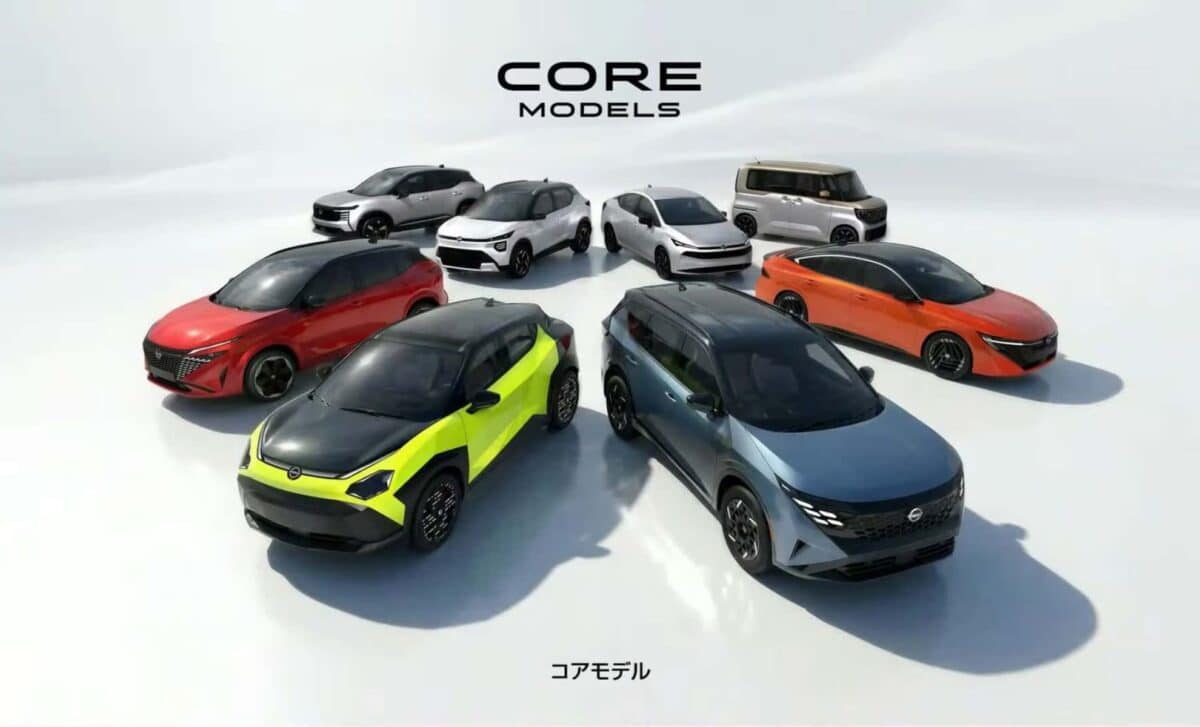
Core models will focus on high-volume stability. The Rogue, known as the X-Trail in other markets, exemplifies this group and will adopt Nissan’s e-Power system, a series hybrid setup where a gasoline engine generates electricity to power electric motors.
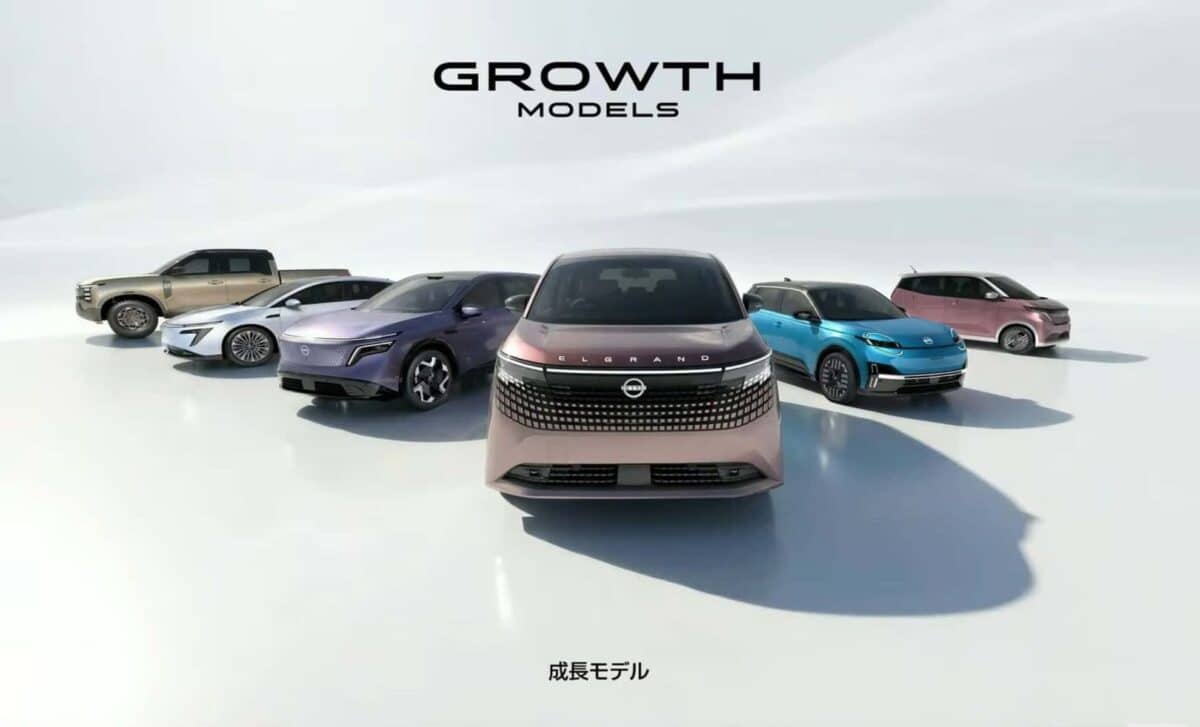
Growth models aim to expand market share in specific regions. A new Juke, for example, is planned for Europe but will not be sold in the United States. Partner models, meanwhile, are designed to extend market reach through collaborations. A rebadged Mitsubishi Montero based on the Armada could fall into this category.
Shared Platforms And A Sharper Market Focus
The future lineup will rely heavily on shared platforms, powertrains, and software. Nissan states that three main vehicle families, including frame-based vehicles, will account for up to 80% of its global volume, leaving 20% for more specialized models such as the Z and GT-R.
This industrial simplification is paired with a refined geographic strategy. Nissan will prioritize the United States, Japan, and China as its main markets, with Europe notably absent from this core focus. The company expects sustained growth in the U.S., targeting 1 million annual sales by 2030. That figure represents a 7.97% increase compared to the 926,153 vehicles sold in 2025.
AI Integration Set To Reach Most Of The Lineup
Artificial intelligence is positioned as a central pillar of Nissan’s future vehicles. The company plans to embed AI-driven systems in 90% of its lineup over time, although it has not specified a precise rollout schedule.
These technologies will cover both advanced driver assistance systems and vehicle controls. The first model to feature this new AI integration will be the Japanese-market Elgrand, expected this summer. It will introduce the next-generation ProPilot system, described as offering hands-free driving with end-to-end self-driving capabilities targeted for completion by the end of fiscal year 2027.
Nissan has not provided detailed timelines for the broader deployment of its redesigned lineup, leaving some aspects of the transition still undefined.