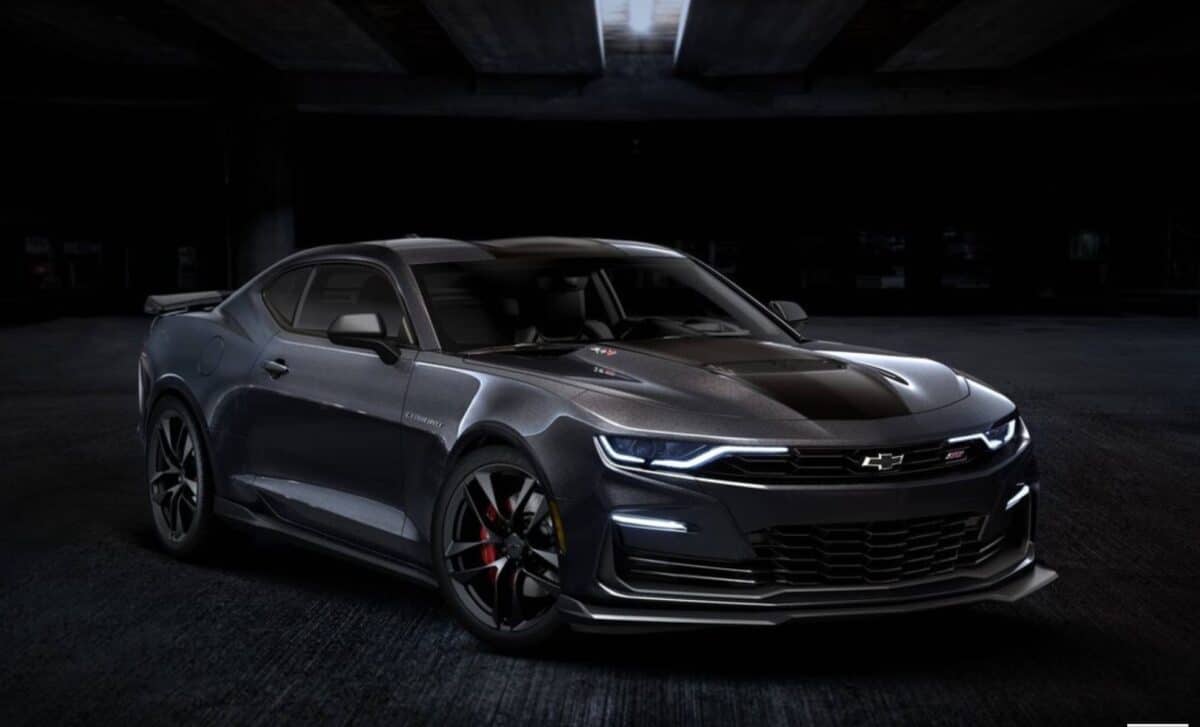
After a brief hiatus, Chevrolet appears ready to re-enter the pony car battle against the Ford Mustang and Dodge Charger. The upcoming Camaro is likely to remain a two-door sports car, though a four-door variant has not been ruled out, echoing Dodge’s strategy with the Charger.
The return of the Camaro also addresses a gap in Chevrolet’s lineup. Since the model was discontinued after the 2024 model year, the Corvette has stood as the brand’s most accessible sports car, starting above $72,000. The reintroduction of the Camaro is expected to offer a more attainable performance option while signaling continued support for gasoline-powered vehicles.
A Familiar Platform With Potential All-wheel Drive
The next-generation Camaro is expected to ride on an updated version of General Motors’ Alpha platform, which previously underpinned the outgoing Camaro as well as the Cadillac CT4 and CT5. According to Car and Driver, this revised “Alpha 2” architecture will also serve future Cadillac and Buick sedans.
The platform remains designed for front-engine, rear-wheel-drive configurations, and the Camaro is expected to maintain that layout. Still, all-wheel drive could be offered as an option, as it is already available on the CT4 and CT5. This addition would help broaden the car’s appeal, particularly in colder climates, while strengthening competition with rivals like the Dodge Charger.
Earlier reports had suggested a possible shift to the VSS-R platform used in the China-market Cadillac CT6, but current expectations point toward an evolution of the proven Alpha architecture instead.
Engine Lineup Led By A New-generation V-8
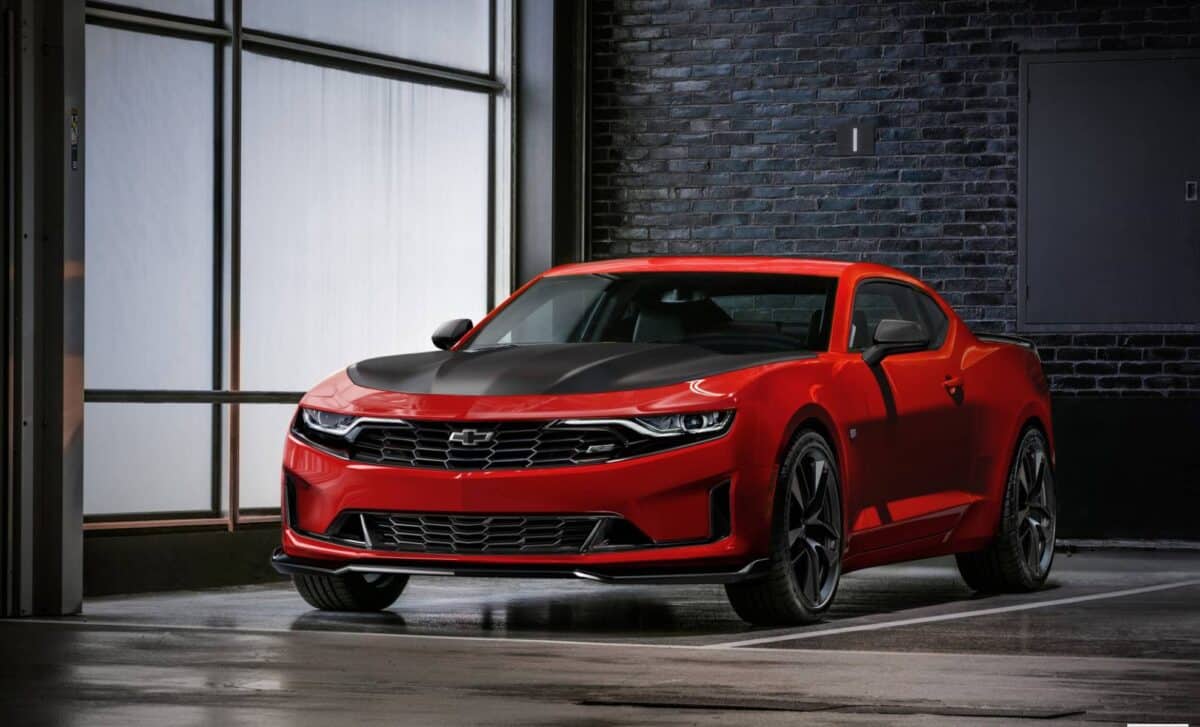
Under the hood, the 2028 Camaro is expected to offer a range of internal-combustion engines. The base model will likely feature a turbocharged four-cylinder engine, possibly the 2.7-liter unit already used in the Cadillac CT4. This engine produces 325 horsepower and 380 lb-ft of torque in the CT4-V, with higher torque figures in Chevrolet trucks.
A key highlight remains the return of a V-8 option. The Camaro is expected to adopt the new 6.7-liter small-block LS6 engine introduced in the 2027 Corvette Stingray and Grand Sport, delivering 535 horsepower and 520 lb-ft of torque. This would represent a noticeable increase over the previous Camaro SS.
Higher-performance variants are also anticipated. Following historical patterns, the Camaro could share additional Corvette engines, including a 5.5-liter V-8 for future versions such as a ZL1 or Z/28.
Transmission options are expected to include a 10-speed automatic, with the possibility of a six-speed manual similar to those offered in the CT4-V Blackwing and CT5-V Blackwing. A V-6 engine, previously positioned between the four-cylinder and V-8, may not return, as simplifying the lineup appears likely.
Positioning, Risks, And Expected Pricing
The Camaro will once again compete directly with the Ford Mustang and Dodge Charger, while also overlapping with sports cars like the Nissan Z and BMW M2. Maintaining a competitive edge will depend on meeting enthusiast expectations, particularly regarding the availability of a V-8 and a manual transmission.
Production is scheduled to begin in late 2027 at GM’s Lansing Grand River Assembly plant in Michigan, where the Camaro will be built alongside related Cadillac and Buick models. The vehicle is expected to go on sale as a 2028 model.
Pricing is projected to start around $40,000 for a four-cylinder version, with V-8 models likely exceeding $50,000. Chevrolet’s objective appears to be keeping the Camaro more affordable than the Corvette, while still delivering strong performance credentials.
The model’s design will also play a decisive role. A fastback silhouette with a sloping roofline and hatchback—recalling earlier generations—is expected, but its reception among buyers could influence the car’s success as much as its specifications.