
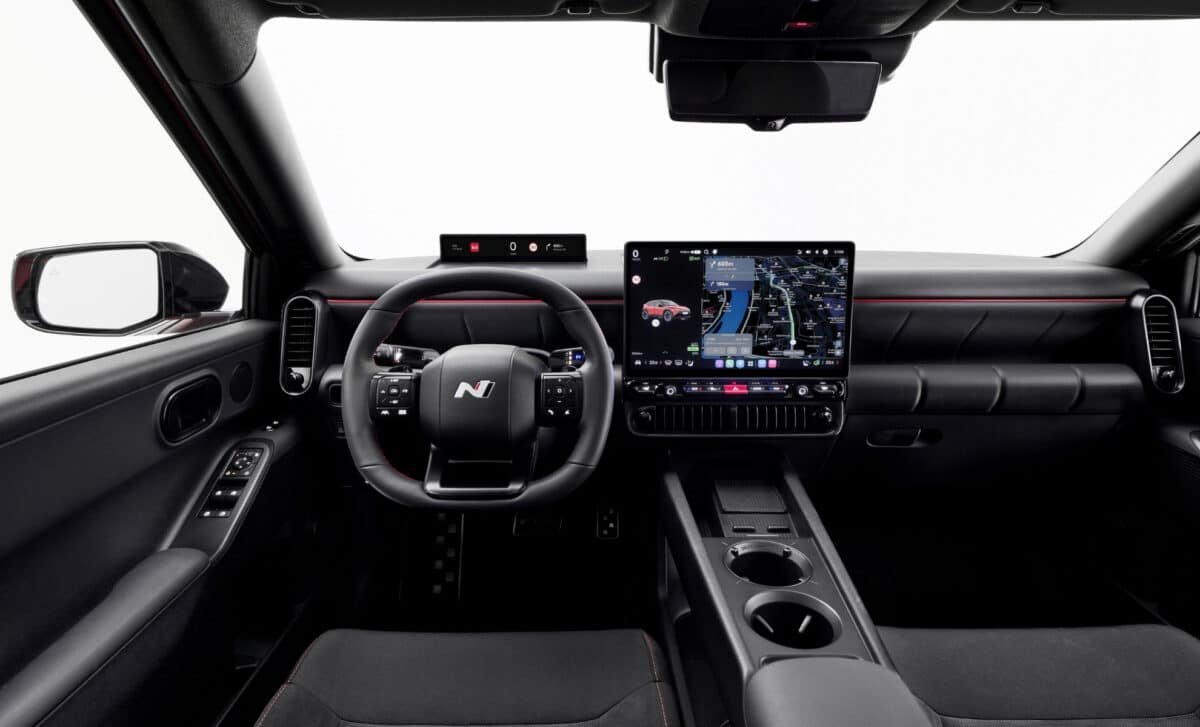
The announcement marks a step in Hyundai’s broader shift toward becoming a software-defined mobility company, extending across its Hyundai, Kia, and Genesis brands. Pleos Connect is positioned as a central element of this transition, integrating navigation, media, and vehicle controls into a unified platform.
The system was developed through extensive research into driver behavior conducted at Hyundai’s user experience studios in Seoul, Irvine, Frankfurt, and Shanghai. That research shaped both the interface design and the balance between digital and physical controls.
A Smartphone-Like Interface Designed for Everyday Use
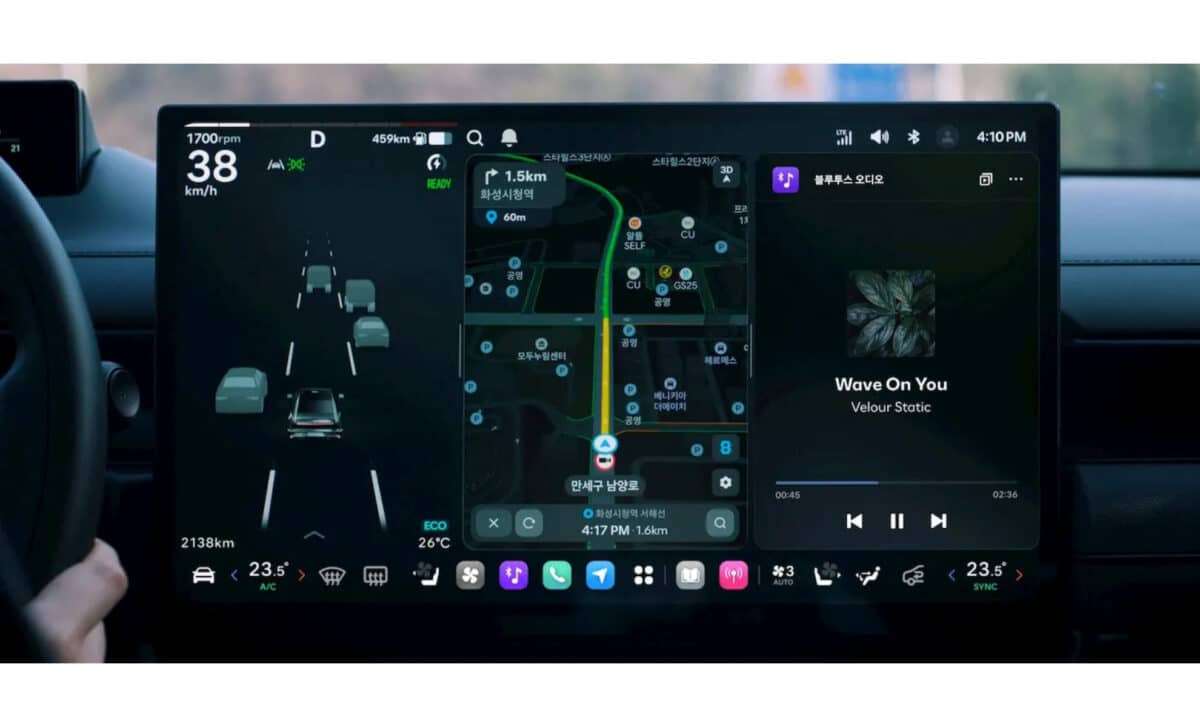
Pleos Connect introduces a layout that closely resembles a mobile operating system, with app-based navigation and customizable elements. The main display is divided into three sections: driver information on the left, navigation and applications on the right, and a lower bar for pinned or recently used apps.
According to Electrek, Hyundai designed this structure to make the system easier to navigate while driving, reducing the need for complex menu interactions. The interface supports functions such as music, navigation, and other in-car services in a format familiar to most users.
The system also includes an improved navigation experience, with a simplified and customizable screen layout alongside real-time routing guidance. These updates aim to streamline how drivers access directions and adjust their routes during trips.
A Key Difference from Tesla
While Pleos Connect shares similarities with Tesla’s infotainment approach, Hyundai has introduced notable differences in its implementation. One of the most visible changes is the inclusion of a slim secondary display positioned directly in front of the driver.
This smaller screen shows essential information such as speed, media playback, and turn-by-turn directions, allowing drivers to keep their focus forward. This setup reduces reliance on the central screen for critical driving data.
Hyundai has also retained physical buttons below the main display and on the steering wheel. These controls manage functions like climate settings and media, offering an alternative to fully touch-based interaction and addressing usability concerns often raised with fully digital systems.
Gleo AI and the Shift Toward Software-Defined Vehicles
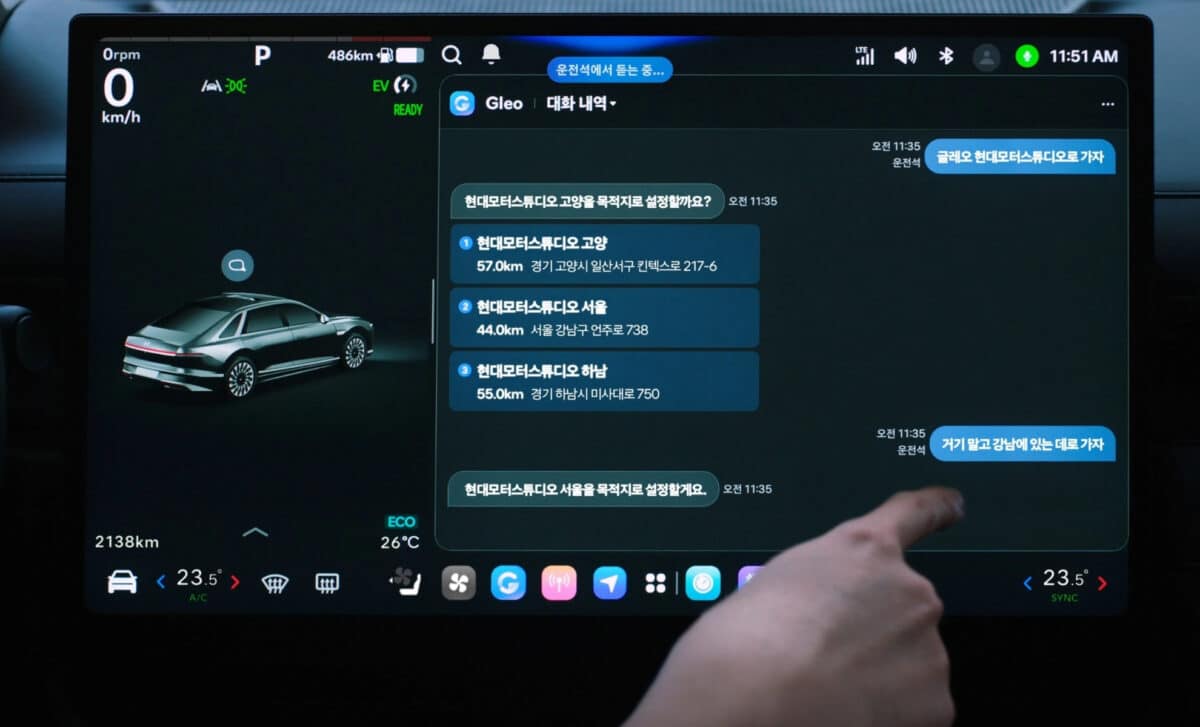
A central component of Pleos Connect is Gleo AI, Hyundai’s voice assistant built on a large language model. The system can handle commands such as setting navigation destinations, adjusting climate controls, or searching for information like weather and sports updates.
Gleo AI is designed to improve over time by learning from user interactions, forming part of Hyundai’s long-term strategy to deliver a personalized in-car experience. The system will continue evolving through over-the-air updates, adding new features and capabilities.
Pleos Connect will debut on the new Grandeur in South Korea in May, with a broader global rollout planned, including the upcoming IONIQ 3. Hyundai Motor Group aims to equip around 20 million vehicles with the system by 2030, describing it as its first tangible step toward a full software-defined vehicle architecture.