

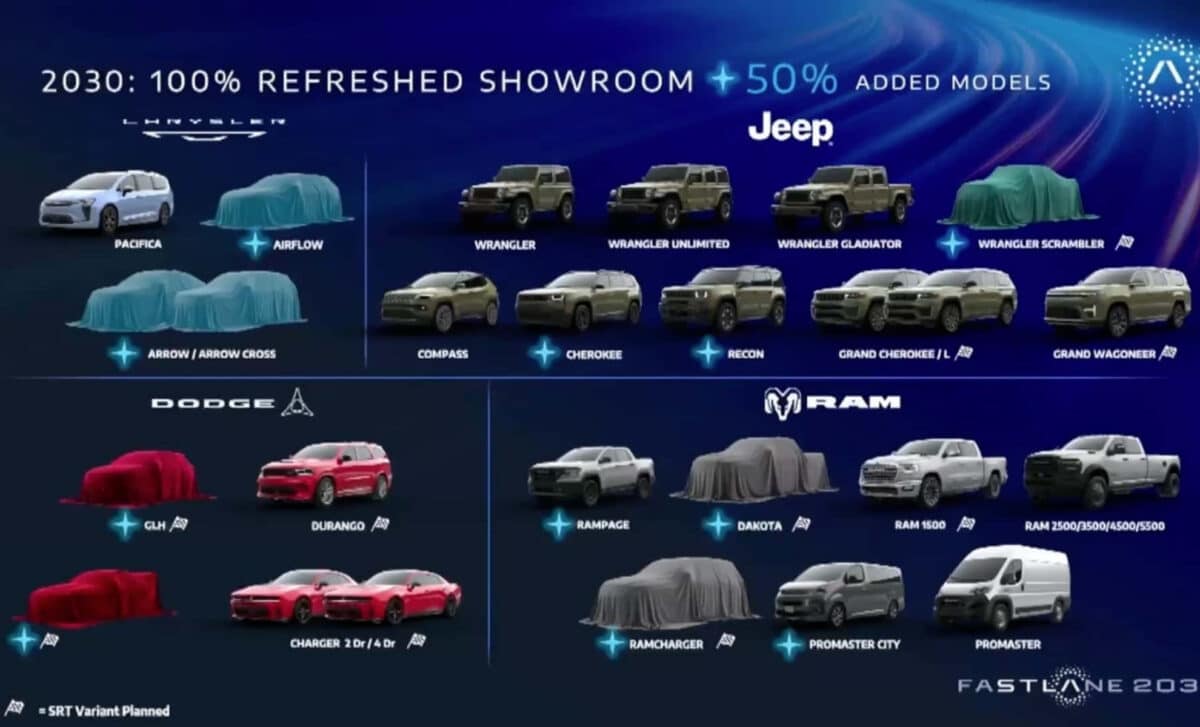
The transatlantic carmaker has had a rough stretch. Sales and profits have taken a significant hit amid fierce competition in both the EV and software segments, and its American EV launches have largely misfired. The Jeep Wagoneer S and Dodge Charger Daytona EV both failed to gain traction, leaving buyers dealing with unfinished software experiences. Earlier this year, Stellantis quietly pulled its plug-in hybrid lineup from the U.S. market, axing the Jeep Wrangler 4xe, Cherokee 4xe, and Chrysler Pacifica PHEV, to double down on its profitable gas-powered trucks and SUVs as regulatory conditions shifted.
Now the company is restarting from the ground up. The plan covers not just EVs but a complete rethink of how its vehicles are engineered, connected, and eventually driven autonomously. It is, by any measure, one of the most ambitious restructuring roadmaps the company has ever put forward, and also, for that reason, one of the most scrutinized.
A Single Platform to Rule Them All
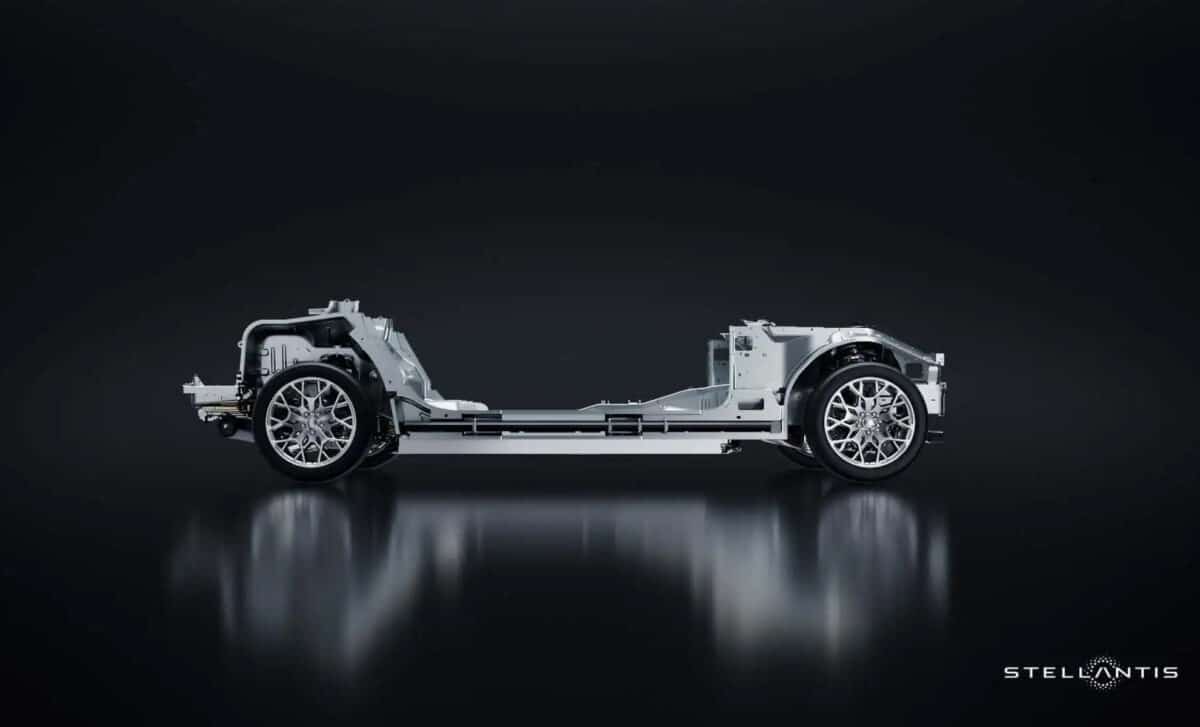
At the core of the turnaround is STLA One, a new scalable vehicle architecture designed to replace five existing platforms with a single unified system. According to InsideEVs, STLA One will cover three key vehicle segments: subcompact (B), compact (C), and large family-oriented vehicles (D), with 70% parts commonality shared across all three. That kind of consolidation is exactly what engineers and finance teams dream about, it slashes complexity and helps offset the enormous capital costs associated with electrification.
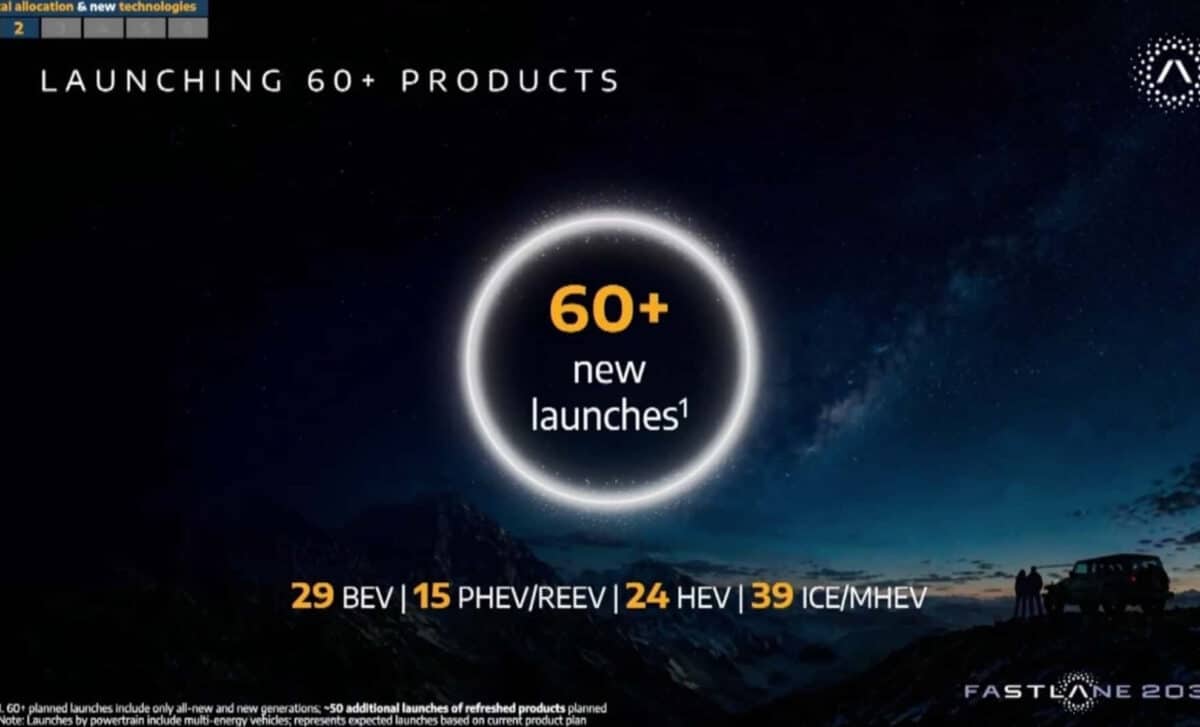
The platform will support an 800-volt architecture, enabling faster charging speeds and improved energy efficiency. It is also designed to accommodate multiple powertrain types. Over the next five years, Stellantis plans to launch 29 new EVs, 15 plug-in hybrid or extended-range models, 24 traditional hybrids, and 39 combustion-powered vehicles all riding on this new architecture. It is worth noting that Stellantis is not alone in this kind of ground-up rethink, Ford, Volkswagen, and Mercedes-Benz have all gone through similar painful recalibrations of their EV strategies in recent years.
LFP Batteries and Cell-to-Body Design
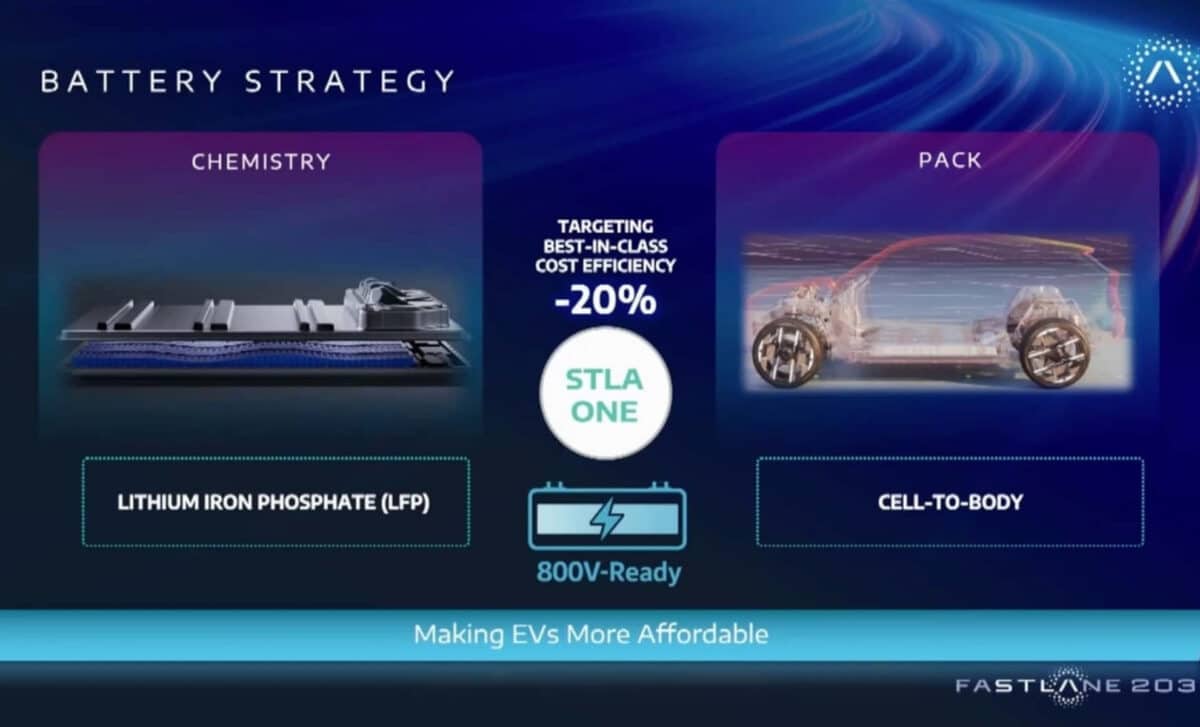
For the electric version of STLA One, Stellantis is turning to lithium iron phosphate batteries, LFP chemistry that has become dominant in China largely because it eliminates reliance on expensive minerals like nickel and cobalt. The trade-off has historically been lower energy density compared to nickel-based alternatives, but, as InsideEVs reports, advances in LFP technology in China have meaningfully narrowed that gap in both range and fast-charging capability.
Stellantis is also adopting a cell-to-body battery pack design, a structural approach that integrates battery cells directly into the vehicle’s body rather than housing them in separate modules. The benefits are tangible: less weight, reduced mechanical complexity, more interior space, and a higher usable energy density because more cells can be packed into the same footprint. It is a technical direction that several of the most competitive EV makers have been moving toward, and Stellantis is now following suit.
Qualcomm Partnership and a Tesla FSD Rival
On the software and autonomy front, Stellantis is expanding its existing partnership with chip giant Qualcomm. The company will integrate Qualcomm’s Snapdragon Digital Chassis across its vehicle lineup to upgrade in-vehicle infotainment and cockpit experiences. For advanced driver-assistance systems, it will incorporate Qualcomm’s Ride Pilot ADAS platform.
Perhaps the most headline-grabbing element of the announcement is Stellantis’s partnership with Wayve, a U.K.-based autonomous vehicle startup. The two companies will work together to bring hands-free, supervised door-to-door automated driving to Stellantis vehicles, a capability explicitly framed as comparable to Tesla’s Full Self-Driving system. It is an ambitious target in a space where even the most well-resourced players have struggled to deliver on their promises.
The first vehicles built on these new technologies are expected to begin rolling out as soon as next year. Legacy automakers have a long track record of announcing transformative roadmaps that later stall, get scaled back, or disappear entirely. When the first STLA One models hit showrooms, that will be the real test of whether Stellantis has genuinely turned a corner.