

Presented during a meeting with dealers and partners in Salzburg, the plan reflects Ford’s attempt to strengthen its position in one of the industry’s most competitive regions. The company is pursuing growth through two parallel priorities: expanding Ford Pro, its commercial-vehicle division, and renewing its passenger-car lineup with rally-inspired models built in Europe.
Ford says Ford Pro has already become central to its European business. The commercial-vehicle arm has led the market in Europe for 11 consecutive years, while the company now aims to turn software and connected services into a larger source of revenue.
The automaker also used the event to repeat its support for zero-emissions mobility, while warning European regulators that transition targets need to remain aligned with market demand and infrastructure realities, particularly for small businesses operating fleets.
Ford Pro Expands Beyond Commercial Vehicles
Ford is increasingly positioning Ford Pro as a productivity and services platform rather than only a manufacturer of vans and trucks. According to Motor1, the company wants software and services to account for 25 percent of Ford Pro’s EBIT.
The business already relies heavily on connected-vehicle systems. Every Ford Pro vehicle sold since 2019 includes an embedded modem, allowing real-time monitoring and data collection. Ford says more than 1.2 million customers in Europe are currently connected, generating nearly 6 million diagnostic signals every day.
At the center of this approach are the company’s Uptime Services, which monitor vehicle health and identify potential problems before breakdowns occur. Ford stated that the system delivered nearly one million additional days of uptime for customers during 2024.
One of the updates announced in Salzburg focuses on smaller businesses, which have generally had limited access to advanced fleet-management systems. Through the new Dealer Uptime Services program, dealerships will monitor vehicle conditions proactively, contact customers before failures occur, and prepare parts and workshop appointments in advance.
Early pilot programs showed repair-time reductions of up to 50 percent, while around 80 percent of repair jobs were identified proactively. Ford also indicated that the program could increase customer retention and generate additional revenue for dealer service departments.

Ranger Super Duty and Transit City Target Very Different Markets
Ford’s new commercial-vehicle announcements include two models designed for opposite ends of the market.
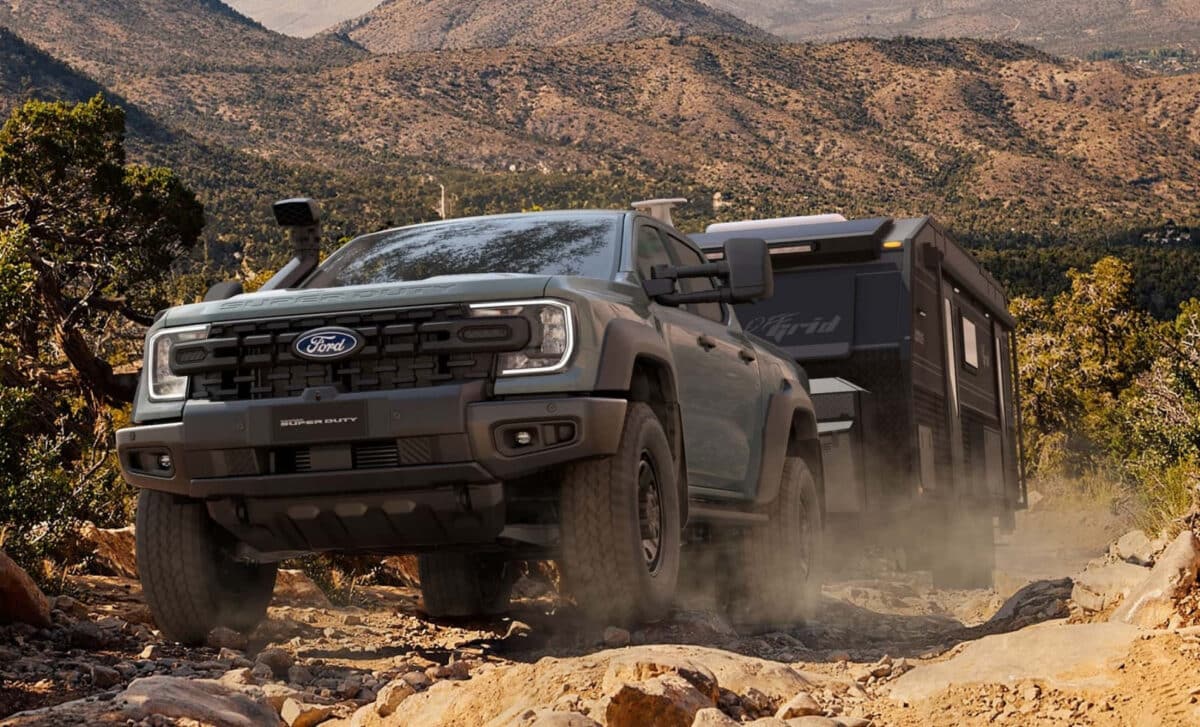
The Ranger Super Duty, available immediately, is intended for heavy-duty professional applications including emergency services, forestry, mining, and military use. The pickup has a combined gross weight rating of 17,637 pounds, or 8 metric tons.
The vehicle also offers towing capacity of up to 9,921 pounds and a payload capacity close to 4,409 pounds. Ford added reinforced suspension, extra underbody protection, and increased ground clearance as standard equipment.
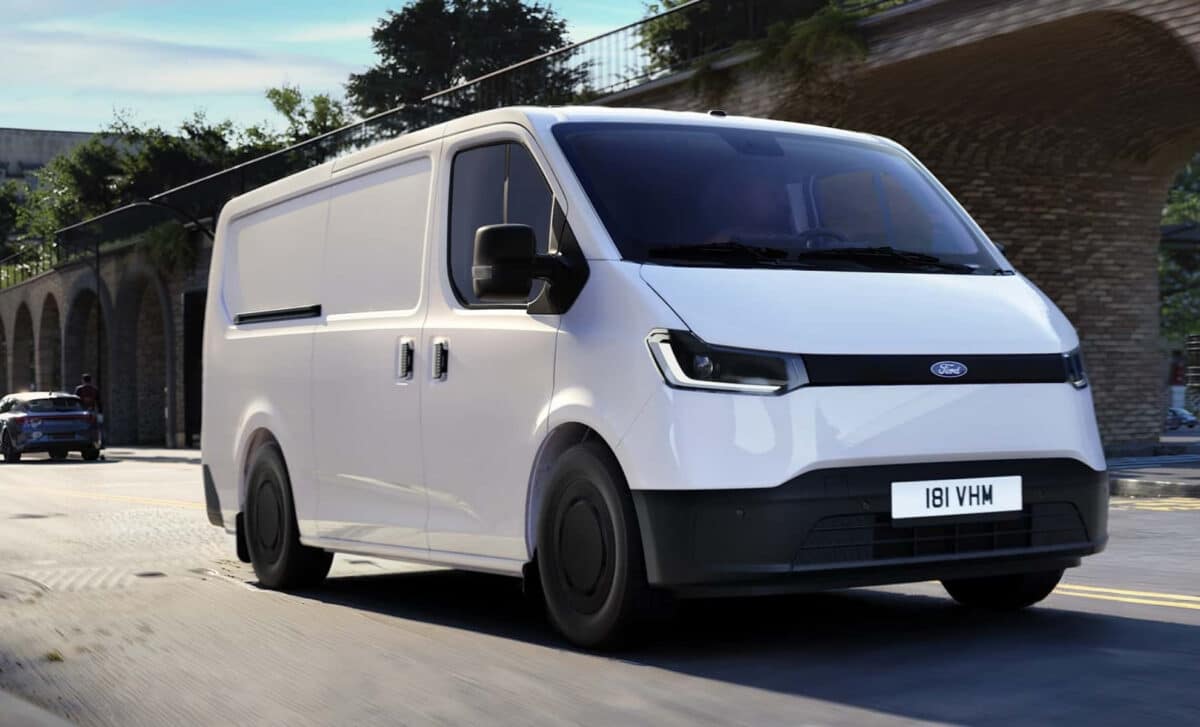
At the other end of the lineup is the Transit City, a fully electric van developed for urban fleets operating in low-traffic or restricted-access zones increasingly common in European cities.
Ford plans to offer the Transit City in a single high-specification configuration with three variants available, including a chassis-cab version intended for customized conversions. The company expects the model to arrive at dealerships by the end of 2026.
Five New Passenger Vehicles Planned by 2029
Ford also confirmed the arrival of five new passenger vehicles for Europe before the end of 2029. The automaker stated that all of them will be built in Europe and influenced by the company’s rally heritage and long competition history. The upcoming range includes a new Europe-focused Bronco family model and a compact multi-energy SUV that will be produced at Ford’s Valencia plant beginning in 2028.
The company also announced a subcompact electric car in the B-segment designed with sporty driving dynamics, alongside a small urban electric SUV using the same design language. Two additional multi-energy crossovers are expected to complete the lineup by 2029.

During the Salzburg presentation, Ford repeated its support for a zero-emissions future while calling for greater flexibility from European regulators. According to the company, targets that advance faster than consumer demand could slow fleet renewal and create unintended effects on emissions reduction efforts.
Ford also called for broader recognition of plug-in hybrids and extended-range electric vehicles as transition technologies. The automaker pointed to ongoing charging infrastructure limitations and delays in obtaining electrical-grid connections for fleet depots, issues that continue to affect small business operators across Europe.