
The average transaction price for a new vehicle climbed to $49,275 in March, reflecting a 3.5 percent increase year over year, according to data reported by Cox Automotive’s Kelley Blue Book. At the same time, EV prices dropped by 2.8 percent to $54,508, marking the third consecutive monthly decline.
This shift comes as manufacturers intensify discount strategies to stimulate demand for electric models. While EV affordability is improving, consumer preferences continue to lean heavily toward larger, more expensive vehicles, shaping the broader market dynamics.
Automakers Increase Incentives To Sustain Ev Demand
Discounting has become a central tool in the EV market. According to data from Cox Automotive, incentives on electric vehicles now average 14.6 percent of the transaction price, a notably higher level than the broader industry average of 7.2 percent.
These incentives are effectively reducing the upfront cost for buyers, but they come at a steep cost for manufacturers, who are absorbing nearly $8,000 per vehicle sold. The strategy reflects growing pressure to maintain sales momentum in a segment where pricing remains a barrier for many consumers.
Meanwhile, internal combustion engine vehicles and hybrids are not seeing the same level of price adjustments. Their pricing has remained relatively stable, with the overall industry average transaction price showing little month-over-month variation.
Price Gap Narrows, But Evs Remain More Expensive
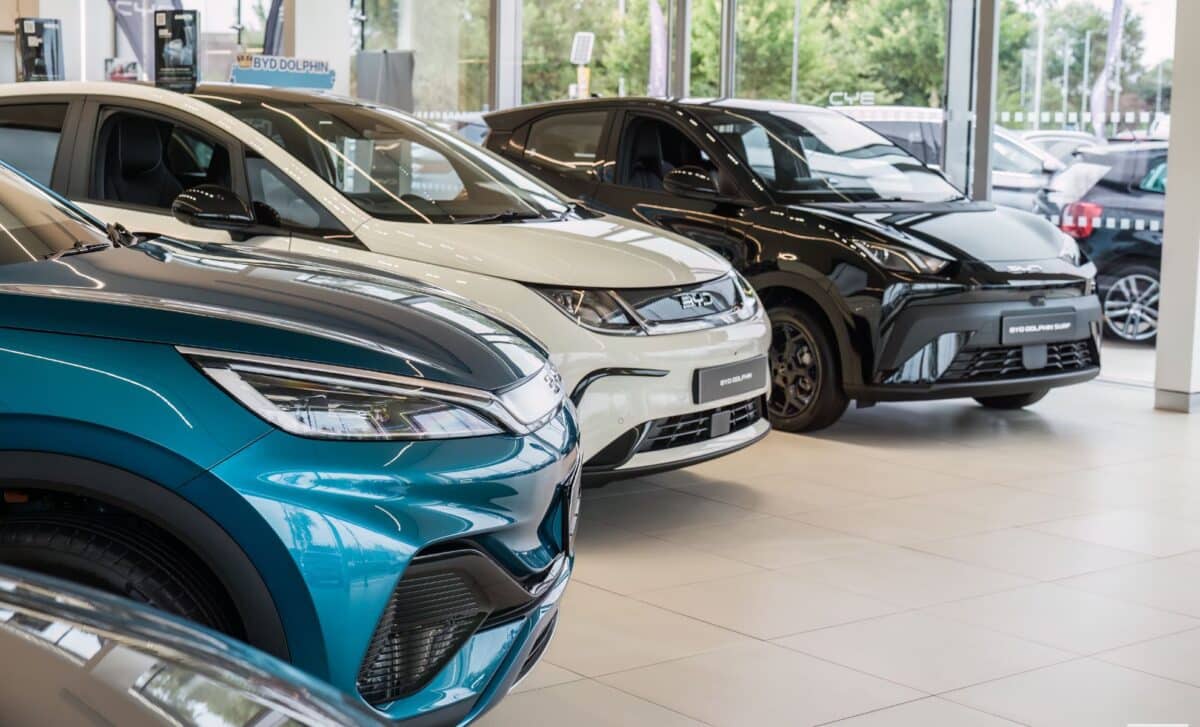
Despite the recent declines, electric vehicles still carry a premium over gasoline models. The current difference stands at approximately $5,800, the smallest gap recorded so far.
According to the same Kelley Blue Book data, this reduced gap may be manageable for high-mileage drivers who can offset the higher purchase price through fuel savings over time. Still, the difference remains significant for many buyers evaluating upfront costs.
The average manufacturer’s suggested retail price also continues to trend higher, reaching $51,456 and marking the twelfth consecutive month above the $50,000 threshold. This underscores the broader pricing environment in which EVs are competing.
Consumer Demand Continues To Favor Larger Vehicles
Market trends show that American buyers are still prioritizing size and capability over electrification. Full-size pickup trucks are priced near $66,000, while full-size SUVs approach $80,000, contributing heavily to the overall rise in average transaction prices.
At the opposite end, compact cars remain far more affordable, staying below $28,000 with only a modest 1.1 percent year-over-year increase. Yet their share of the market continues to decline as buyers opt for larger models.
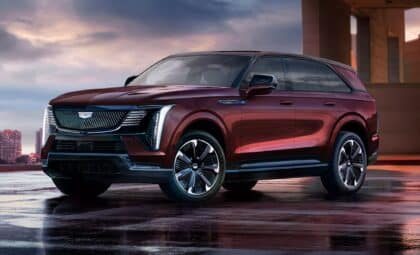
Brand-level data reveals mixed performance across the industry. Porsche recorded a 12.4 percent increase in average transaction price to $128,447, while Cadillac rose 11.6 percent to $84,139. In contrast, Mercedes-Benz saw prices fall by 3.4 percent to $75,886, and Tesla declined by 2.6 percent to $53,142, continuing its ongoing price adjustments to remain competitive, as noted by Carscoops.
Across segments, price movements vary widely. Subcompact cars saw a 13.6 percent annual increase, while high-performance cars surged by 13.8 percent. Meanwhile, segments like sports cars and luxury compact SUVs experienced declines, highlighting uneven demand patterns across the market.
These combined trends illustrate a market in transition, where pricing strategies, consumer preferences, and vehicle types continue to evolve in parallel.