
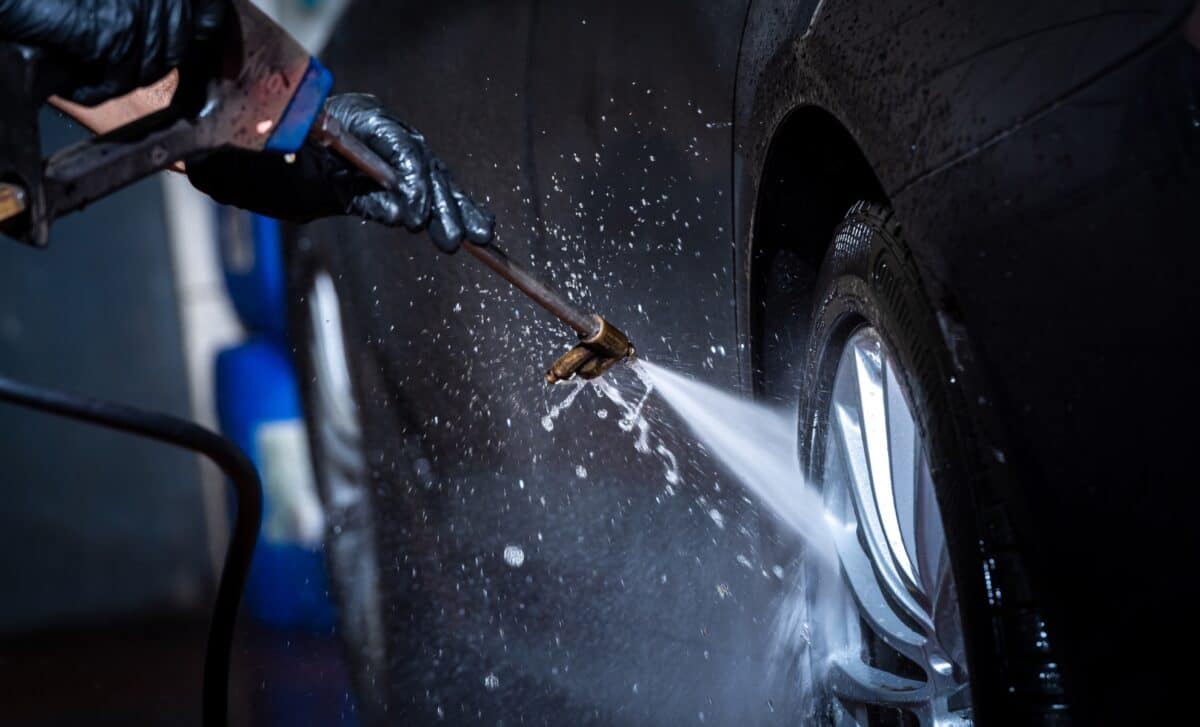
According to Consumer Reports, pressure washing a car carries risks when done incorrectly, with potential damage ranging from compromised paint to conditions that may encourage rust formation. Tires are also affected, despite being designed to withstand demanding road conditions.
Many car owners appear unaware of the risks. According to a TyreSafe survey, around 80% of drivers did not know that intense pressure washing can damage tires. The issue is not the use of a pressure washer itself, but how it is used.
Pressure settings, distance, nozzle selection, and water flow all influence whether cleaning remains safe for tires, wheels, and painted surfaces.
Tire Damage Can Begin With Excessive Water Pressure
Pressure washing tires is not inherently harmful, but direct and aggressive spraying can damage the rubber. According to the TyreSafe survey, aiming a pressure washer directly at a tire sidewall may create micro perforations or visible damage in the rubber. That deterioration can accelerate tire wear and may contribute to air leaks.
Slow air leaks can result in underinflated tires. Underinflation is among the most common causes of tire blowouts. To reduce these risks, pressure washing should be approached with controlled settings and careful technique rather than maximum cleaning force.
Pressure Range, Water Flow, and Nozzle Choice Matter
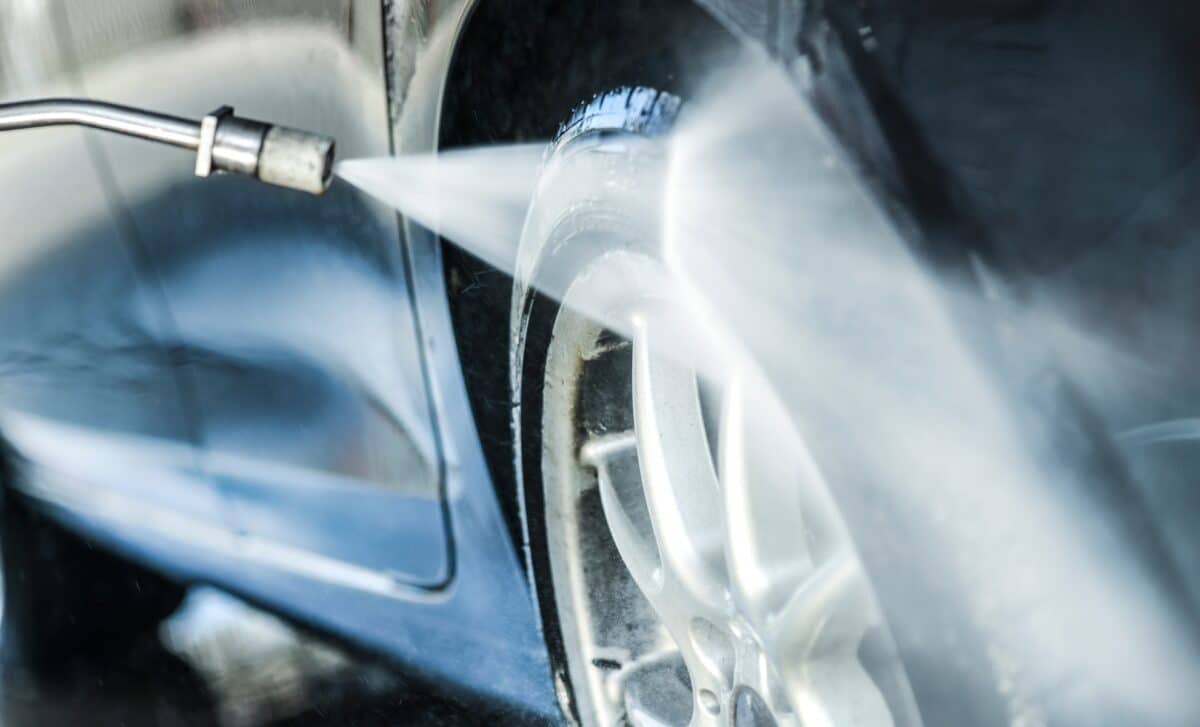
The recommended operating range for cleaning a vehicle is between 1,200 and 1,900 psi, using a light- to medium-duty pressure washer. This pressure level is sufficient to remove dust, dirt, road grime, road salt, and dried bird droppings while remaining suitable for surfaces including paint, glass, rubber, plastic, and chrome trim.
Water flow is another factor. The recommended rate is between 1 and 2 gallons per minute, equivalent to roughly 3.7 to 7.6 liters per minute. Distance also plays a role. Maintaining approximately 12 to 18 inches between the nozzle and the vehicle surface helps reduce the likelihood of damage.
For nozzle selection, a 40-degree nozzle is recommended for washing body panels. When cleaning wheels and tires, switching to a 25-degree nozzle provides stronger cleaning action without increasing surface risk.
Avoid directing the spray into the area between the tire shoulder and the wheel edge, particularly on older tires that already show dry rot or visible deterioration, as this may reduce the risk of water intrusion or air leaks.
Wheels Can Be Pressure Washed, but Technique Remains Critical
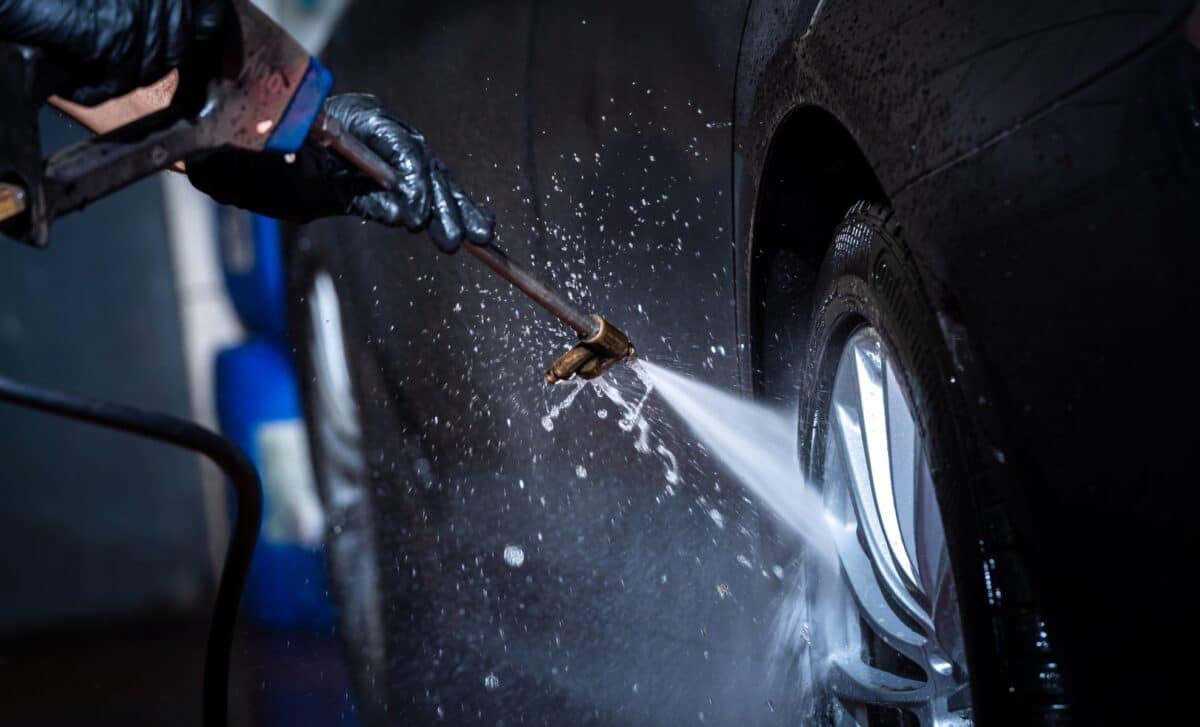
Pressure washing wheels is considered possible without scratching or damaging the finish when done correctly. According to Jalopnik, pressure washing can efficiently remove brake dust, tire residue, mud, and accumulated grime from wheel surfaces. The same operating principles apply: moderate pressure, controlled distance, and appropriate spray direction.
Spraying any vehicle surface from close range at more than 2,000 psi can quickly turn routine cleaning into an avoidable problem. For wheel cleaning, the recommended approach is to maintain a distance of 12 to 18 inches, use a 25-degree nozzle tip, and direct the spray at roughly a 45-degree angle to loosen debris.
A suggested cleaning sequence involves pre-rinsing the wheels and tires, applying a wheel cleaner such as Adam’s Polishes Wheel & Tire Cleaner or Turtle Wax Hybrid Hyper Foam Wheel and Tire Cleaner, agitating the surface with a soft brush, then rinsing thoroughly with the pressure washer.
Consumer Reports takes a cautious position on pressure washing entire vehicles. Safe results depend on keeping pressure controlled, maintaining distance, using a broad spray pattern, and avoiding harsh cleaners or chemicals.