
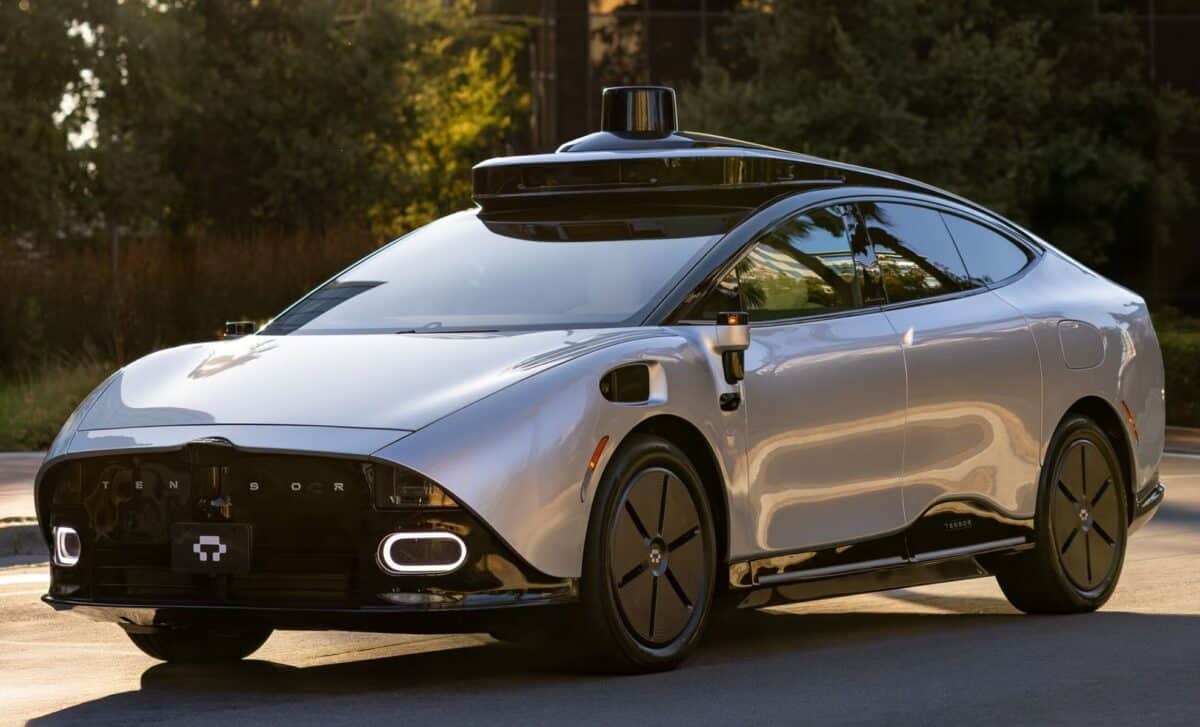
With over a decade of R&D and a brief history under the name AutoX, Tensor is positioning its Robocar as the first fully autonomous vehicle designed for private use—not fleets. It’s a bold move in a market still waiting for a true hands-free, eyes-off-the-road vehicle for consumers, far beyond Tesla’s current supervised systems.
The arrival of a commercial-ready Level 4 car for individuals could significantly disrupt the autonomous vehicle space, especially in the United States, where offerings from Waymo and Tesla remain limited to ride-hailing or supervised use.
While most competitors focus on fleet-based services, Tensor is building a vehicle that owners can drive—or let drive itself—without any reliance on a human operator. The company is also making privacy and personal control over data a central feature of its pitch, distancing itself from practices common among other players in the industry.
Engineered From the Ground up for Autonomy
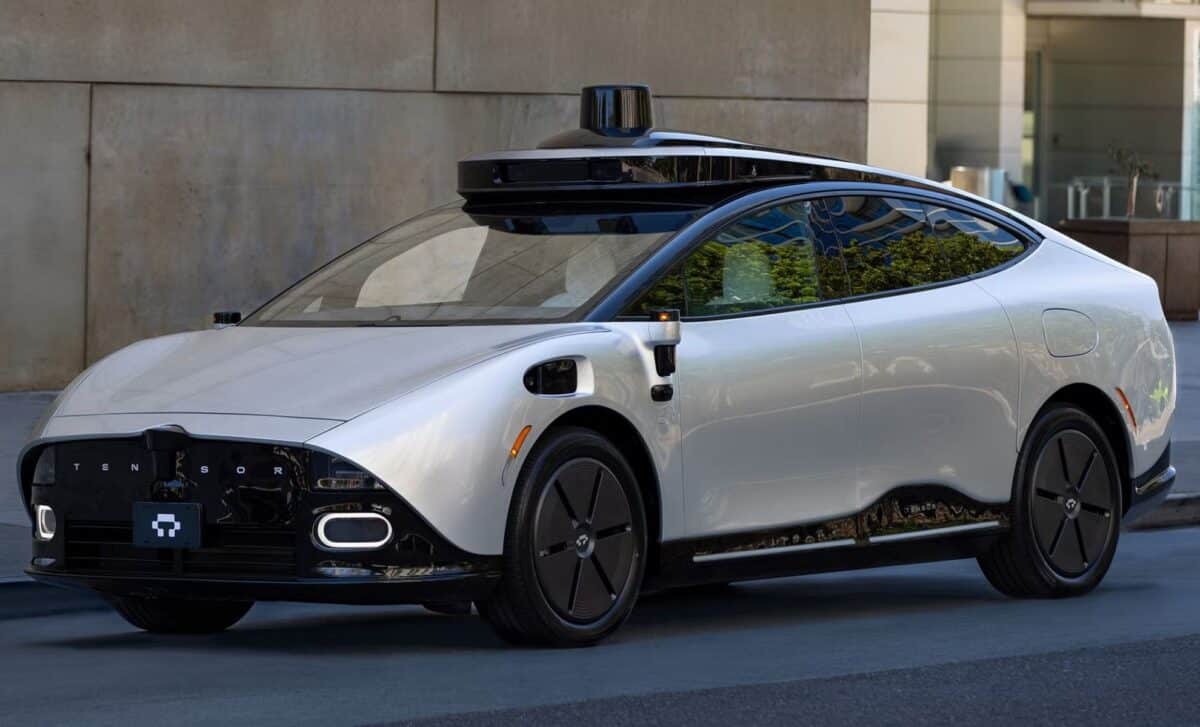
Tensor began work on its Robocar in 2020 after relocating its operations from China to the U.S., according to MotorTrend. The company scrapped existing vehicle platforms and designed the car from scratch with full autonomy in mind. It now includes over 100 onboard sensors, including 37 cameras, 5 lidar arrays, 11 radars, and 10 ultrasonic sensors. These devices are supported by 13 mini wipers, 30 washer nozzles, and heating elements to ensure constant visibility—even in snow or fog.
Powering these systems is a computer equipped with eight Nvidia Drive Thor-X chips, delivering 8,000 trillion operations per second. Most of the vehicle’s computing happens onboard, meaning the Robocar remains functional even without a 5G connection. It also features three redundant communication systems to enhance reliability.
Unique among autonomous vehicles, the Robocar has sensor covers that close when the car is off, protecting the hardware from dirt or accidental damage. It’s a detail aimed at long-term daily use and wear, and one that reflects Tensor’s intention to market the Robocar as a practical personal asset, not just a tech demo.
Luxury Meets Self-Driving Practicality
Inside, the vehicle offers a blend of premium design and advanced automation. It’s powered by an 845-volt battery pack with a claimed range of 250 miles, and it supports fast charging from 10% to 80% in 20 minutes. The Robocar also includes a concept for a robotic home charging arm—still in development—that would automate plug-in sessions.
Coach-style center-opening doors are motorized and fitted with sensors to prevent contact with obstacles. All mechanical systems—steering, braking, and acceleration—operate by-wire, allowing the steering wheel and pedals to retract when the vehicle is in full autonomous mode. According to Supercar Blondie, the Robocar maintains traditional controls, giving users the freedom to switch to manual driving at any time.
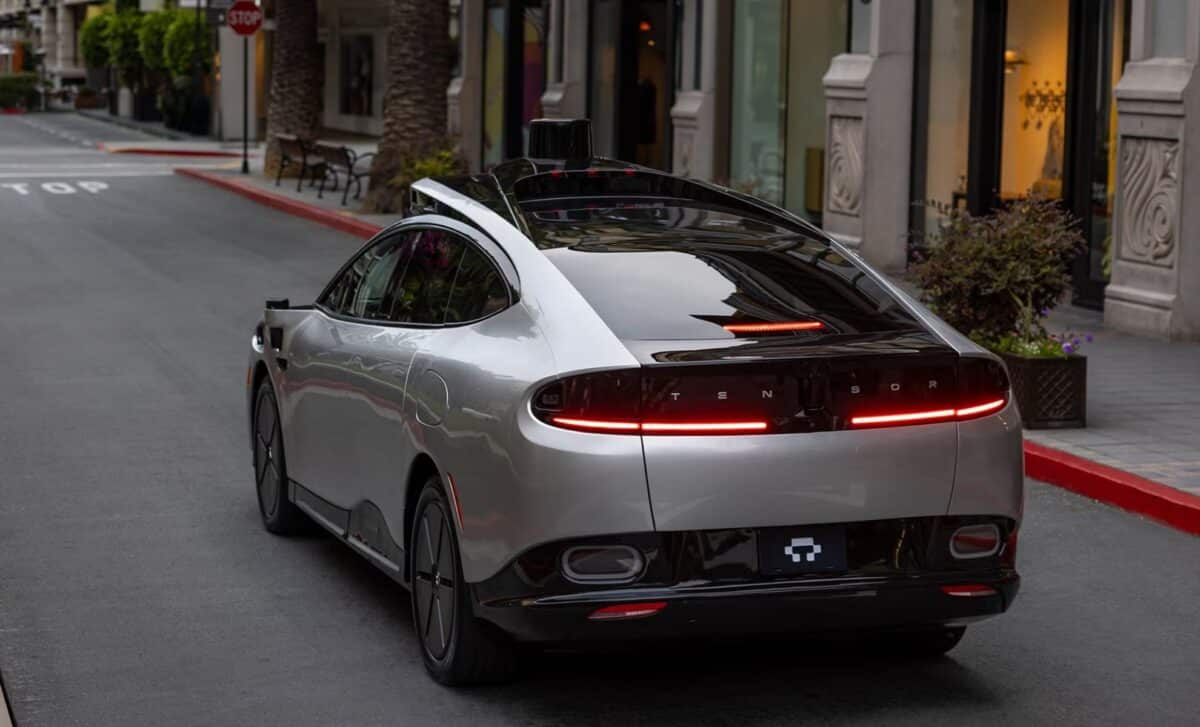
The company describes it as “an embodied personal agent that moves you,” a phrase used by Tensor’s Chief Marketing Officer Amy Luca. The Robocar also includes rear-wheel steering, providing a 37-foot turning radius, making the car more maneuverable despite its larger size.
Data Privacy and Voice Interaction
Tensor emphasizes owner control over data collection and usage. While the car can connect to the cloud, data sharing is opt-in only, and all information—including facial and palm biometrics—can be accessed and deleted via the car or its app. Interior microphones and cameras include physical covers and manual switches, offering users complete privacy.
A standout feature is its Agentic AI, which allows drivers to interact with the car conversationally. Instead of issuing commands, owners can talk naturally with the Robocar, asking it for routes or requesting pickups via voice, call, or text. This AI system uses a Visual Language Model trained to respond to unexpected situations and learn from user behavior. It also integrates with calendars and habits to suggest trips and charging sessions.
Production of the Robocar will be handled by VinFast in Haiphong, Vietnam. The first units are expected to arrive in the United Arab Emirates in late 2026, with U.S. deliveries starting in early 2027, pending regulatory clearance. Tensor is also eyeing expansion into Europe, with plans for a rideshare rollout in Denmark.