
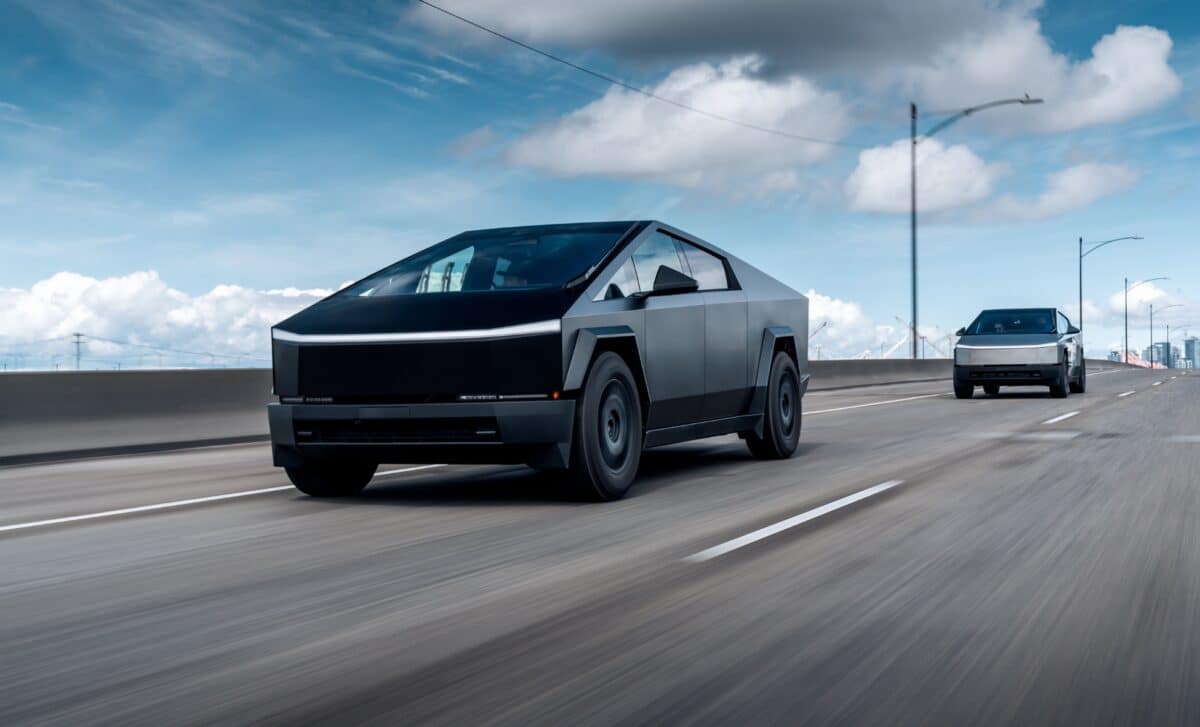
A Cybertruck owner who goes by “Shygar” set out to test all-weather readiness by swapping the factory Goodyear all-terrain tires for a set of BFGoodrich KO3 all-terrains. The original tires had logged 31,000 miles, and with rainy and snowy seasons coming up, the change was as much a planned test as it was a practical upgrade. This kind of owner-driven test gives a grounded look at real use that you don’t always get from formal reviews or maker specs.
Seasonal Swap and How the Test Was Set Up
Shygar made the swap to make the Cybertruck better prepared for winter, treating the job like an experiment as well as routine maintenance. After nearly two years of ownership, the truck had seen lots of highway miles plus some off-roading, so the tires weren’t worn out—they were swapped for seasonal reasons and foresight.
The trip included an out-and-back run to America’s Tire (a discount tire center) about an hour away. Before heading out, Shygar reset Trip B to track energy use on both legs of the drive. To keep the driving behavior consistent, the truck’s Full Self-Driving (FSD) mode was set to “hurry“, that helped ensure throttle inputs were similar on the way there and back, making the comparison cleaner.
What They Noticed
With FSD doing the driving, measured energy use rose from “just over 400 Wh/mi” on the stock Goodyears to the “low 430 Wh/mi range” after fitting the KO3s. That bump reflects the KO3’s more aggressive tread and beefier construction, which are designed for durability and better off-road grip.
Even so, Shygar says, “So far, I really like them compared to the stock Goodyears.” He did note a bit more road noise at highway speeds and a short vibration through the scroll wheels, but nothing that ruined the ride. The tires also brought back the scent of fresh rubber and a familiar hum at 70 mph, reminding him of the truck when it was nearly two years younger.
Real-World Takeaways
This swap shows the trade-off between energy efficiency and stronger off-road/winter performance, something owners prioritizing all-weather capability might accept. Lab tests often miss the subtleties of a particular driver’s habits or local traffic patterns, whereas owner-led experiments like this highlight those everyday variables and make the data more practical.
The Cybertruck’s design, stainless-steel exterior, steer-by-wire setup, and an enclosed, powered bed, helps it stay tough across different terrains and weather (and makes upgrades like the KO3s easier to justify without undermining long trips).
Shygar’s approach is a good example of how owners can add real, hands-on knowledge to the conversation, filling gaps left by polished reviews. As more people run these kinds of tests, the community builds a fuller picture of how vehicles perform in real life, showing that practical upgrades can coexist with energy efficiency and longevity.