

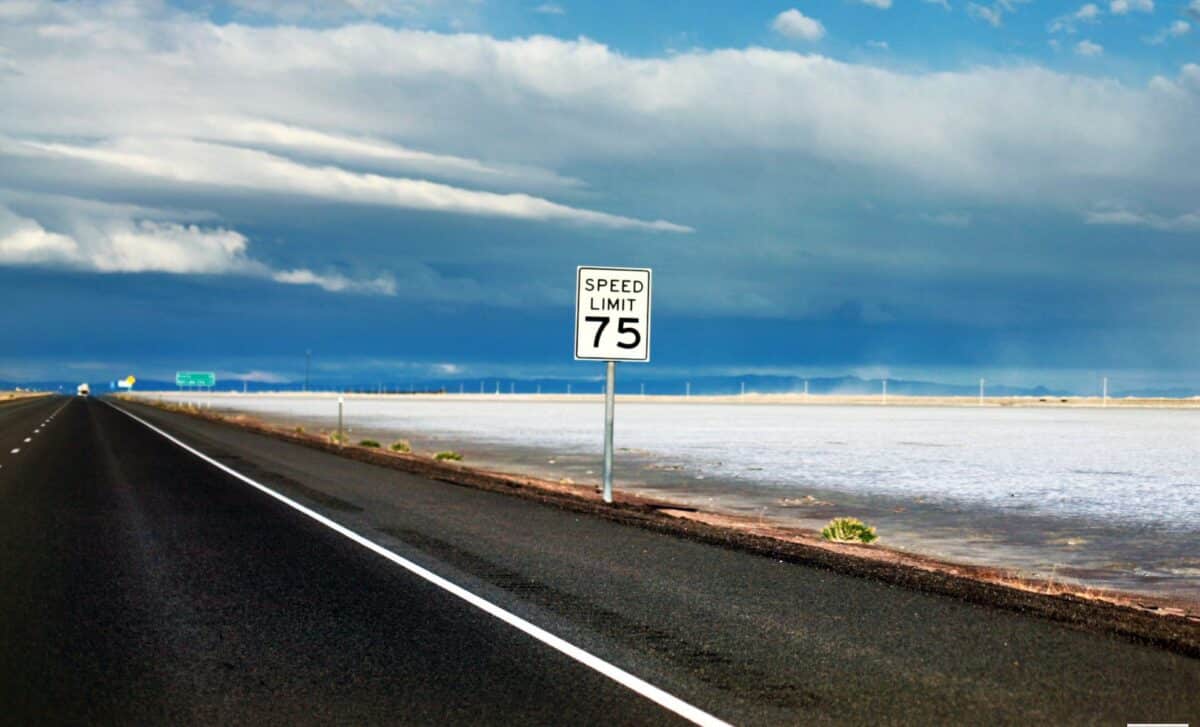
Fuel economy declines steadily as speed increases, especially on highways where aerodynamic drag becomes a dominant force. Data cited by federal agencies and automotive researchers shows that driving significantly faster can sharply increase fuel use, even for hybrids and diesel-powered vehicles.
Many drivers try to stretch each tank further by adopting habits such as limiting idling, maintaining tire pressure, or reducing air conditioning use. Yet highway speed has a particularly strong impact on fuel consumption because vehicles require more energy to overcome air resistance at higher speeds.
Aerodynamic Drag Rises Rapidly At Higher Speeds
The issue affects nearly every type of vehicle. Diesel, gasoline, and hybrid models all experience reduced efficiency as speed climbs. According to the Auto Research Center, aerodynamic drag accounts for roughly 50% of highway fuel usage, making speed one of the largest variables in overall fuel economy.
A simplified explanation of vehicle aerodynamics helps explain why fuel economy falls so quickly at highway speeds. When calculating drag, the velocity of an object is squared, meaning resistance rises disproportionately as speed increases.
In practical terms, a vehicle traveling twice as fast as another does not face double the drag force, but four times as much. That additional resistance forces the engine to generate more power, increasing fuel consumption.
Jalopnik notes that this effect becomes especially noticeable above 45 or 55 mph. At those speeds, the energy needed to maintain momentum begins taking what it describes as a “steady, significant toll” on fuel mileage.
Roof-mounted accessories can also contribute to the problem. Removing roof racks may slightly improve efficiency because they reduce aerodynamic resistance at highway speeds.
Federal Estimates Show Steep Fuel Economy Losses
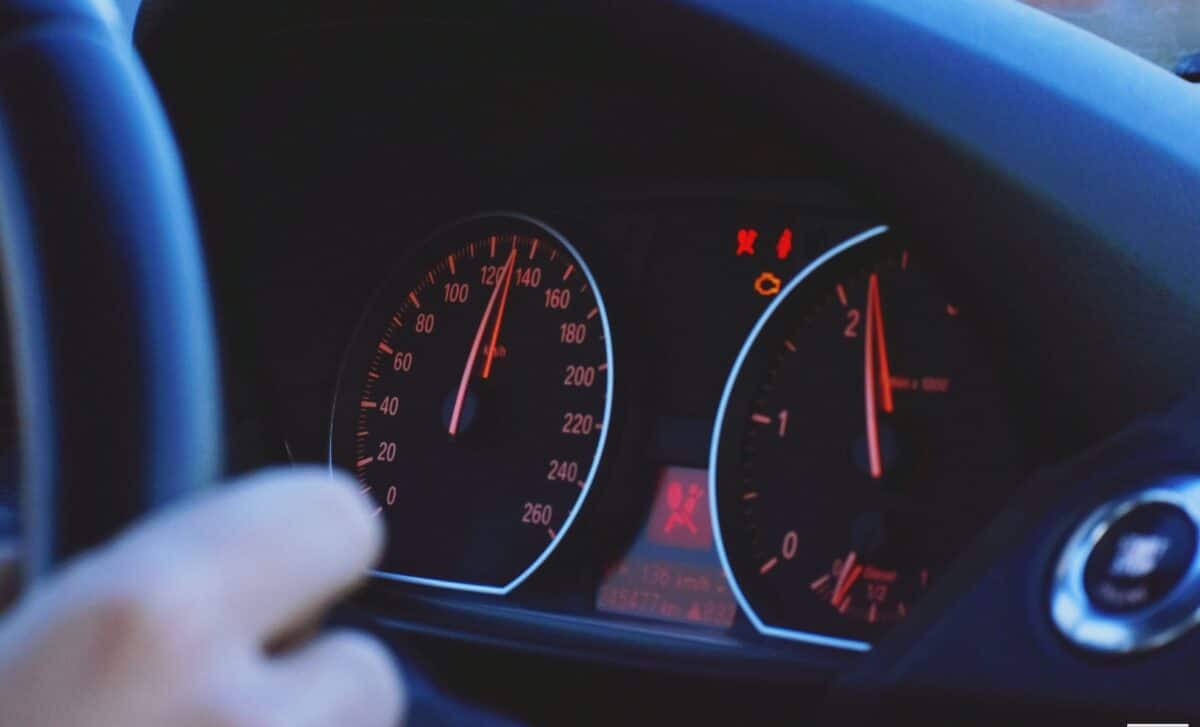
According to the U.S. Department of Energy, every 5 mph driven above 50 mph costs drivers roughly $0.27 more per gallon, based on gasoline priced at $3.83 per gallon.
The agency also provided comparisons showing how fuel economy changes between 55 mph and 75 mph across different vehicle types. A midsized diesel car rated at 55 mpg while traveling at 55 mph would see fuel economy fall to 37 mpg at 75 mph, representing a 31% increase in fuel consumption.
Hybrid vehicles show a similar pattern. Fuel economy declines from 45 mpg at 55 mph to 33 mpg at 75 mph, a reduction of 28%.
Conventional gasoline-powered vehicles also experience substantial efficiency losses at higher speeds. The article states that these cars use 25% less fuel at 45 mph than at 75 mph, while the difference between 55 mph and 75 mph reaches 28%.

The Debate Over Speed Limits And Fuel Conservation Continues
The relationship between speed and fuel economy has historical precedent in U.S. policy. The national 55 mph speed limit was signed into law by President Richard Nixon in 1974 during the oil crisis of that era.
That measure was intended to reduce national fuel consumption at a time of rising energy concerns. The current period of elevated fuel prices has renewed attention on similar conservation strategies, though the article does not suggest any policy proposals.
Persistent fuel costs may influence consumer vehicle choices, mentioning both the popularity of SUVs and growing interest in used plug-in hybrids.