

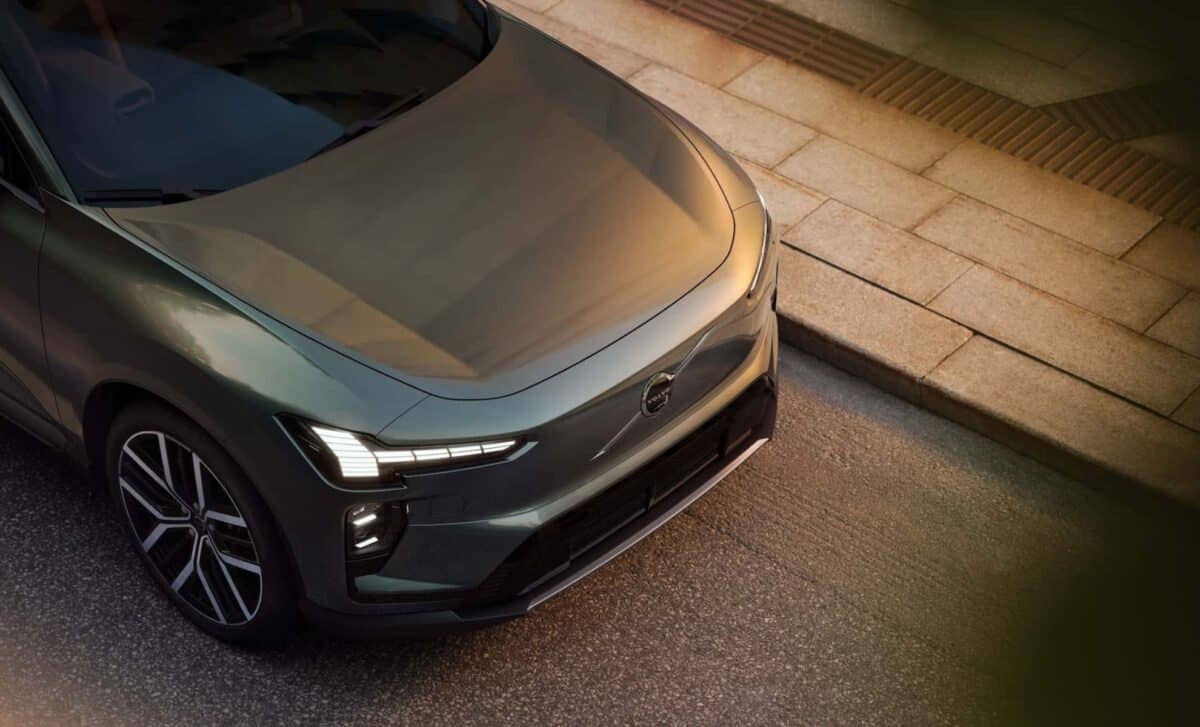
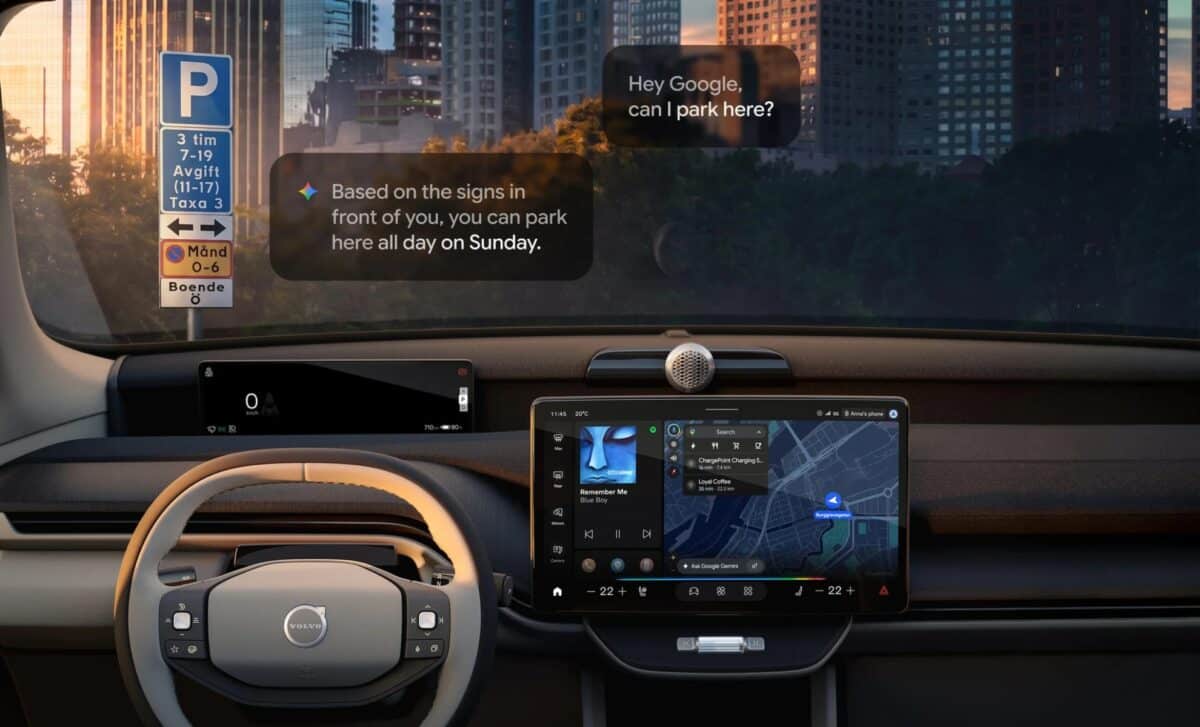
Volvo and Google presented the technology as part of their broader collaboration around Google-based infotainment systems. The feature combines Gemini’s conversational AI model with the EX60’s built-in cameras, neural processing engine, and software-defined vehicle architecture.
The demonstration focused on contextual awareness inside the vehicle. Instead of relying only on voice queries or navigation data, the system can interpret visual information captured through the car’s cameras and respond in natural language. The companies described the feature as an early example of how AI could interact with both drivers and passengers during everyday travel.
Gemini Can Identify Buildings and Translate Road Signs in Real Time
One of the central demonstrations involved the driver asking the car about a road sign written in another language. The Gemini assistant reportedly scanned the sign automatically, translated the text, and explained its meaning aloud without requiring manual input from the user.
According to InsideEVs, another example showed the system identifying the Transamerica Pyramid in San Francisco after being asked about a tall building visible at the end of a street. Gemini responded that the structure is primarily an office building rather than a tourist attraction, though it noted the presence of a park at its base. The assistant also asked whether it should plan a route to a nearby location.
The interaction resembled Google Lens on smartphones, though adapted for in-car use with voice commands and live environmental analysis. The system relies on Gemini’s multimodal capabilities, which allow it to process images, spoken language, and contextual data simultaneously.
Volvo and Google Emphasize Privacy Protections for Camera Analysis
Google stated during the presentation that privacy measures are integrated into the feature. The companies said image analysis only occurs with the driver’s permission enabled, and faces are blurred during processing.
The announcement arrives as automakers increasingly expand the role of cameras and software inside vehicles. In this case, Volvo tied the feature directly to the EX60’s onboard computing systems, including its neural processing engine and software-defined platform.
According to the information shared during Google I/O, the companies have not disclosed whether the feature will remain exclusive to the EX60 or eventually expand to additional models equipped with Google built-in systems.
More Google-Based Features Are Planned for Upcoming Volvo Models
Google also confirmed several additional software updates for vehicles using its embedded infotainment platform. A car-optimized version of YouTube Music is expected to launch soon, alongside deeper Gemini integration capable of controlling vehicle functions through voice commands.
Another feature announced during the event is 3D Immersive Navigation for Google Maps. The technology first appeared on Android smartphones before expanding to Android Auto, and it is now scheduled for rollout on vehicles equipped with Google built-in systems.
Volvo’s EX60, EX90, and ES90 will be the first models to receive the new immersive navigation experience. Google and Volvo did not provide release dates for either the Gemini camera functionality or the upcoming navigation updates, leaving the timeline for deployment unresolved for now.