
The arrival of the automobile in the late 19th and early 20th centuries changed American city life. Cars, then called “horseless carriages“, upended streets in places like San Francisco, Chicago, and New York.
With almost no traffic rules, “anyone of any age” could take the wheel, a complaint voiced by the San Francisco Call in December 1901, which called automobiles “sizzling and steaming” nuisances on city streets. That moment kicked off a long move toward rules and what we now know as the driver’s license.
How Licensing Got Rolling
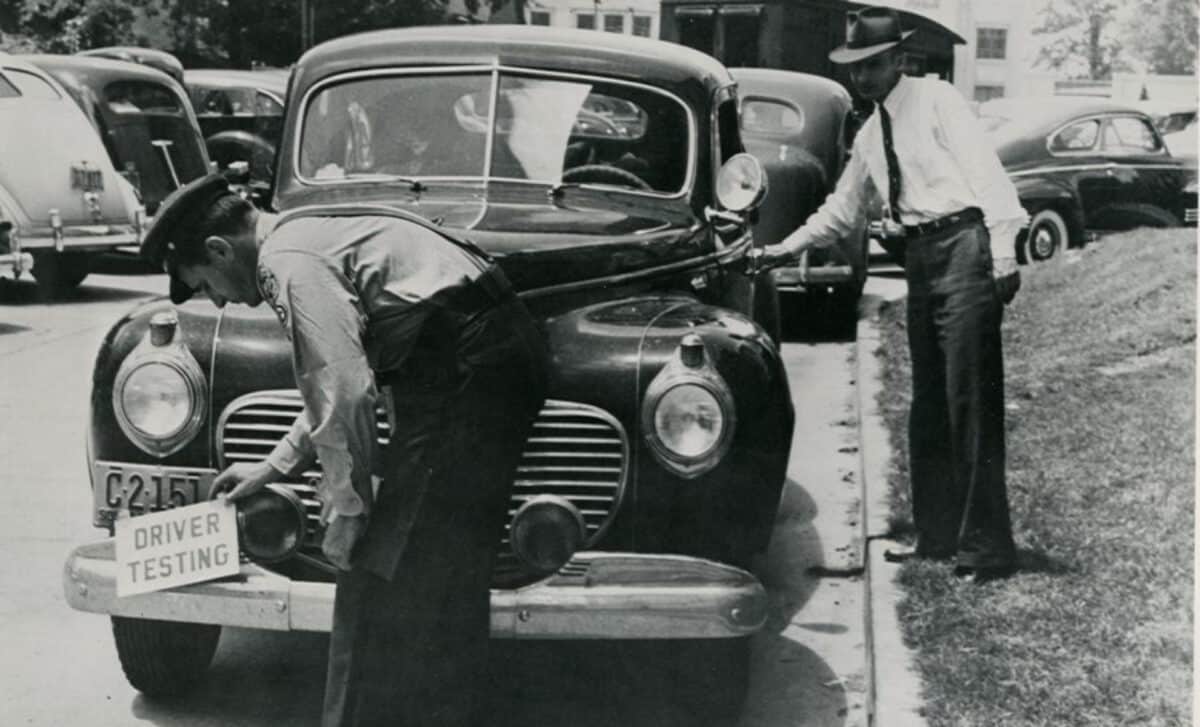
In 1899, Chicago led the way with an 18-question driver exam. New York began licensing vehicles in 1903, but early efforts focused more on controlling the vehicle than testing the driver. The turning point came in 1910 when New York Assemblyman Albert S. Callan pushed a law that required chauffeurs to pass an exam to get a driver’s license. That license was a paper document with a photo on the reverse side, an early ancestor of today’s card-style license.
Pennsylvania added the first age requirement in 1909, setting a precedent for age-based rules. California later changed the layout, moving the driver’s photo to the front of the document in 1958.
Tech Upgrades and Stronger Security
Licenses went through big tech changes over the decades. IBM developed the magnetic stripe in the 1960s, and that feature showed up on licenses by the 1990s (the magnetic stripe is a data-storing band typically on the back of cards). After post-9/11 security concerns, states added layers of protection like holograms, microprinting, and laser-perforated state symbols—think California’s “brown bear.”
In October (year unspecified), California stepped things up again by replacing the magnetic stripe with a bar code that uses a unique security signature and adding design elements such as “redwoods and golden poppies.”
Moving Toward Digital IDs
The move to digital is underway as wallets make room for phones. States from Hawaii to Louisiana now accept virtual licenses you can pull up on a smartphone or smartwatch. Michigan has even let people take the written portion of the driving test online.
Still, a physical ID is usually needed once “the rubber hits the road.” Interest in driving among young people has fallen: about 48 percent of 16-year-olds had a license roughly 30 years ago, compared with just 25.6 percent in 2018.
What’s Next: Challenges and Questions
The drive for more secure IDs, meant to fight forgery and terrorism-related threats, has pushed license design and tech forward. Early licenses were easy to fake, a risk made obvious after post-9/11 security concerns; today’s licenses are complex pieces of technology used for identity verification.
At the same time, fewer young people getting licenses raises questions about future demand for both traditional and digital credentials. The shift away from early driving points to changing priorities and could spur new ideas that reshape personal transportation and the rules that govern it.
Driver’s licenses, once simple bits of paper, now sit at the crossroads of technology, regulation, and social change. Their path from the early 20th century to the digital age mirrors wider societal shifts and highlights an ongoing balance between innovation and regulation as authorities work to meet new challenges effectively and securely.