
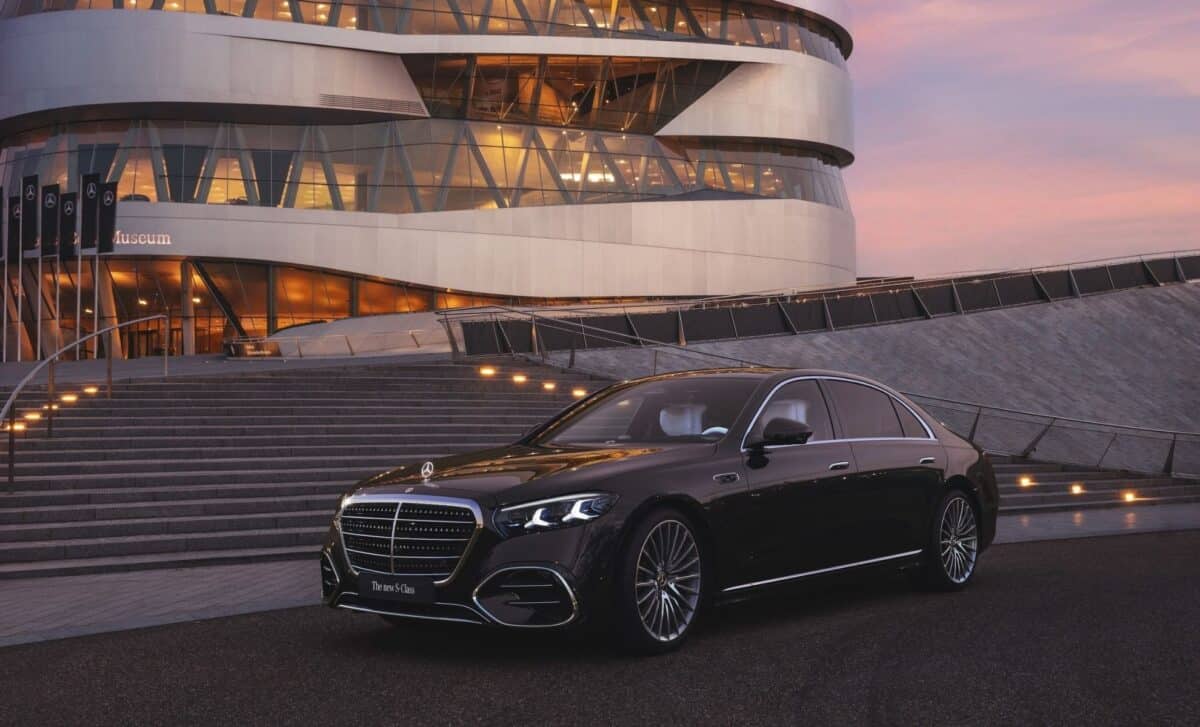
It’s easy to miss at first glance. The Mercedes-Benz S-Class revealed in early 2026 doesn’t shout about its changes. From the outside, the evolution appears discreet, familiar. Yet behind the lines of this flagship lies one of the most significant mid-cycle updates ever made to a luxury sedan.
Despite appearances, the update isn’t just cosmetic. Mercedes has replaced or modified more than 2,700 components, more than half of the car’s parts, signaling a serious attempt to reposition the S-Class in a market where its dominance is no longer guaranteed.
A Facelift That Behaves like a New Generation
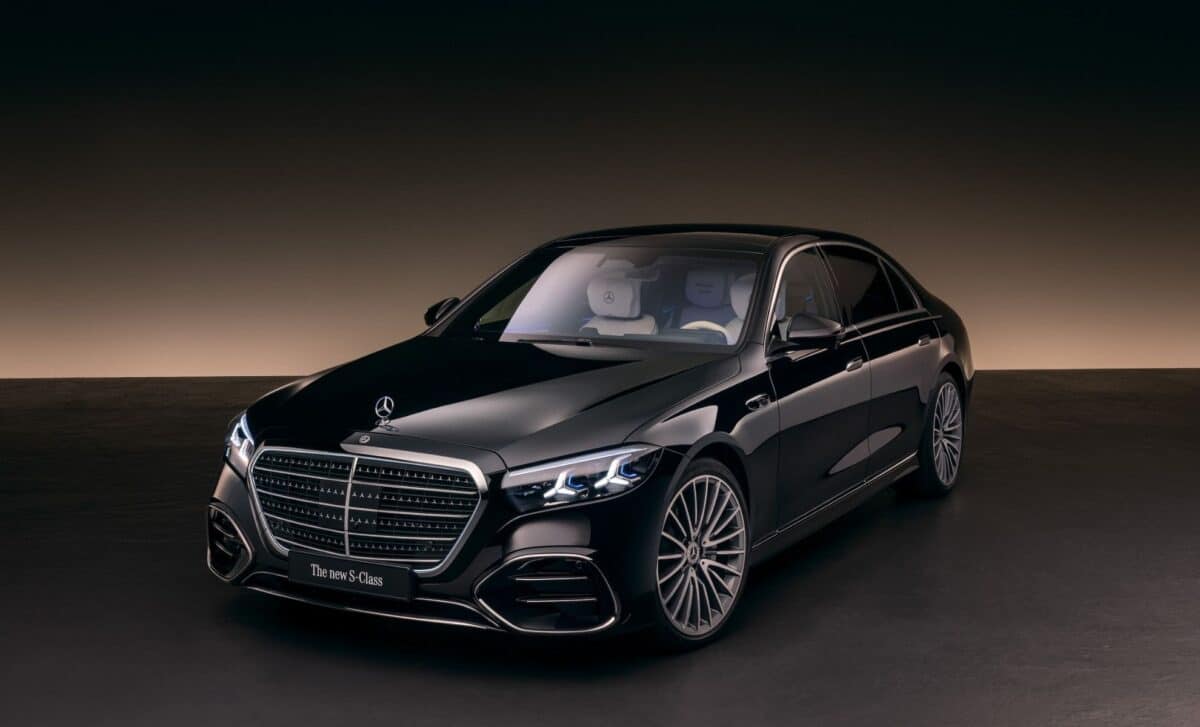
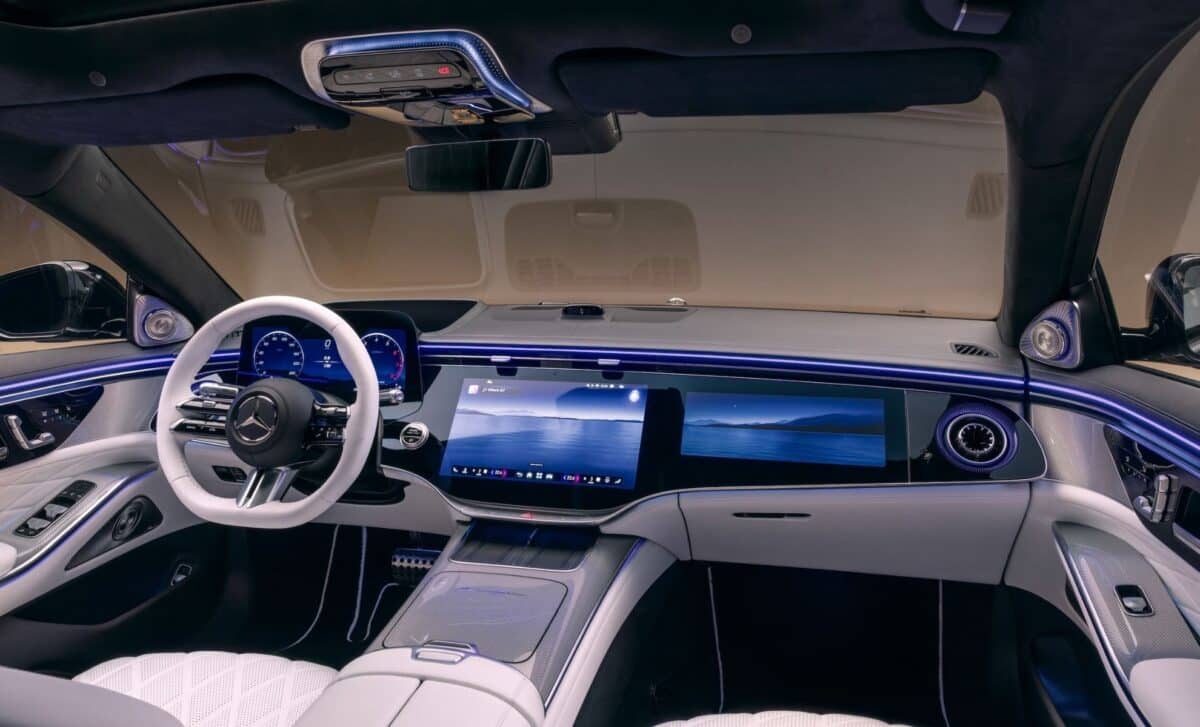
Mercedes insists on calling it a facelift, but this overhaul is closer to a generational leap. Shared technologies from newer models like the CLA and GLC are now embedded in the S-Class, including an entirely new operating system and interior layout. The logic is straightforward: spread development costs across models while bringing the flagship up to date in a cost-effective way.
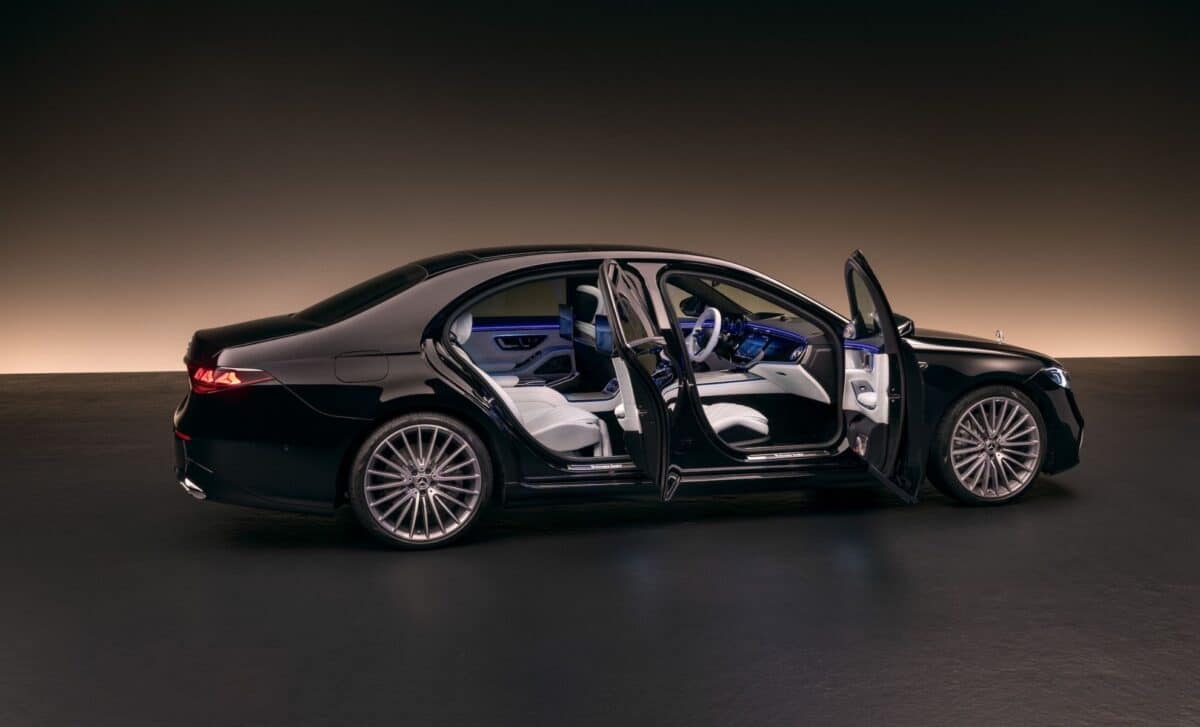
Underneath the surface, the most visible update may be inside. The rear cabin, particularly in the long-wheelbase version, has taken on the role of an executive lounge. Two 13.1-inch screens, video conferencing capabilities, reclining seats, and individualized comfort functions have turned the back seat into a mobile office. Mercedes is betting that these changes will resonate with both corporate buyers and private owners.
Comfort Stays, Autonomy Adapts
One of the more symbolic changes lies in the automation strategy. Mercedes has pulled the plug on Drive Pilot, its Level 3 hands-off system previously available on certain roads. Instead, the 2026 S-Class comes with a Level 2++ system that allows hands-free driving in urban traffic, under close supervision from the driver. Mercedes CEO Ola Källenius presented it as a more practical solution with broader real-world relevance, particularly for the Chinese and US markets, where the feature will roll out first.
In parallel, ride quality and refinement have not been sacrificed. Adaptive air suspension remains standard, and acoustic insulation has been improved. These upgrades address what Mercedes still sees as a central purchase driver: the feel of travel, especially in the rear.
Engines Refined, Not Revolutionized
Unlike rivals who pivot sharply toward electric-only offerings, Mercedes has kept its focus on internal combustion engines and plug-in hybrids for the S-Class. The updated lineup spans six- and eight-cylinder options, along with two plug-in hybrid variants capable of delivering up to 118 km (73 miles) of electric range. A 612 hp V12 remains available, but only in the armored S680 Guard model.
Mercedes’ choice here reflects a wider strategy. The brand already offers the EQS, a fully electric luxury sedan. But with mixed reception and criticism of its design and range, the manufacturer has chosen to keep the S-Class as a benchmark for thermal and hybrid excellence, rather than force electrification for its own sake.
Repositioning for a New Global Landscape
Sales figures speak volumes: global S-Class production has dropped from around 90,000 units in 2022 to under 50,000 in 2025, reports L’Auto-Journal. The decline isn’t just cyclical, it reflects structural shifts. In China, once Mercedes’ most reliable luxury sedan market, brands like BYD, Zeekr, and Huawei now offer technologically advanced sedans for 30–40% less. These newcomers are tuned to local digital expectations, and Mercedes’ prestige no longer guarantees loyalty among younger buyers.
In the US, the S-Class has been impacted by a 15% import duty introduced during the Trump administration, making it less competitive against domestic or locally assembled rivals. Mercedes’ response, a deeper technological offer, enhanced rear comfort, and hybrid flexibility, aims to justify a high price point while broadening appeal.
According to Auto Plus, this strategy is not without risks. The removal of Drive Pilot is seen by some, like Stefan Reindl of the German Institute for Automotive Research, as a step backwards. Others question the absence of a dedicated electric S-Class variant, especially given how quickly the luxury segment is polarizing around zero-emission models.
Balancing Legacy and Pressure
The S-Class has long been a symbol product, one that projects brand image far beyond its actual sales. Its health can influence how Mercedes justifies pricing across its range. That explains the unprecedented depth of this update. By mixing mature technologies from the lineup with a new approach to digital luxury, Mercedes is trying to reassert the S-Class as the center of gravity in a rapidly shifting segment.
Whether this refined formula succeeds will depend on how well it navigates the thin line between tradition and transformation. For now, one thing’s clear: Mercedes is no longer resting on the S-Class’s reputation, it’s working to rebuild it.