

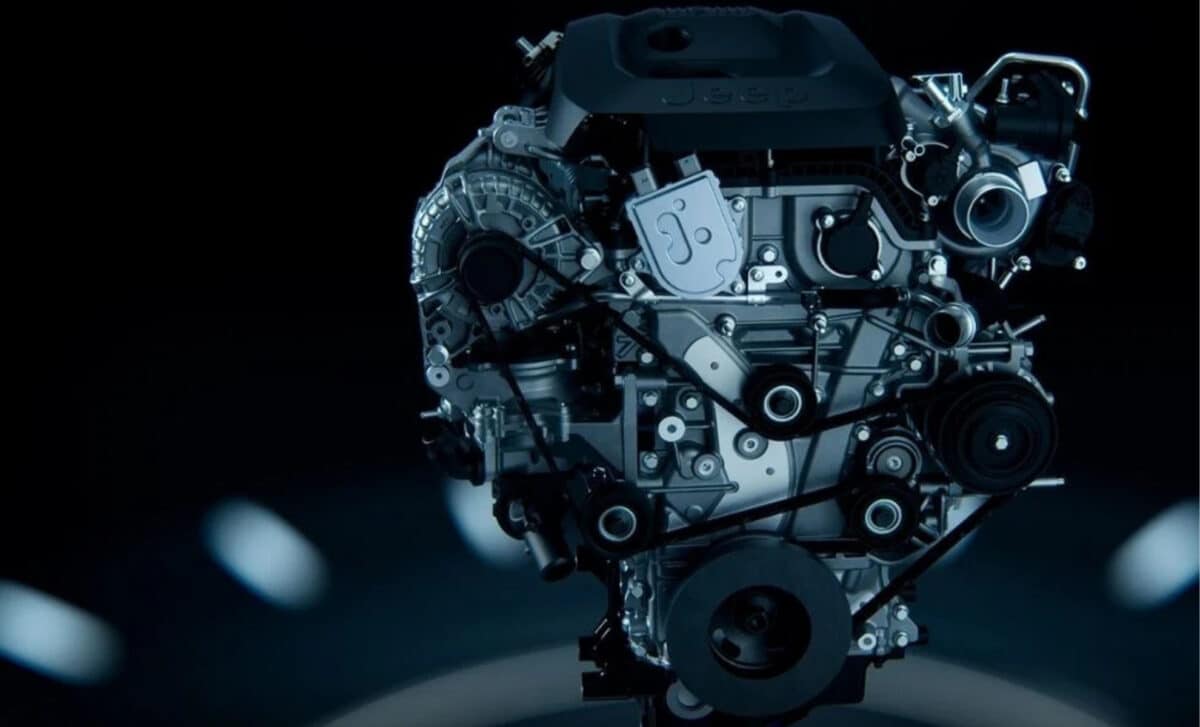
The launch stands out in an industrial context where investment in new gasoline engines has become increasingly rare. Stellantis presented the Hurricane 4 several months ago, positioning it as a technically advanced unit within a group that has faced industrial challenges in recent years.
Unlike existing engines in its portfolio, this 2.0-liter block incorporates solutions derived directly from top-level motorsport. The group first deployed this technology on the Maserati MC20’s Nettuno V6 before adapting it to a four-cylinder configuration intended for family-oriented SUVs.
A Combustion System Derived from Formula 1
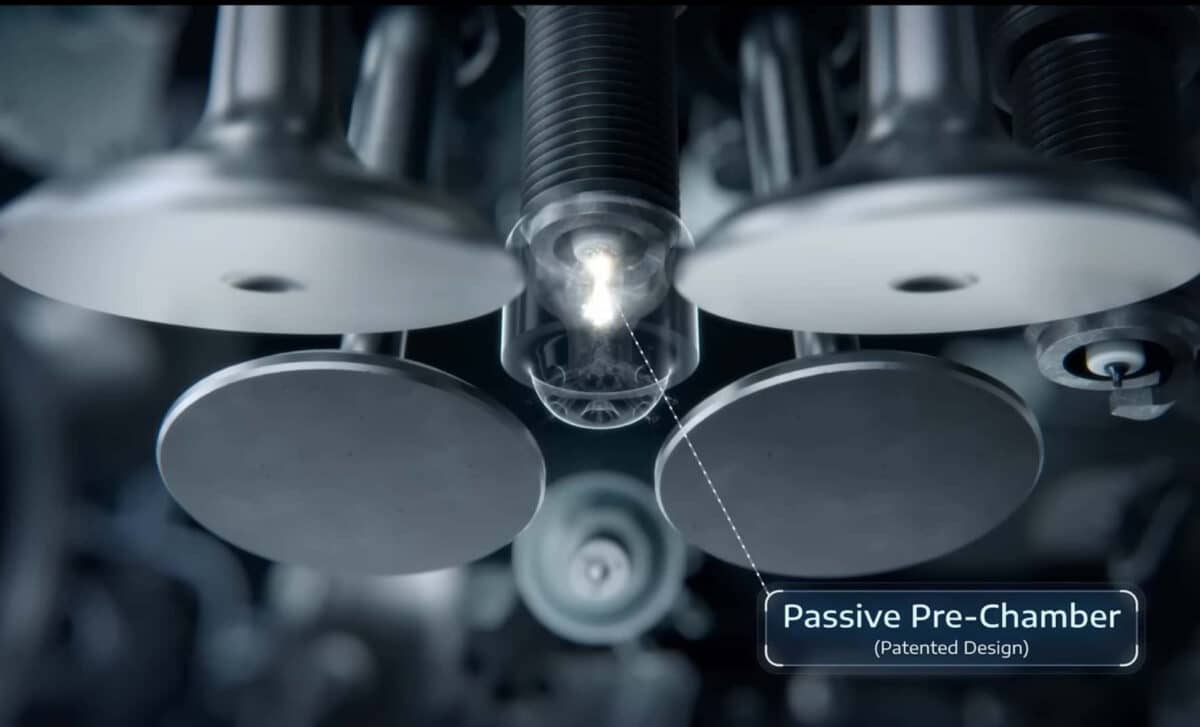
At the core of the Hurricane 4 lies a system called Turbulent Jet Ignition (TJI). As reported by Auto Plus, this pre-chamber combustion technology mirrors the type of system used in recent hybrid-era Formula 1 engines.
The setup introduces a small secondary combustion chamber designed to optimize the air-fuel mixture before ignition. Each cylinder features two spark plugs: one dedicated to the pre-chamber to initiate combustion and another that operates under high load conditions. The stated objective is a more complete combustion process, improved energy efficiency, and greater power output per cubic centimeter.
Stellantis initially implemented this principle on the Maserati Nettuno V6 powering the MC20. Its adaptation to a mass-market four-cylinder engine marks a notable shift, bringing a technology associated with high-performance sports cars into the SUV segment.
Advanced Technical Features Beyond the Ignition System
Beyond TJI, the Hurricane 4 integrates a range of engineering solutions. The engine uses both direct and indirect fuel injection, combining two systems to optimize operation under varying conditions.
It is also equipped with a variable-geometry turbocharger featuring movable vanes, a configuration more commonly seen on high-performance gasoline engines such as the Porsche 911 GT2 RS. In addition, the engine employs an electrically controlled valve timing system. Unlike conventional cam phasers that rely on oil pressure, this electric system can operate independently of engine running conditions, including when the engine is stopped. In practical terms, this allows for a smoother and less intrusive Start&Stop function.
The engine runs on the Miller cycle, keeping the intake valves open longer to enhance combustion efficiency. Cooling is handled by a more compact intercooler supported by a heat exchanger. The aluminum block features structural reinforcements and walls extending below the crankshaft centerline, a layout that is reminiscent of BMW’s B48 and B58 engines, aimed at improving both rigidity and weight control.
Positioned as an Entry-Level Engine in the United States
In the United States, the Hurricane 4 is not reserved for premium trims. It serves as the entry-level engine for the Jeep brand. On the Grand Cherokee, fuel consumption is reported at around 11.4 liters per 100 kilometers, a figure described as relatively reasonable for a vehicle of that size.
The engine is designed to be versatile enough to power both the more compact Jeep Compass and the larger Grand Cheroke. While its technology could theoretically suit a compact sports car, Stellantis has not publicly confirmed such an application.
As for the European market, the question remains largely theoretical. According to the same source, regulatory standards and taxation would likely prevent the engine from establishing a commercial presence there, effectively limiting its deployment to other regions.