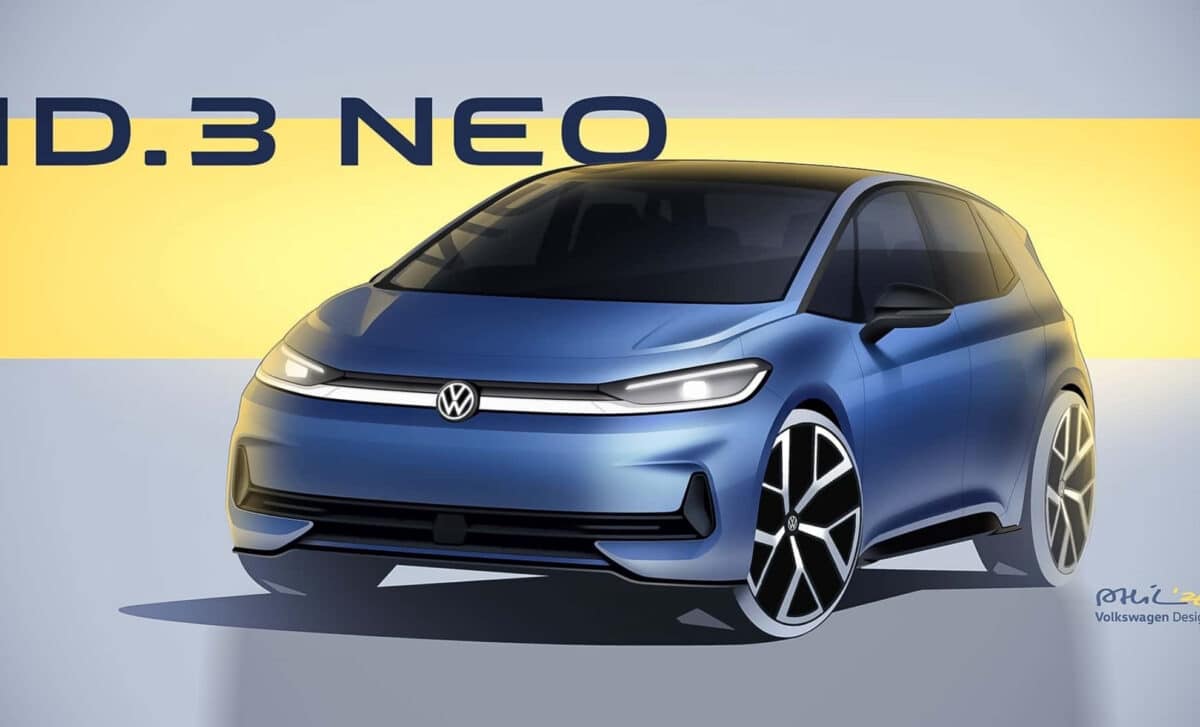
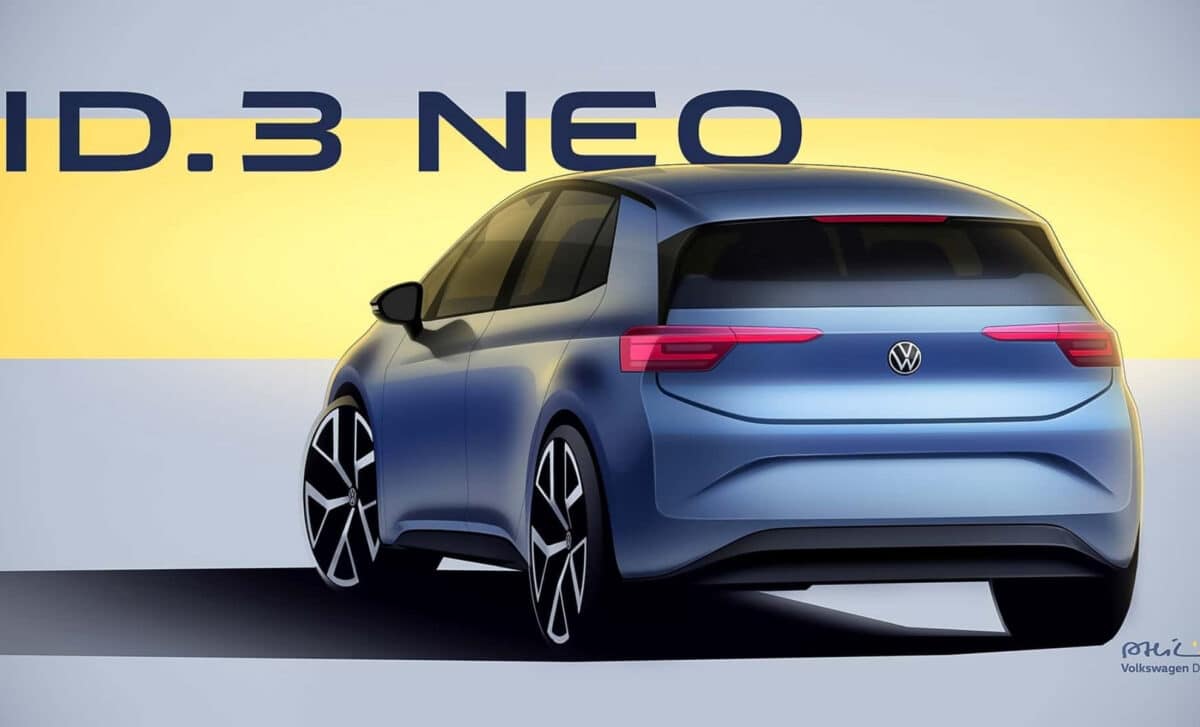
Launched several years ago, the ID.3 has become one of the most popular electric cars in Germany and a key pillar of Volkswagen’s electric strategy. While the company plans a fully electric Golf for later in the decade, the upcoming revision is designed to extend the lifecycle of the current model.
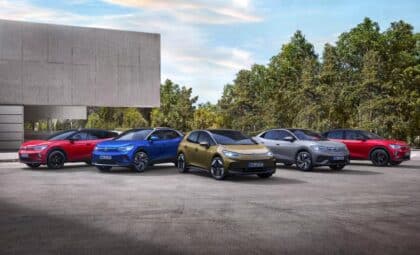
The ID.3 Neo also reflects a broader evolution of Volkswagen’s electric lineup. Several other models, including the ID.4, ID.5, and ID.7, are already available to order in Europe with the brand’s latest software generation, which introduces additional digital features across the range.
A Digital Upgrade Across the ID Lineup
One of the central elements of the ID.3 Neo update is a broad digital upgrade. Volkswagen is introducing a new generation of software that expands the capabilities of its driver assistance and infotainment systems.
Among the new features is an updated Travel Assist system that includes traffic-light recognition. The system is designed to work with the vehicle’s driver assistance technologies to respond to traffic signals during assisted driving. Another addition is one-pedal driving, allowing the car to slow down to a complete stop using regenerative braking.
The updated vehicle will also integrate the Innovision infotainment system. According to Motor1, this system forms part of the latest software generation already deployed in other ID models currently on sale in Europe.
Physical Buttons Return to Simplify Controls
Volkswagen is also revising the control concept inside its electric vehicles. Future ID models, including the ID.3 Neo, will once again feature physical buttons on the steering wheel. The change aims to simplify access to frequently used functions while driving. The cockpit layout appears to draw inspiration from the ID. Polo interior design, which likely serves as a reference for the new interface.
The update also introduces an optional digital vehicle key. This feature enables drivers to unlock and access the car using devices such as smartphones or smartwatches. Communication between the device and the vehicle is wireless and works similarly to mobile payment technology, meaning a dedicated app is not required.
It remains unclear whether the refreshed model will adopt retro-style displays, a design element that has been discussed but not confirmed.
Powertrain Updates and a New LFP Battery
The update also brings changes to Volkswagen’s electric powertrain technology. Entry-level “Pure” versions of the ID.4 and ID.5 will receive a new APP 350 electric motor rated at 188 horsepower.
The new motor delivers higher torque while reducing energy consumption compared with the previous APP 310 unit. In the ID.4, the improvement translates into an increase of up to 25 miles (40 kilometers) of additional WLTP range. The motor can be paired with a new lithium iron phosphate high-voltage battery with a net capacity of 58 kWh. Volkswagen says this battery configuration is designed to operate in a robust and efficient manner.
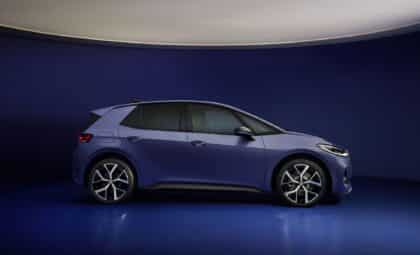
Despite the new name, the ID.3 Neo is not considered a fully new generation of the model. According to Motor1’s analysis, the car represents a comprehensive revision of the existing vehicle, which has been on the market for about seven years. The model is expected to fill the gap for buyers seeking an electric hatchback larger than the ID. Polo while waiting for the ninth-generation Golf, which Volkswagen has already teased and which is expected to arrive later with a new platform and software developed in collaboration with Rivian.