
China’s automotive industry has been gaining momentum in recent years, with manufacturers steadily expanding their technological capabilities. In this context, Geely’s latest announcement underscores a growing competitiveness that is beginning to challenge established global players.
The development also highlights a broader shift in the industry, where improving internal combustion efficiency remains a priority alongside electrification. While fully electric vehicles dominate headlines, hybrid systems continue to evolve in parallel, offering measurable gains in energy use and performance.
A Record-Setting Thermal Efficiency Verified Independently
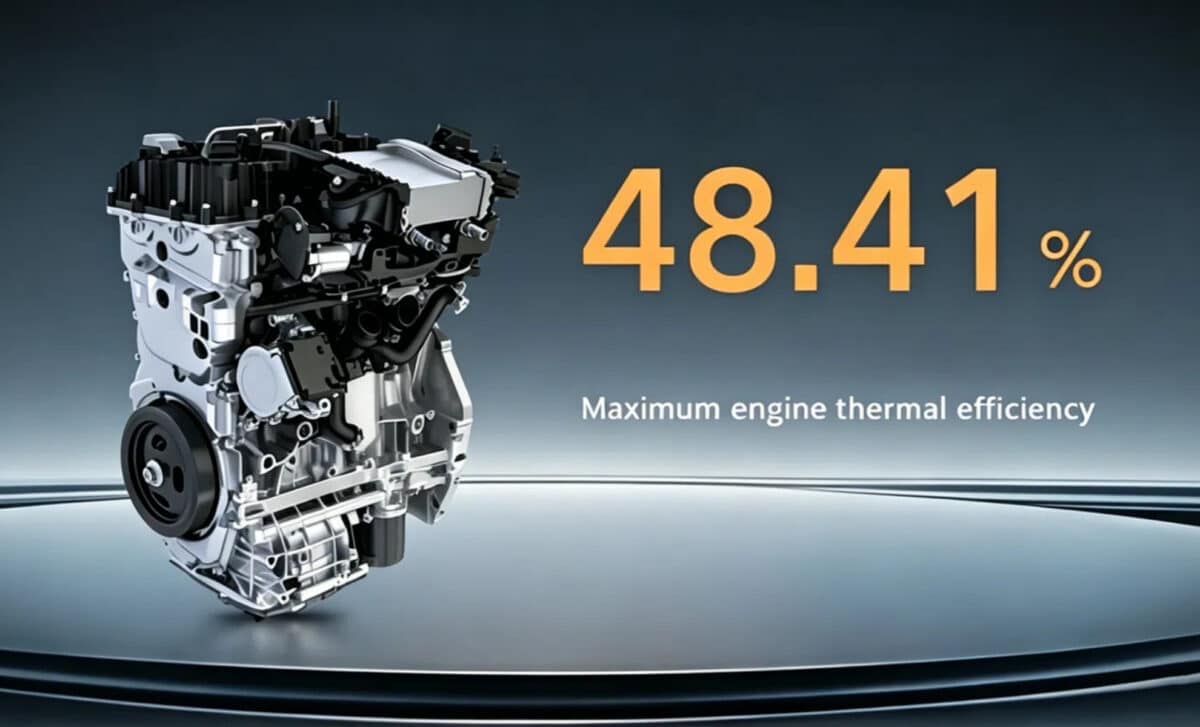
According to Motor1, Geely’s new i-HEV system achieves a thermal efficiency of 48.4 percent, a figure confirmed by Guinness World Records. Thermal efficiency measures how much of the fuel’s energy is converted into usable power, and in this case, nearly half of the energy is effectively utilized.
The same report indicates a combined fuel economy of 105 miles per gallon, reinforcing the system’s performance credentials. Geely states that this efficiency level can be achieved across different configurations, whether the hybrid system is paired with a 1.5-liter or a 2.0-liter internal combustion engine.
A Significant Leap Beyond Current Production Engines
Thermal efficiency has long been a key benchmark for engine development. According to Car News China, most of the most efficient production engines until now have operated at around 42 percent, including systems such as Nissan’s e-Power and Toyota’s Dynamic Force hybrids.
By contrast, conventional internal combustion engines typically range between the mid-20s and mid-30s in thermal efficiency. This gap illustrates the scale of Geely’s claim, positioning its new system well above standard industry performance levels.
Hybrid Systems and the Push Toward Maximum Efficiency
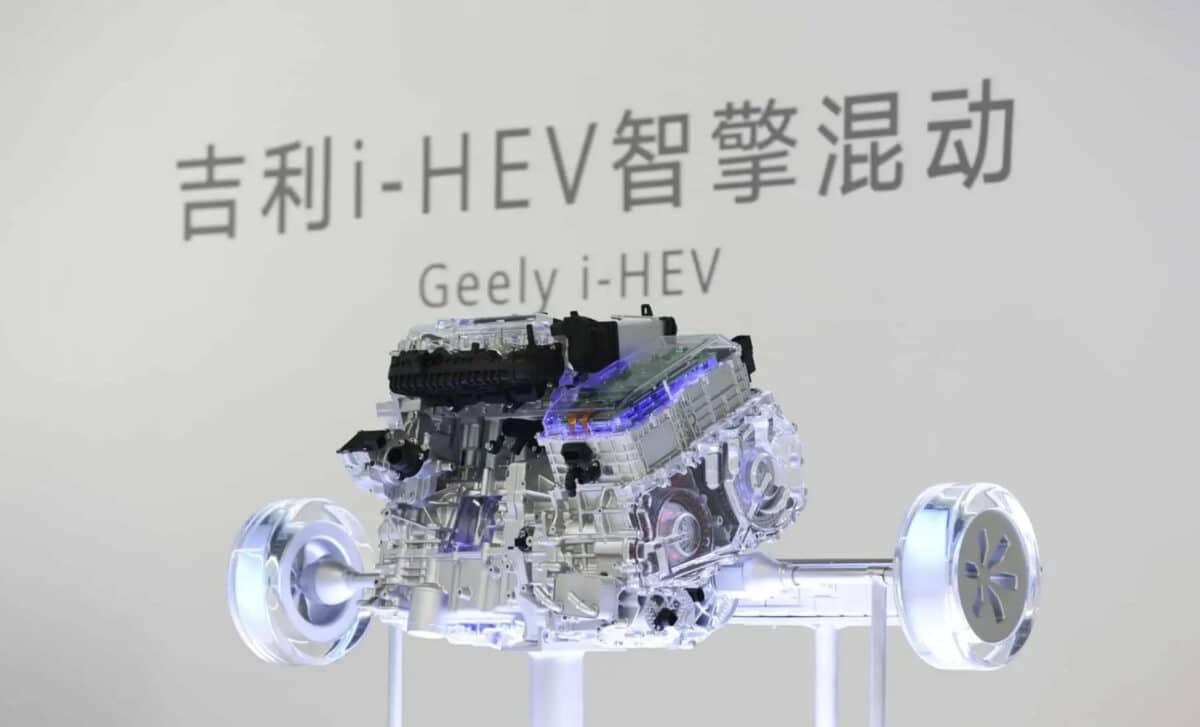
Hybridization plays a central role in achieving such results. These systems can capture and reuse energy that would otherwise be lost, particularly during low-efficiency phases like starting and stopping. This approach contributes directly to improved overall efficiency.
Geely’s figures are approaching those seen in Formula 1 power units, where thermal efficiency exceeds 50 percent using highly advanced technologies. While not identical in application, the comparison reflects how close production-based systems are getting to the upper limits of internal combustion performance.
Geely’s announcement arrives at a moment when the future of internal combustion remains under scrutiny, yet developments like this suggest there is still room for technical progress within hybrid architectures.