
The Q4 E-Tron has been one of Audi’s most popular electric models, built on the Volkswagen Group’s MEB platform. Until now, it had seen limited changes, despite growing competition in the segment. This refresh brings mechanical improvements alongside notable updates to design and onboard technology.
The changes affect both SUV and Sportback variants, with gains in efficiency, power, and charging performance. The update also introduces bidirectional charging and an infotainment system powered by Android Automotive.
Improved Efficiency and Extended Driving Range
Audi has fitted the Q4 E-Tron with a new electric motor that is around 10% more efficient. This directly increases the maximum WLTP range of the single-motor SUV variant to 359 miles (578 km), a gain of 19 miles (30 km). The Sportback version, benefiting from a more aerodynamic shape, reaches up to 368 miles (592 km).
All-wheel-drive Quattro variants also see range improvements, though more modest, varying between 9 and 20 miles depending on configuration. According to InsideEVs, the updated powertrain lineup delivers 201 horsepower in base form and 282 horsepower in Performance trim, while dual-motor versions now produce 295 horsepower and 335 horsepower respectively.
These changes position the Q4 E-Tron more competitively within its segment, particularly as efficiency becomes a key differentiator among electric SUVs.
Faster Charging and Bidirectional Capability
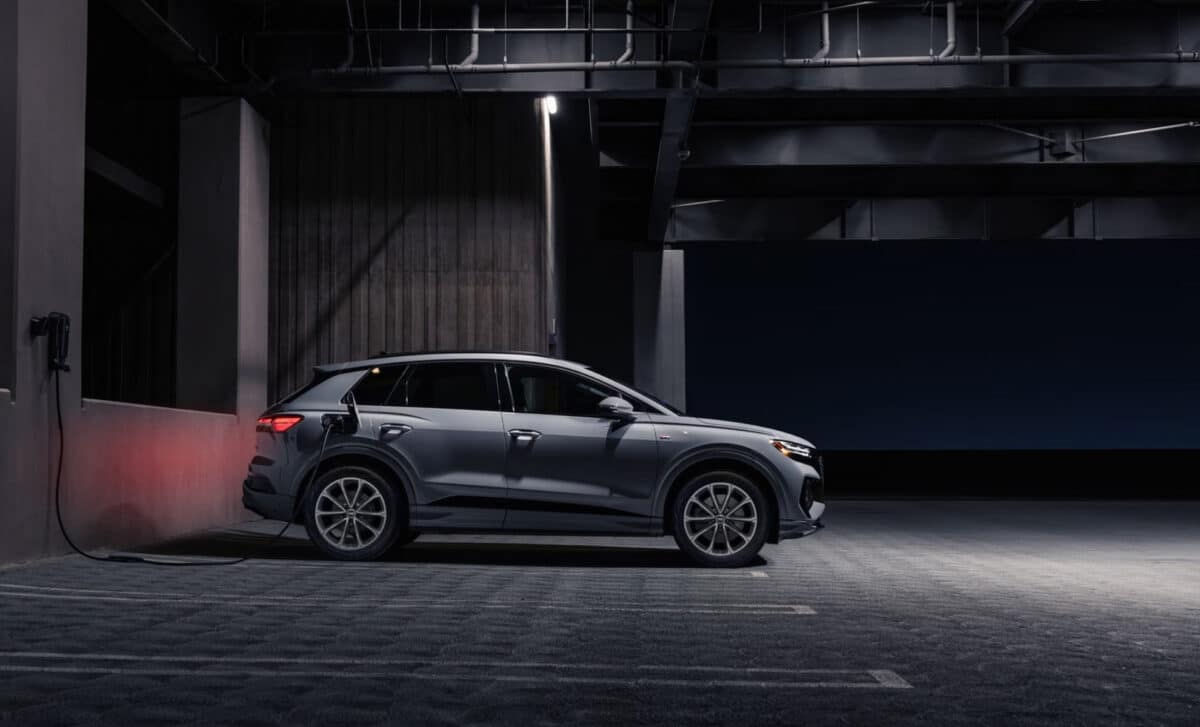
Charging performance has also been upgraded. The top Performance variants now support peak charging speeds of up to 185 kW, an increase of 10 kW over previous figures. Other versions charge at 160 kW and 165 kW.
With the 82 kWh battery, charging from 10% to 80% takes 27 minutes. A 10-minute charging session can add up to 112 miles (180 km) of range, according to InsideEVs.
A notable addition is bidirectional charging. The Q4 E-Tron now supports vehicle-to-load (V2L) and vehicle-to-home (V2H) functions, delivering up to 2.3 kW through a standard household socket located in the trunk. This allows external devices to be powered directly from the vehicle without specialized equipment.
Updated design and expanded digital interface
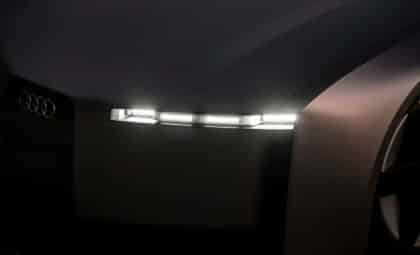
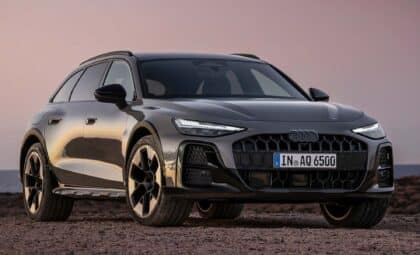
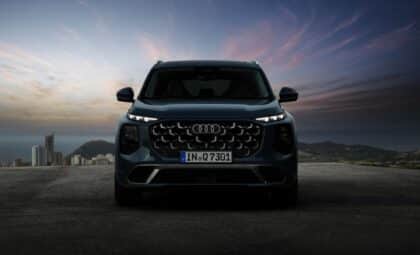
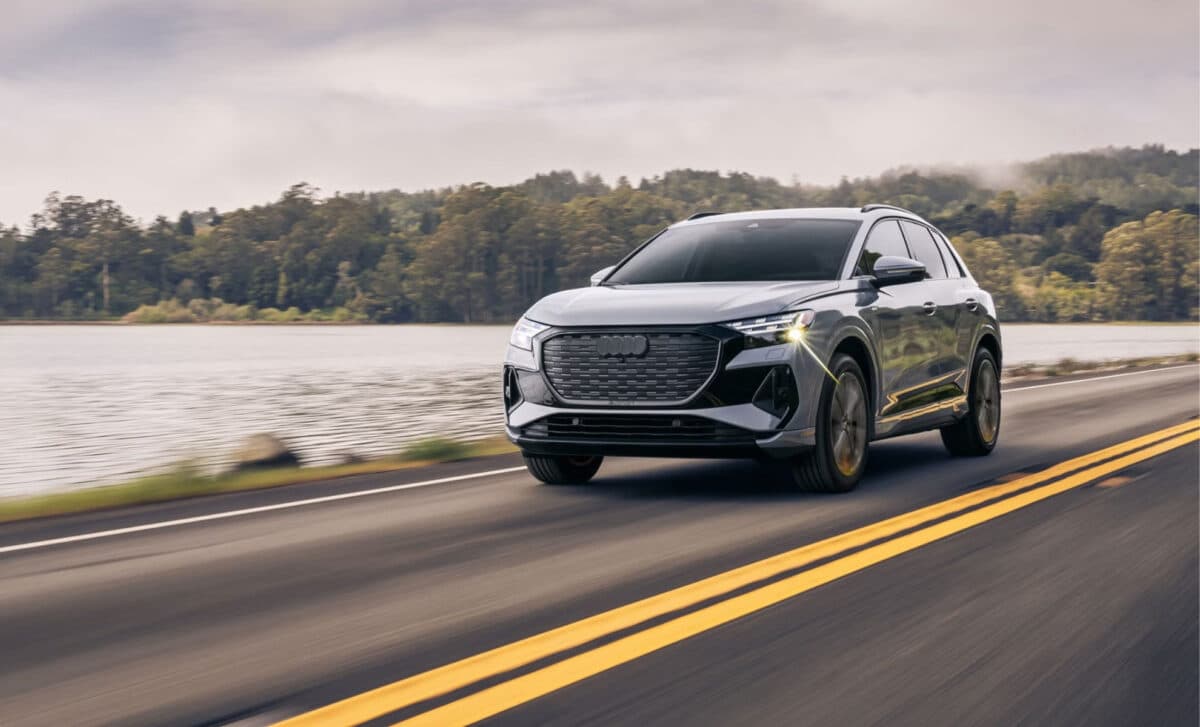
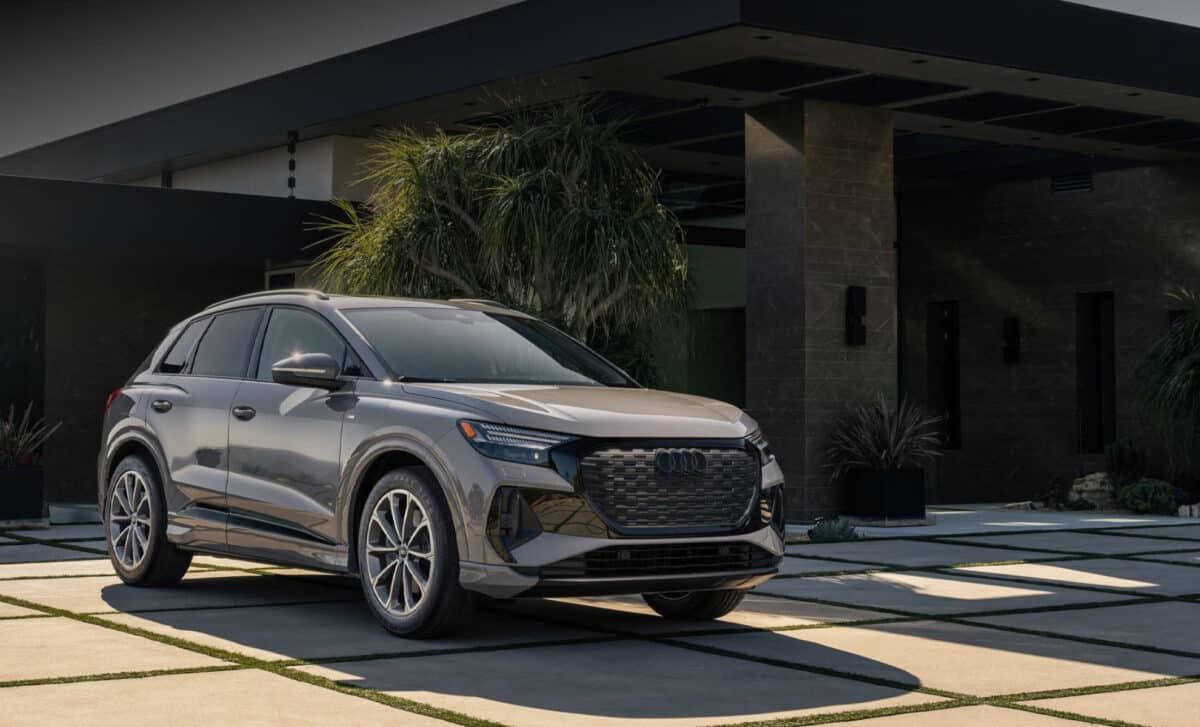
The exterior receives subtle but visible changes, including new LED headlights with customizable daytime running light signatures, a redesigned body-colored grille, and updated bumpers. At the rear, second-generation digital OLED taillights offer four selectable light patterns.
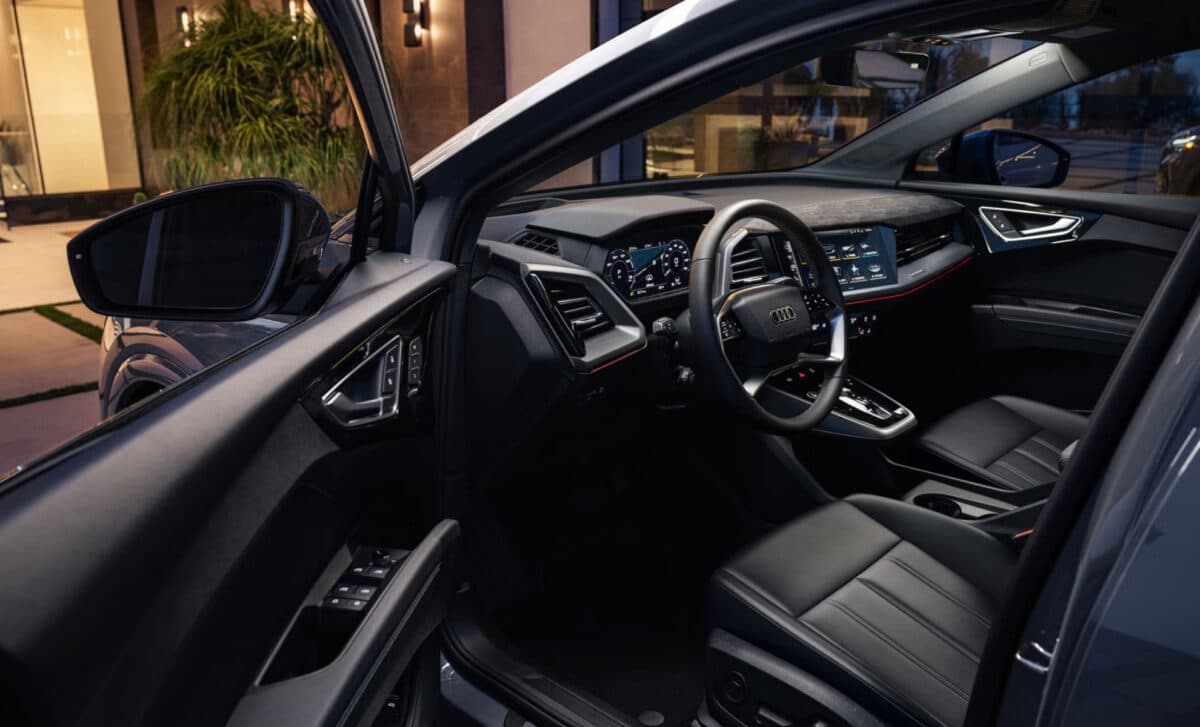
Inside, Audi has introduced a new dual-screen setup with displays measuring 11.9 inches and 12.8 inches, with an optional 12-inch passenger screen. The steering wheel design has also changed, replacing the previous squared-off shape with a more conventional circular form.
The infotainment system now runs on the One Connected platform based on Android Automotive OS. It includes an AI-powered voice assistant integrated with ChatGPT, while an augmented-reality head-up display projects navigation and driver assistance data onto the windshield as a 70-inch virtual image.
Additional driver assistance systems are now standard, including adaptive cruise control, lane departure warning, traffic sign recognition, and autonomous emergency braking with multiple assist functions.
In Germany, pricing starts at €47,500, about $51,300, for the base Q4 E-Tron with a 63 kWh battery, rising to €49,450, about $53,400, for the Sportback version. The larger 82 kWh battery is available for an additional €6,000, about $6,500.