The German automaker is gradually adapting its portfolio to comply with upcoming Euro 7 emissions standards, which are forcing significant engineering and financial trade-offs. While some models and engines are being retired or modified, others will survive in regions with less restrictive requirements.
This transition highlights a broader shift affecting both luxury and mainstream manufacturers. Performance-oriented vehicles, once central to brand identity, are increasingly constrained by environmental legislation and evolving compliance costs.
A regulatory turning point for Audi’s five-cylinder engine
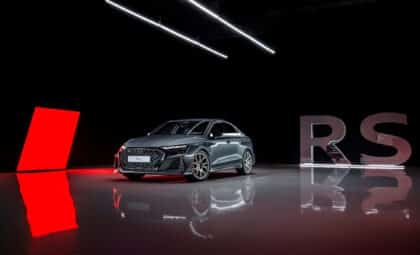
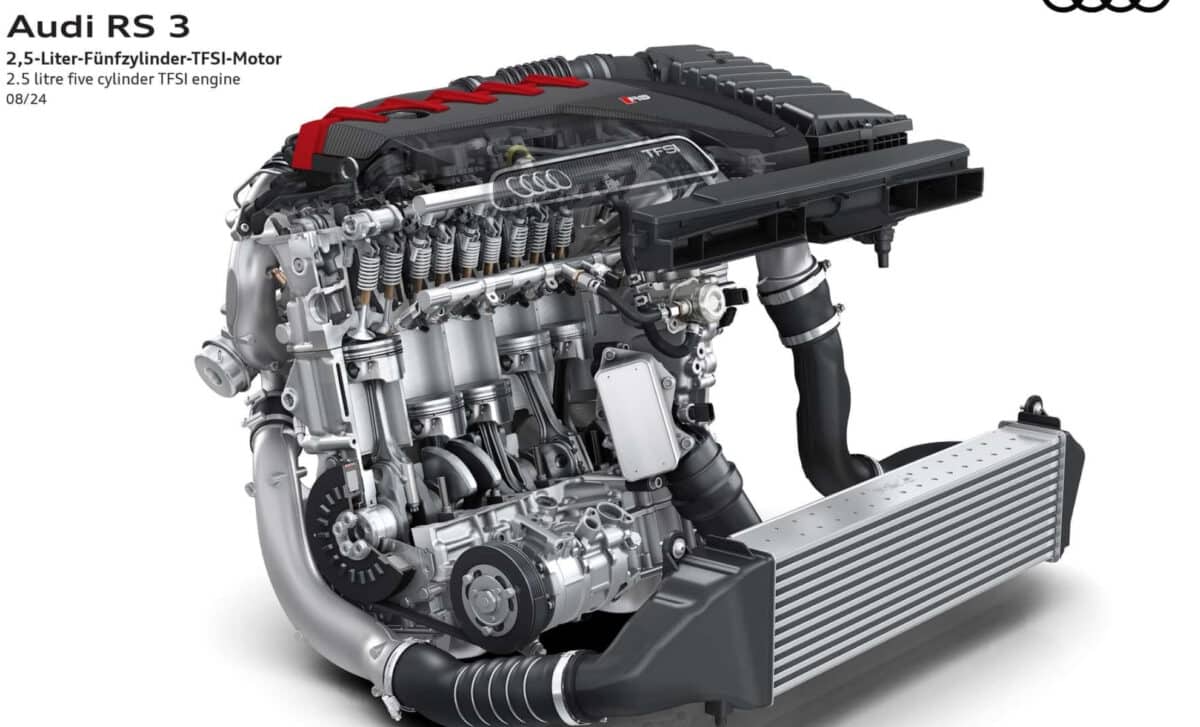
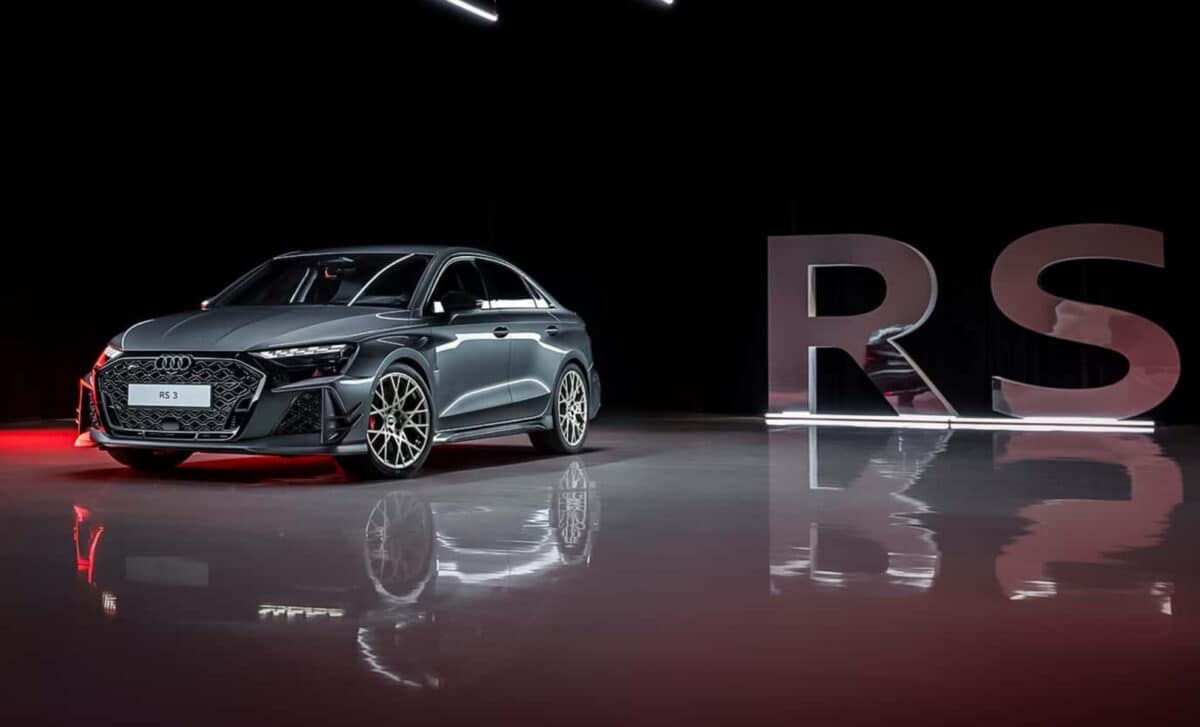
Audi has confirmed it will end production of the inline-five engine for European markets by mid-2027. According to Motor1, A3 model series spokesperson Julia Winkler stated that the RS3 will remain available outside Europe even after the engine is withdrawn from the region.
The decision is directly tied to Euro 7 emissions regulations. Although updating the 2.5 TFSI engine to meet the new standards is technically possible, Audi has determined that the required investment would not be justified by the expected return. As a result, the company will cease offering the engine in Europe while continuing production for other markets.
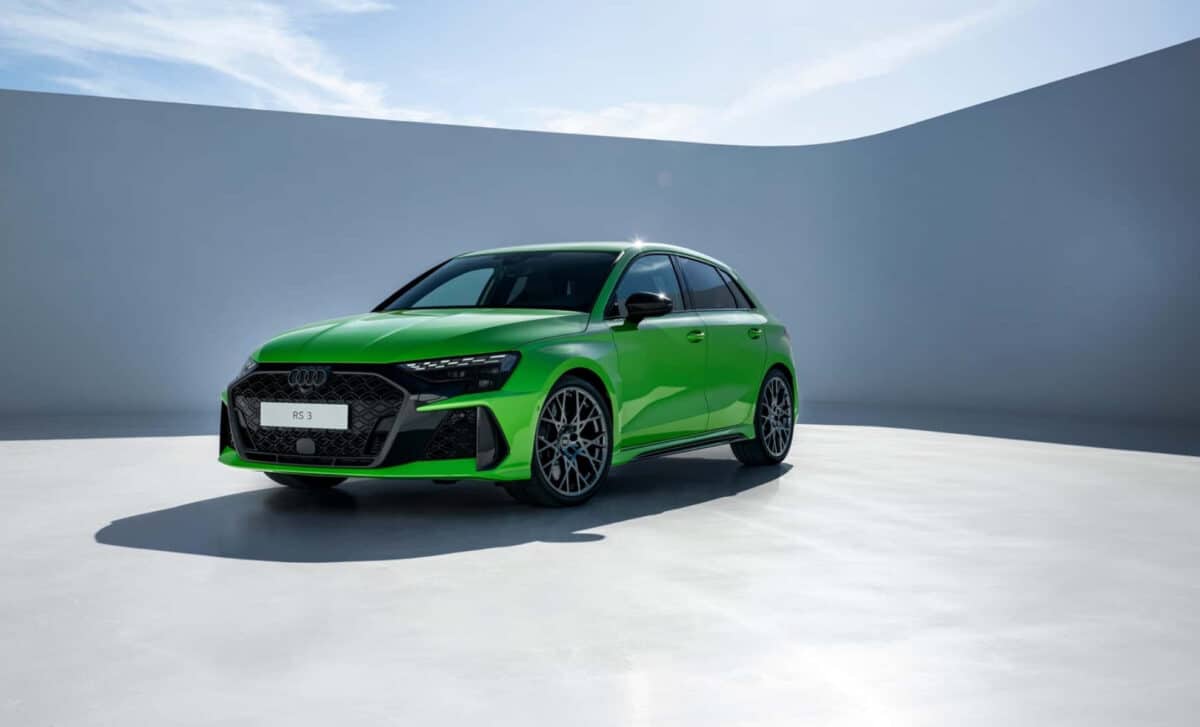
European customers still have a limited window to purchase the RS3 before the phase-out takes effect. The model remains one of the last vehicles equipped with this engine, following the earlier discontinuation of the RS Q3, RS Q3 Sportback, TT RS Coupe, and TT RS Roadster.
A Legacy Spanning Nearly Five Decades
Audi’s five-cylinder engine has a long history dating back to the 1976 Audi 100. Over the years, it became a defining feature of the brand’s performance identity, particularly in compact high-performance models like the RS3.
Its gradual disappearance reflects not just a product decision but the end of a technological lineage shaped by changing industry priorities. The RS3 hatchback and sedan are now the final models carrying this engine, underscoring how limited its presence has become.
Even as it exits Europe, production will continue in Győr, Hungary, where Audi will build the RS3 for North America and other regions with more lenient emissions frameworks. This ensures the engine’s survival, at least temporarily, beyond its European lifespan.
Industry-Wide Impact of Tightening Regulations
Audi’s move is part of a broader trend affecting the automotive sector. Stricter European regulations are already forcing manufacturers to rethink or abandon certain powertrains. Mercedes has recently withdrawn its V12 engine from Europe, while BMW has had to detune its twin-turbo 4.4-liter V8 in models like the M5 and XM to comply with Euro 7.
The impact extends beyond the luxury segment. Mazda has removed a 2.0-liter engine from the Miata, and Honda has phased out the Civic Type R in Europe in response to legislative requirements. Other models, such as the Porsche Cayman and Boxster, were discontinued in the region due to cybersecurity regulations, while the Toyota GR86 and Subaru BRZ faced similar outcomes.
These developments are linked to the European Union’s broader objective of reducing fleet emissions by 90 percent by 2035 compared to 2021 levels. As regulations tighten, the number of performance-focused internal combustion engines available in Europe continues to shrink.
Audi’s five-cylinder engine, while not disappearing entirely, is becoming another example of how regulatory pressure is reshaping the future of performance cars.