
The announcement places BMW among the most successful Western automakers in the EV market, behind only Tesla and Volkswagen based on publicly available production and delivery figures. BMW achieved the milestone while pursuing a strategy that differed sharply from several rivals that repeatedly revised their electric plans.
BMW’s approach combined dedicated EVs with electric models adapted from combustion-engine platforms, allowing the brand to expand its lineup across several vehicle segments rather than relying on a single bestselling model.
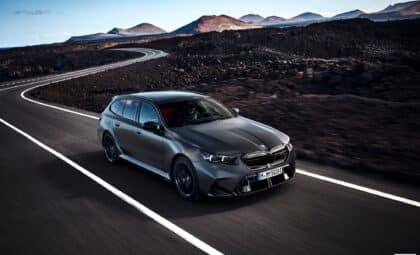
For years, BMW’s EV strategy faced criticism because many of its electric vehicles shared architectures with gasoline-powered cars. Models such as the i4, i5, i7, iX1, and iX2 were often described as compromises compared with fully dedicated EV platforms, though the vehicles still attracted a large customer base.
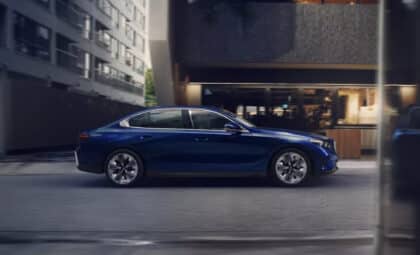
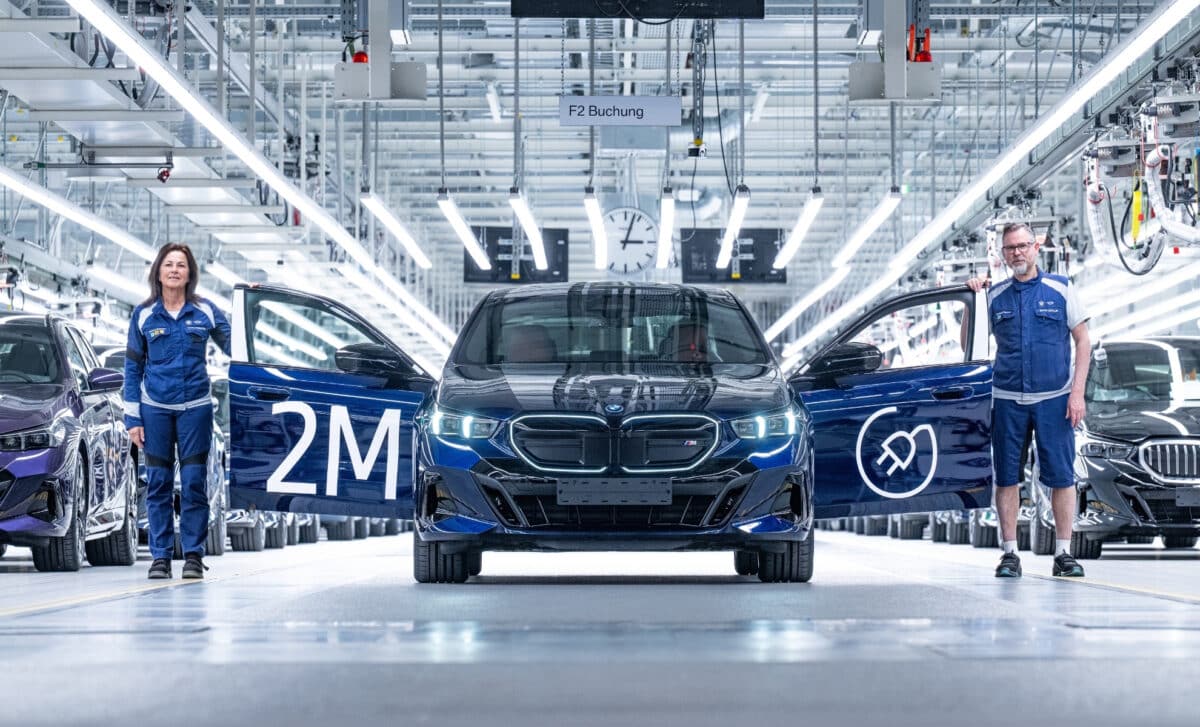
BMW Reaches the 2 Million EV Milestone with the I5 M60
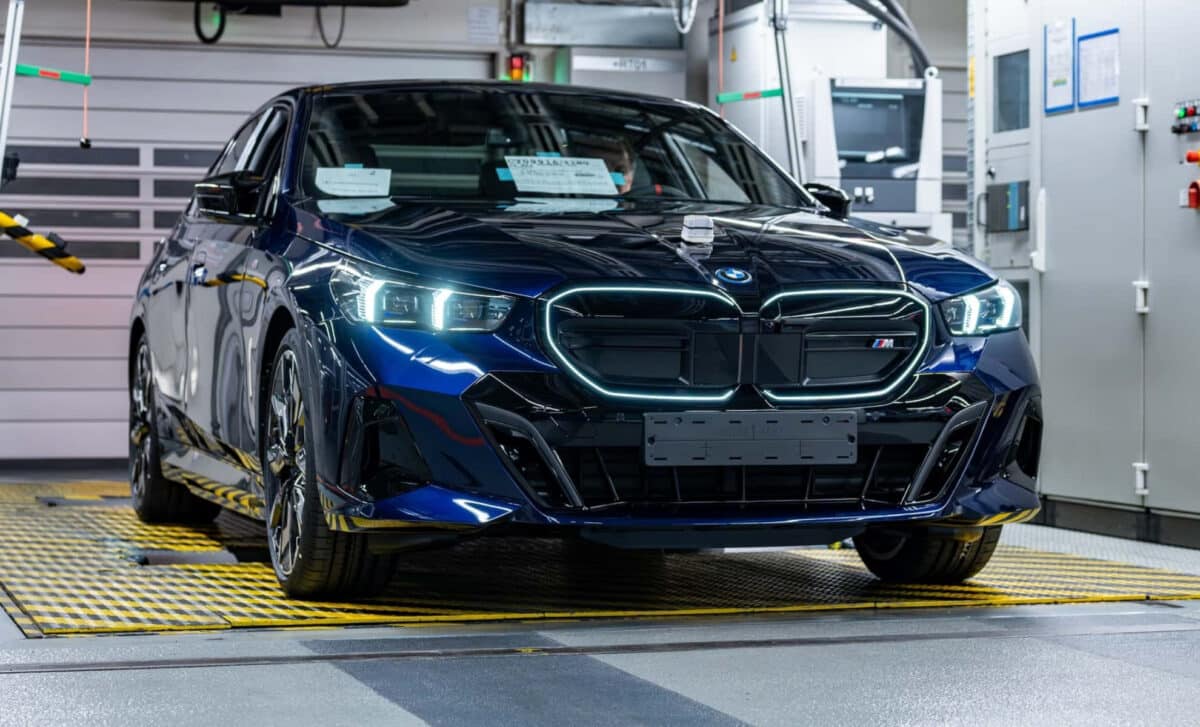
BMW confirmed that its 2 millionth electric vehicle was a blue i5 M60 assembled at the Dingolfing facility in Germany. The vehicle was built for a customer in Spain.
According to InsideEVs, BMW now trails only Tesla and Volkswagen among Western manufacturers in total EV production and deliveries. Tesla has reportedly delivered around 9.2 million vehicles globally, while Volkswagen says it has delivered 4 million all-electric vehicles. The German group also stated that roughly 3 million of those vehicles were based on the MEB platform.
Volkswagen additionally noted that around 77% of its 4 million EVs were manufactured in Europe, even though the company also produces large volumes of electric vehicles in China.
BMW’s milestone comes after years of steadily expanding its electric lineup without depending on one dominant product. Unlike Tesla, whose EV growth has largely centered around the Model 3 and Model Y, BMW spread its sales across several models and market categories.
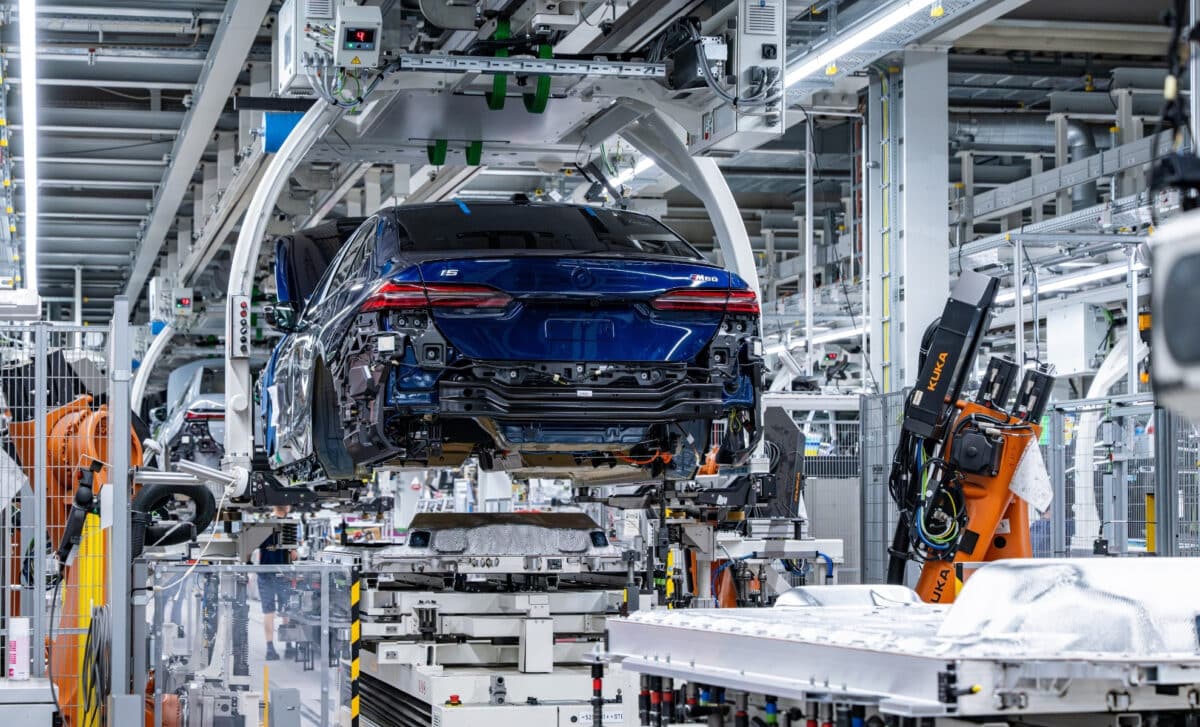
Shared platforms became a central part of BMW’s EV strategy
BMW adopted a flexible approach that mixed dedicated electric models with EVs derived from combustion-engine vehicles. This strategy drew criticism because shared platforms often impose packaging and efficiency limitations compared with fully bespoke electric architectures.
The company’s current lineup includes electric versions of existing combustion models such as the i4, i5, i7, iX1, and iX2. These vehicles were not considered class leaders in any single category, though they still succeeded commercially.
The i4 in particular emerged as BMW’s strongest-selling EV in recent years. The electric version of the 4 Series Gran Coupe also became the brand’s bestselling M model during that period.
Despite concerns surrounding shared architectures, BMW continued to attract buyers with a broader range of electric vehicles spanning different body styles and price segments.
Neue Klasse Models Are Set to Redefine BMW’s EV Lineup
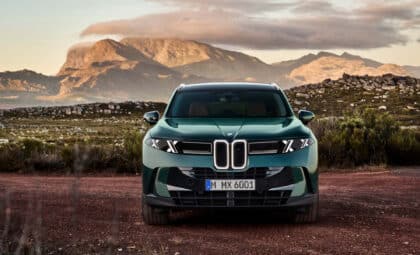
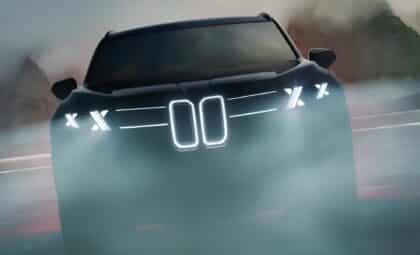
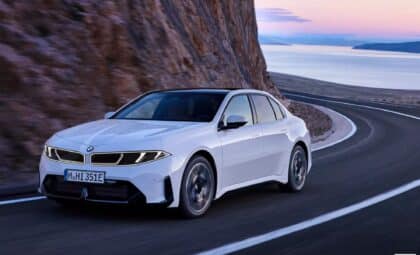
BMW is now preparing to introduce a new generation of electric vehicles built on its dedicated Neue Klasse platform. The first two announced models are the iX3 SUV and the i3 sedan.
The upcoming vehicles are expected to deliver class-leading efficiency and range while also introducing a new direction for BMW’s design language.
The company also confirmed that the Neue Klasse models will be offered in China in long-wheelbase versions. BMW’s existing EV success has largely been built on adapted combustion platforms, making the launch of these dedicated EV architectures a significant shift for the automaker.