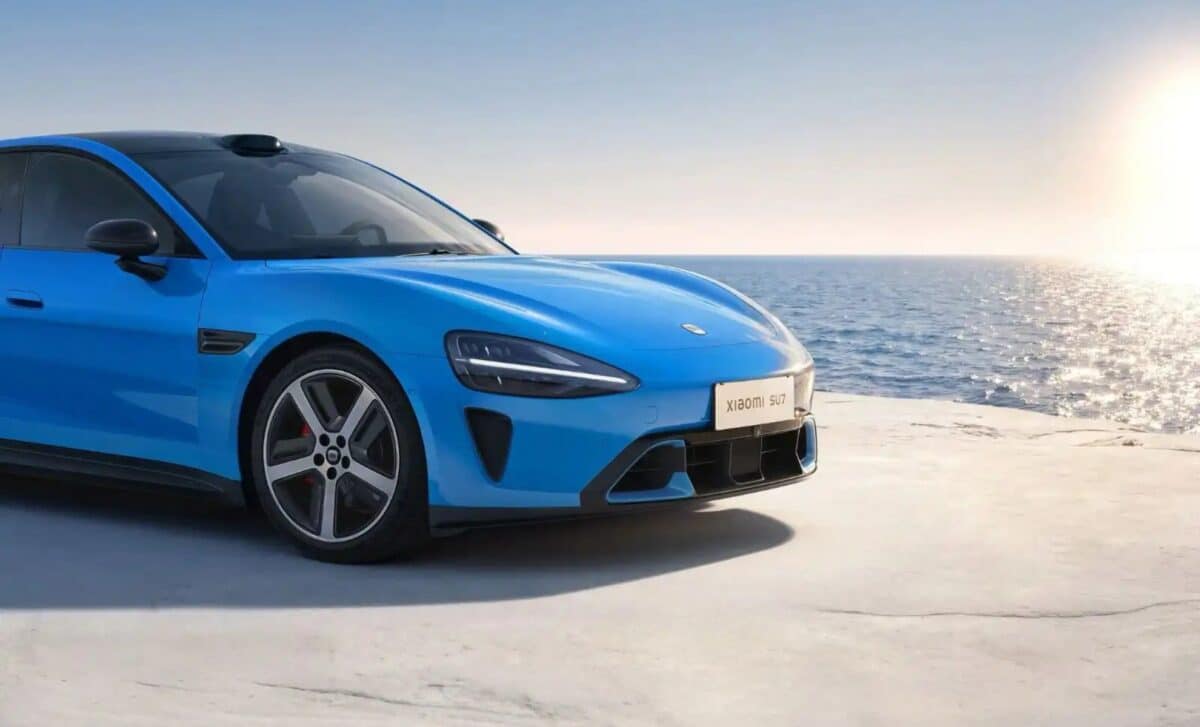
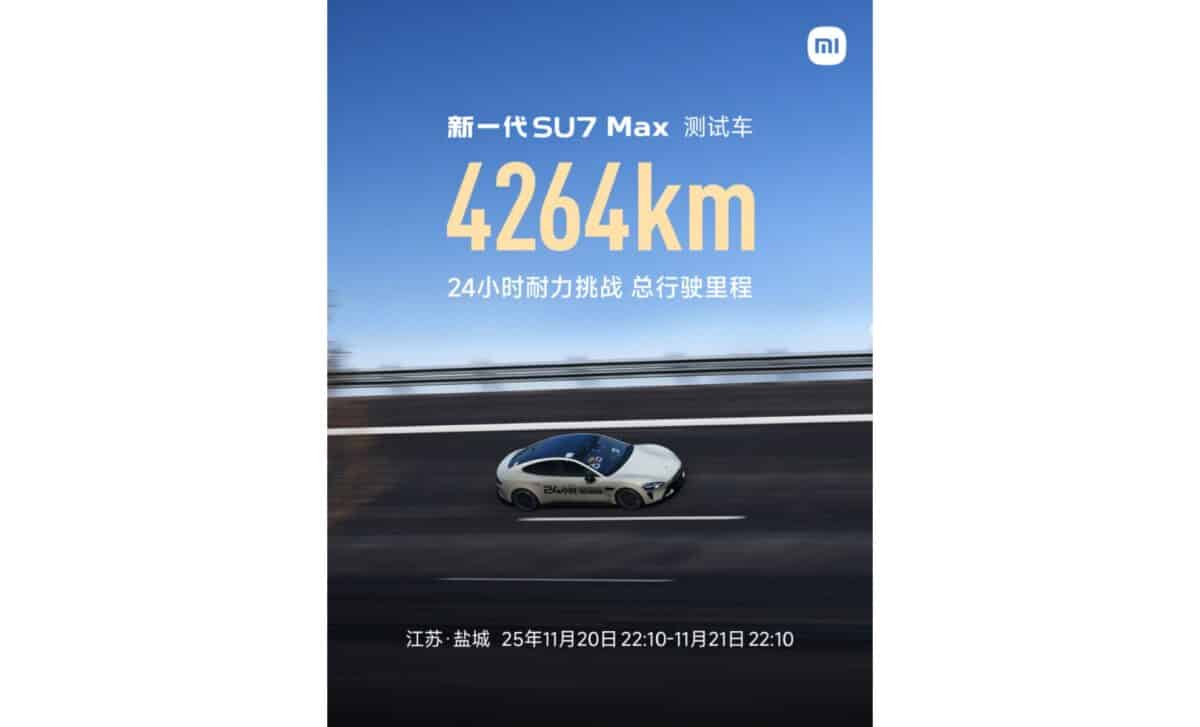
Announced on January 19 by Xiaomi Auto, the feat was achieved on a 7.8 km high-speed oval track at a CATARC-owned proving ground. It exceeded the XPeng P7’s prior record of 3,961 km and Xiaomi’s own 3,944 km mark with the YU7.
According to Xiaomi, the SU7 Max was operated continuously over 24 hours, including time spent charging, in what the company described as “running a marathon at sprint speed.” The performance isn’t just a marketing milestone, it reflects a full-scale validation of the car’s battery system, motor output, and charging capabilities under stress.
For Xiaomi, this moment is about more than setting a number. It marks the company’s push into high-performance electric mobility, driven by technical enhancements and new architecture that allow the SU7 Max to go farther, faster, and with better efficiency.
897V High-Voltage Platform and Battery Integration
At the heart of this record-breaking run is the 897V high-voltage architecture exclusive to the SU7 Max. While the Standard and Pro models are equipped with a 752V silicon carbide platform, the Max’s elevated voltage level enables greater power delivery and thermal control. This shift plays a central role in the car’s ability to perform at sustained high speeds for extended periods.
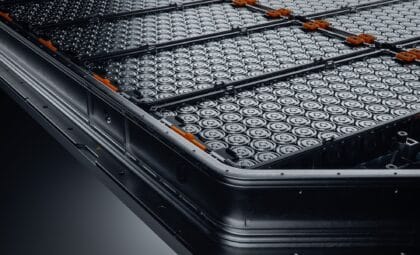
Xiaomi has paired this platform with a 101.7 kWh ternary lithium battery, which offers a CLTC-rated range of 835 km. The high energy density of this pack, combined with the elevated voltage system, allowed for long-distance performance without major fluctuations in power output. The setup supports not just endurance but also real-time stability of the vehicle’s systems during high-load scenarios.
Adding a video to break down the technical details behind this achievement — the new Xiaomi SU7 Max has officially set a new 24-hour endurance challenge record.#XiaomiSU7 #EnduranceTest $xiacy https://t.co/37xGuVpNuM pic.twitter.com/fKKQavWXV1
— DriveGreenLiveGreen (@DriveGreen80167) January 19, 2026
Constant Speed Supported by Enhanced Motor
The SU7 Max maintained a constant speed of 240 km/h throughout the 24-hour test, an output sustained by its V6s Plus electric motor, now standard across the entire SU7 lineup. For the Max version, Xiaomi increased the motor speed to 22,000 rpm, enabling a maximum vehicle speed of 265 km/h. According to Xiaomi, the Max model also delivers an extra 13 kW of power, while improving overall CLTC efficiency by 1.5%.
These mechanical upgrades weren’t just about achieving top speeds. They ensured that the vehicle could hold a high cruising velocity without performance dips, a key requirement for this type of endurance challenge. It’s not a sprint, it’s the sustained ability to perform near the vehicle’s limit without sacrificing range or component stability.
Rapid Charging and Reinforced Safety Design
Another critical element in the SU7 Max’s performance was its fast-charging capability. Xiaomi claims the Max variant can add 670 km of range in just 15 minutes of fast charging. This figure, when applied across a 24-hour timeframe, helped reduce downtime significantly, allowing more kilometers to be covered even with regular charging stops.
Beyond performance and power, Xiaomi emphasized structural integrity and occupant safety. The next-generation SU7 is built with a 2,200 MPa integrated anti-roll structure, a 1,500 MPa underbody crossbeam, and protective underbody coating to reinforce its physical frame under high-speed pressure. It also includes nine airbags, featuring two new rear side airbags added for enhanced rear-passenger protection.
The SU7 Max is now available for pre-order ahead of its April 2026 launch, with a pre-sale price of RMB 309,900 (approximately $44,470).