


Horse Powertrain’s latest development comes just a year after it introduced its modular hybridization concept, which allowed traditional combustion engines to be integrated into existing electric vehicle platforms.
The H12 hybrid engine is a continuation of this strategy, aiming to provide a more efficient alternative to current gasoline engines without requiring a complete redesign of vehicle architectures. It demonstrates that hybrid technologies can still evolve, offering a solution for manufacturers looking to enhance the performance of their combustion engine vehicles while reducing emissions.
A Leap Forward in Engine Efficiency
The Horse H12 hybrid engine represents a leap forward in internal combustion engine (ICE) technology. With a thermal efficiency of 44.2%, it stands as one of the most efficient gasoline engines available today. The engine achieves these impressive results through advanced features such as a high compression ratio of 17:1, a next-generation exhaust gas recirculation (EGR) system, and an optimized turbocharger. These improvements work in tandem to reduce energy losses and increase fuel efficiency.
While the 44.2% thermal efficiency is noteworthy, it does not set a new world record. In December 2025, Chinese automaker Dongfeng introduced a hybrid engine that surpassed this figure, reaching 48.09%. Nevertheless, the Horse H12 engine offers significant improvements over traditional gasoline engines, particularly by reducing fuel consumption by 40% compared to the European average for new car registrations in 2023, which still includes many non-hybrid models.
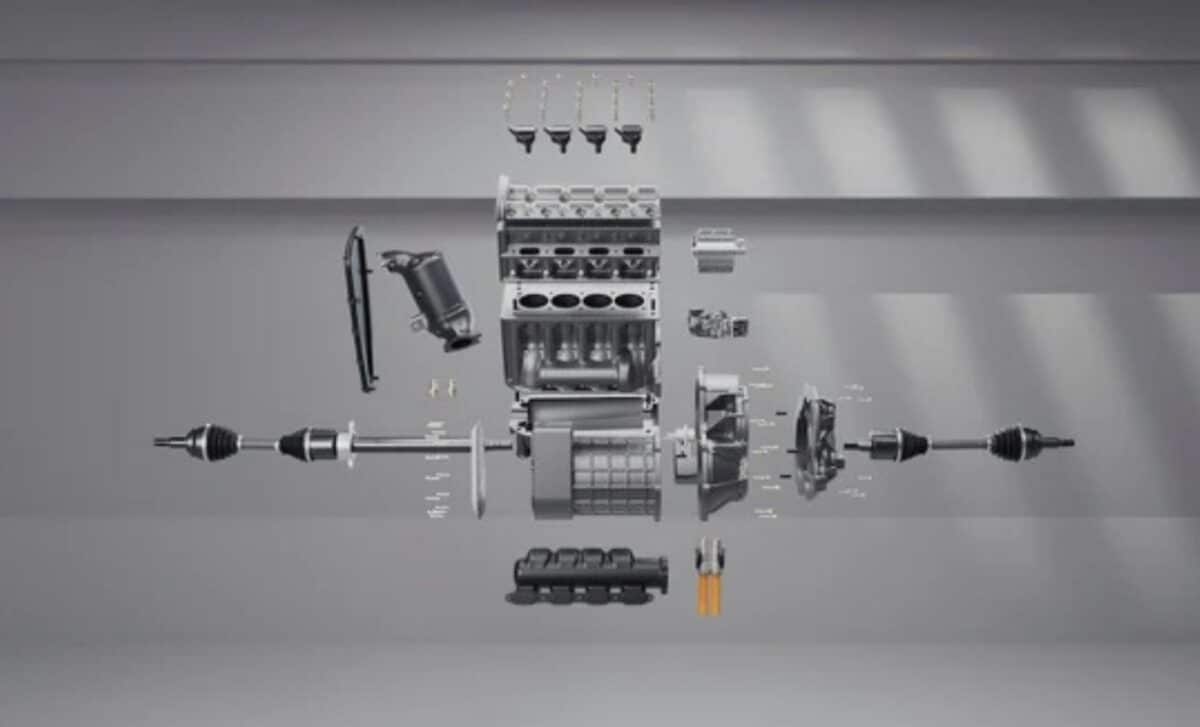
The Role of Renewable Fuels in Emission Reduction
One of the standout features of the H12 engine is its compatibility with 100% renewable fuel, developed by Repsol. In this configuration, the engine could deliver a substantial reduction in CO₂ emissions. According to Horse Powertrain’s data, a vehicle with this powertrain would emit 1.77 tonnes less CO₂ per year compared to a similar model running on conventional gasoline. This figure is based on an average annual driving distance of 12,500 km, reports Automobile Magazine.
However, the environmental benefits of the renewable fuel option depend on the availability and scalability of these fuels. While the engine reduces emissions when paired with renewable fuel, it still emits CO₂ through combustion, and the broader impact will depend on the lifecycle of the fuel and its production process. A fully sustainable solution would require a closed carbon cycle, where the fuel’s emissions are balanced by its renewable production methods, a goal that is still in development.
Hybrid Technology as a Strategic Approach
Horse Powertrain’s innovation comes at a time when the automotive industry is in the midst of a transition to cleaner technologies. While electric vehicles dominate the conversation, many manufacturers, including Horse Powertrain, argue that hybrid solutions can play an essential role in reducing emissions more quickly.
Patrice Haettel, General Manager of Horse Technologies, emphasized that focusing solely on electric vehicles may not be the fastest way to decarbonize the sector. Hybrid powertrains like the H12 offer a way to enhance existing combustion engine vehicles with a lower environmental footprint.
The H12 engine fits into a broader strategy by Horse Powertrain to continue developing high-efficiency combustion technologies alongside electric solutions. The company also introduced the “Future Hybrid” concept in 2025, which allows for the integration of thermal engines and transmissions into existing electric vehicle platforms. By improving the efficiency of thermal powertrains, Horse Powertrain aims to reduce emissions while ensuring that manufacturers can meet regulatory targets without completely abandoning combustion engines.