
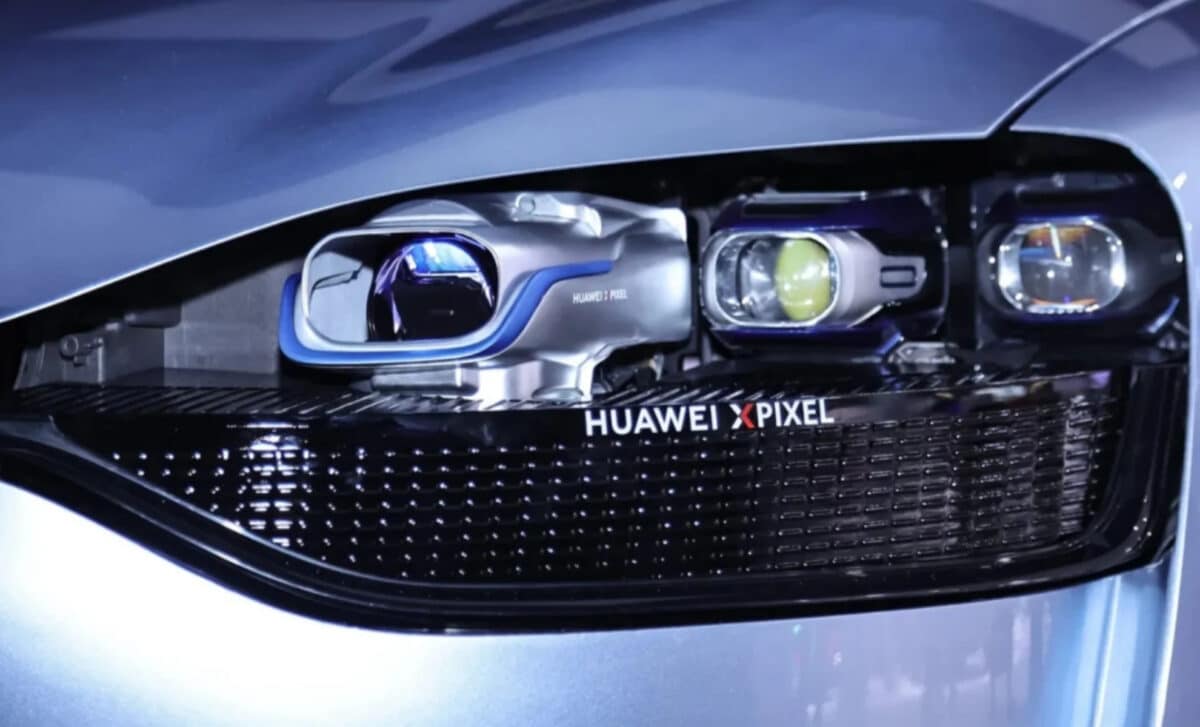
The innovation builds on existing adaptive lighting systems already deployed in several Chinese vehicles. Initially designed to improve visibility and reduce glare, these systems are now evolving into multi-functional tools that combine safety, communication, and digital display.
At a time when Chinese automakers are accelerating integration between hardware and software, Huawei’s approach highlights how even traditional components like headlights are being reimagined. The development also comes as global regulations and competitors gradually catch up with advanced lighting capabilities.
Headlights Evolve From Illumination to Projection Systems
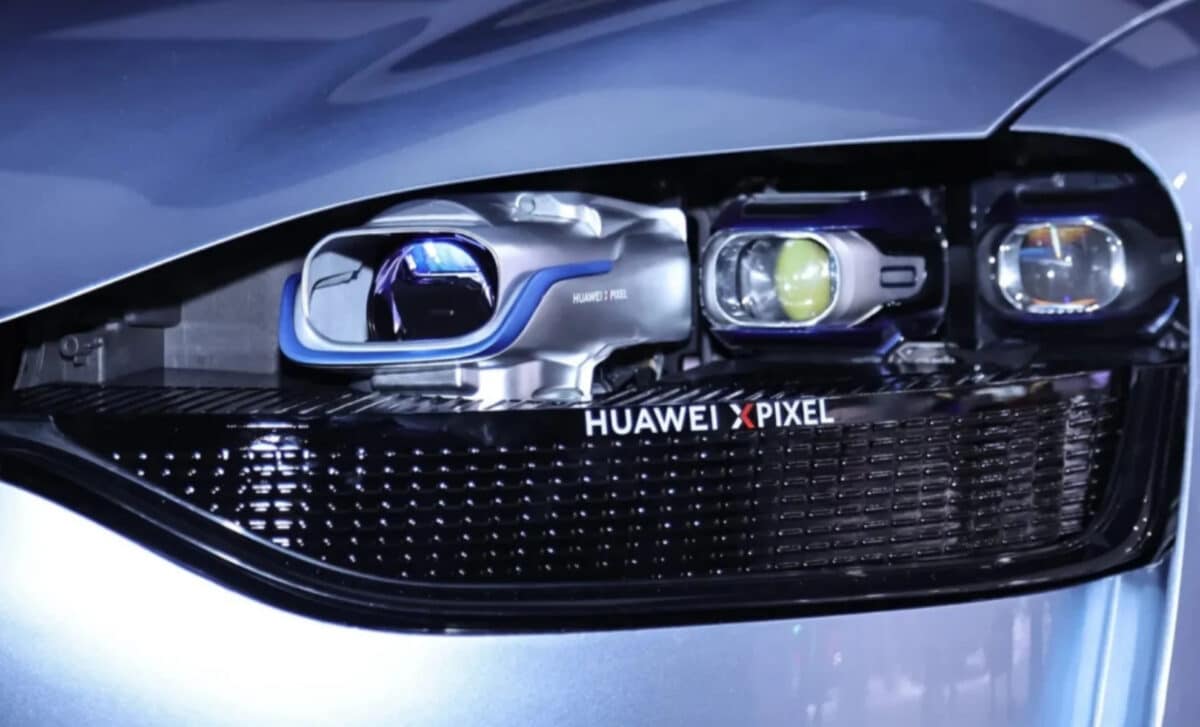
Huawei’s xPixel technology is not entirely new. According to Automobile Magazine, it has already been integrated into models from brands such as Aito, Luxeed, and Avatr, where it primarily enhanced adaptive lighting functions like beam adjustment and curve anticipation.
The latest version significantly expands these capabilities. The optical units can now project color images onto flat surfaces, effectively turning the front of a stationary vehicle into a video projector. This allows users to display films, series, or sports events outdoors, creating a temporary drive-in experience.
While this feature may appear anecdotal in everyday use, it signals a broader transformation. Headlights are no longer limited to illumination; they are becoming platforms for interaction and display. Earlier versions of xPixel already enabled projections on the ground, such as lane guidance or signals intended for pedestrians, a function that continues in this new iteration.
Integration With Driver Assistance and Environmental Interaction
Beyond entertainment, xPixel is designed to work in tandem with Huawei’s driver-assistance systems. The headlights can visually project lane markings onto the road, which can be particularly useful in poor weather conditions or when road markings are faded.
This integration extends to communication with the surrounding environment. The system is capable of projecting signals toward pedestrians and even interactive elements, including simple games for children near the vehicle. These features illustrate how lighting is being incorporated into a wider ecosystem of vehicle-environment interaction.
At the same time, Huawei is advancing its sensing technologies. The company presented a new-generation LiDAR system with 896 lines, capable of detecting obstacles as small as 14 centimeters at a distance of around 120 meters. This includes objects that are typically difficult to identify, such as small animals or road debris. The system operates in coordination with ADAS features to enhance overall driving safety.
A Technology Currently Limited to the Chinese Market
The new xPixel system is expected to debut on the Aito M9, a flagship SUV, before expanding to other models such as the Qijing GT7 and the Luxeed V9. This rollout reflects how Chinese manufacturers are extending innovation beyond batteries and infotainment into other vehicle components.
For now, the technology remains confined to the Chinese market. Regulatory differences partly explain this gap. Adaptive beam systems were only fully authorized in the United States in 2022, illustrating how legislation can influence the pace of adoption.
In other regions, similar technologies are already in use, though less advanced. European manufacturers such as Audi, BMW, Mercedes, and Volkswagen have developed systems like Matrix LED and Digital Light, capable of shaping light beams and projecting basic symbols onto the road. Valeo’s AI-driven lighting, for instance, can adjust to traffic conditions and display warning pictograms, such as reminders to maintain safe distances when approaching a tunnel.